Tile roofing and Buckeye homes
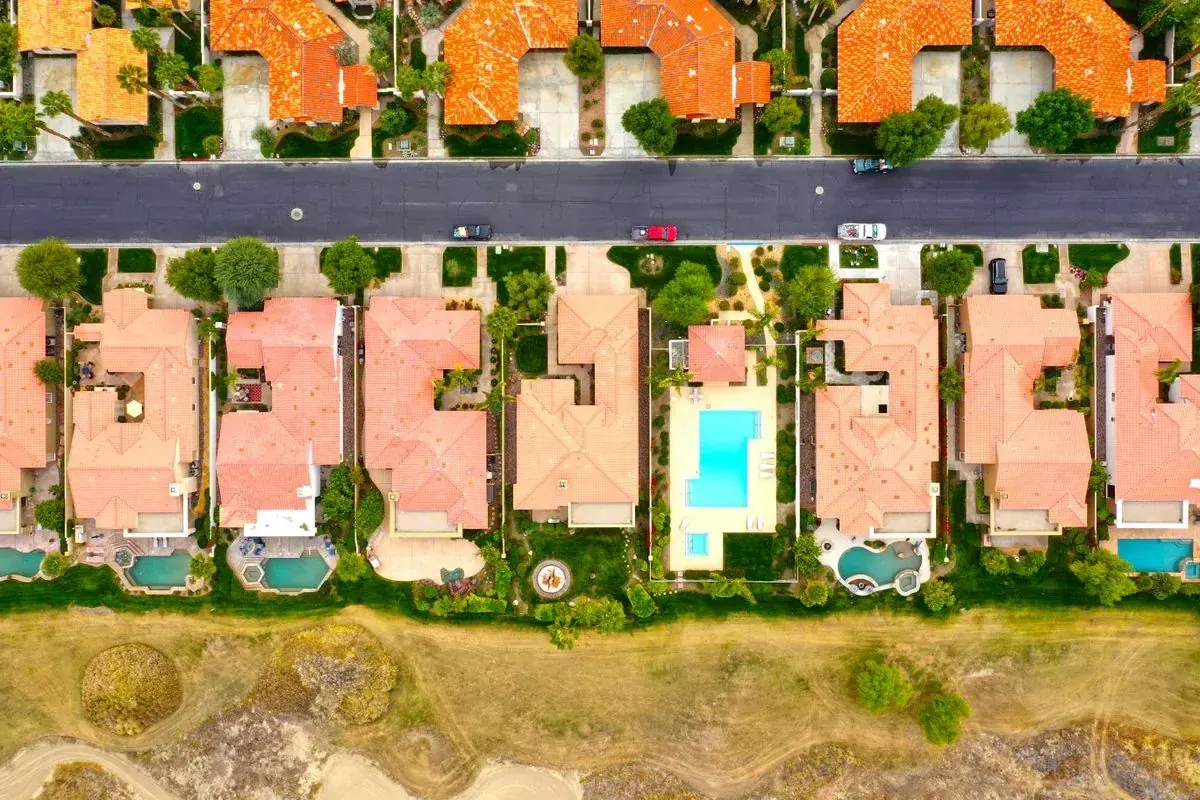
Tile roofing in Buckeye, AZ is the dominant roof type because the city was largely built in the 2000s, when concrete tile was the standard for West Valley subdivisions. Drive through Verrado, Sundance, Tartesso or Sun City Festival and almost every pitched roof is tile.
A tile roof is a system with two jobs split between two layers. The tile handles sun, wind and most of the rain. The underlayment underneath, felt on older roofs and synthetic or self-adhered sheet on better new ones, is the actual waterproofing. In Arizona those layers age at very different rates, which is the single most important thing to understand about owning a tile roof here.
That is why tile roofing work in Buckeye splits three ways: new tile roofs, re-felting existing ones with an underlayment replacement, and tile roof repair.
Concrete tile versus clay tile
Concrete tile is what most Buckeye homes have and what most HOA palettes specify; clay is the premium alternative with richer, longer-lasting color.
| Concrete tile | Clay tile | |
|---|---|---|
| Installed cost per sq ft | $7.00 to $14.00 | $10.00 to $18.00 |
| 2,000 sq ft roof | $14,000 to $28,000 | $20,000 to $36,000 |
| Color | Can fade over years in strong sun | Fired color, holds well |
| Where you see it in Buckeye | Most 2000s and later subdivisions | Custom and higher-end homes |
| Weight | Heavy; structure must be designed for tile | Heavy; structure must be designed for tile |
| What wears out first | The underlayment | The underlayment |
Cost source: Arizona roof replacement cost guide, May 2026, full new system installed.
Tile profiles
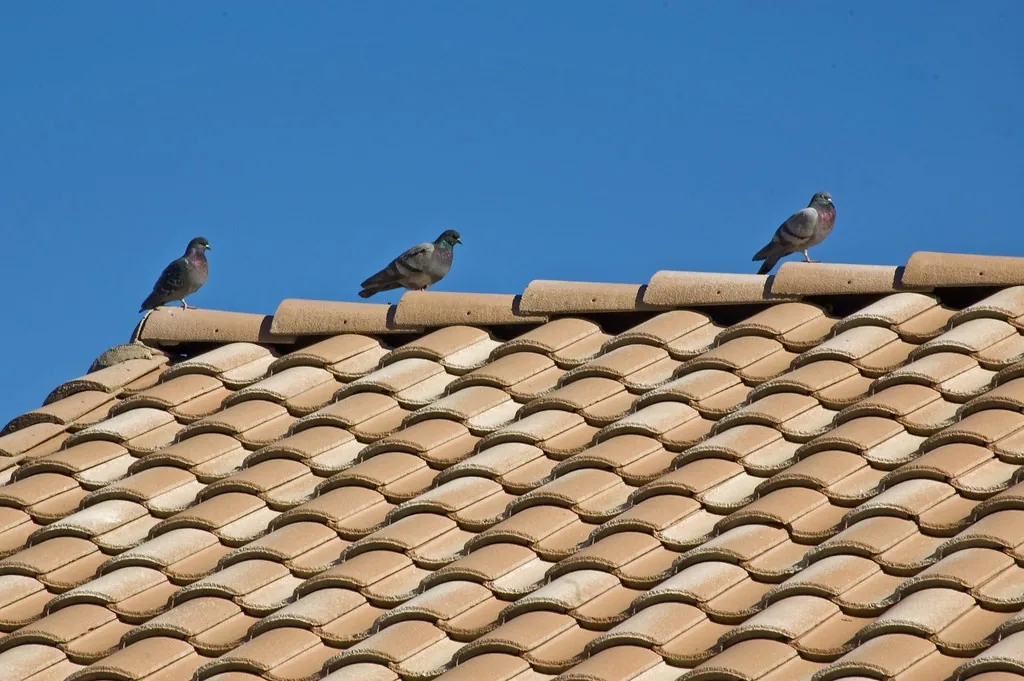
Buckeye roofs use the familiar profiles: the S-shaped Spanish and mission styles, flat and low-profile tiles, and two-piece clay barrel tile on some custom homes. Profile matters for repairs, because a discontinued profile is hard to match, and for HOAs, whose architectural standards often name the profiles allowed in each village.

The underlayment decides how long a tile roof lasts
The underlayment decides the life of a tile roof in Buckeye. A Phoenix roofer's published table gives these Arizona service lives, and notes that in the Phoenix metro materials age at the faster end of them.
| Underlayment | Arizona lifespan |
|---|---|
| 30# felt, single layer | 15 to 20 years |
| 40# felt, double layer | 25 to 30 years |
| G40 / modified bitumen | 25 to 35 years |
| Synthetic | 25 to 40 years |
| Peel-and-stick / rubberized | 30 to 40 years |
Tile, wind and the monsoon
Tile is heavy, but it is not immune to monsoon wind. The National Weather Service defines the monsoon as June 15 through September 30, issues severe thunderstorm warnings for winds of 60 mph or greater, and notes that downburst winds can in rare cases exceed 100 mph. The tiles that move are the edges: eave courses, rakes, ridges and hips.
On a new roof or a re-felt, ask how ridge and hip tile will be fastened. Mechanical fastening rather than mortar alone is what keeps them in place through a downburst. On an existing roof, a pre-monsoon check of the ridges and edges is the cheapest insurance there is. See monsoon storm damage repair.
HOA palettes and tile matching
Most of Buckeye's master-planned communities have architectural standards that cover roof material, profile and color. Verrado is run by the Verrado Community Association; Sun City Festival and the other large communities have their own review processes.
- For a new tile roof or a color change, get HOA architectural approval before the job is scheduled
- For a re-felt that relays the same tile, notify the association even if approval is not strictly needed
- For repairs, match profile and color, moving weathered tile to front elevations where needed
- Keep the approval letter with your roof warranty paperwork for the next sale of the house
When tile is not the right roof
Tile is not the right answer for a flat or very low-slope roof, which is foam or membrane territory, or for a structure not framed to carry it. Some acreage homes and outbuildings around Tonopah and Palo Verde suit metal better, and budget-driven projects may choose shingle. Compare them in tile vs shingle vs foam, or request a tile roofing quote. Coverage details are on the service area page.
Looking after a tile roof in Buckeye
A tile roof needs little maintenance compared with most roofs, but the little it needs matters in Buckeye because of how the weather arrives: months of dry heat, then a monsoon that tests every detail in a few weeks.
- Before June 15, have ridge, hip and eave tile checked and loose pieces reset and fastened
- Keep valleys and the junctions with walls clear of the debris dust storms leave behind
- Replace cracked tile promptly so the felt beneath is not exposed to sun
- Check pipe boots and flashings every year or two; they age faster than the tile
- Photograph the roof before and after any solar, satellite or HVAC work
- Plan for an underlayment replacement around the felt's published 15 to 20 year Arizona life, rather than waiting for leaks
What tile work costs in Buckeye
Tile work in Buckeye falls into three price brackets: repairs priced by the job, underlayment replacement that reuses the tile, and a full new tile roof. On a 2,000 square foot roof, published figures put an underlayment replacement at $7,000 to $10,000 in a Phoenix-area size table and $9,000 to $17,000 in a 2026 Arizona guide, against $14,000 to $28,000 for new concrete tile and $20,000 to $36,000 for clay.
For most Buckeye tile roofs with sound tile, the underlayment replacement is the best value, because it renews the part that wears out while keeping the part that does not. The full breakdown is in the roof replacement cost guide.
How a new tile roof is installed
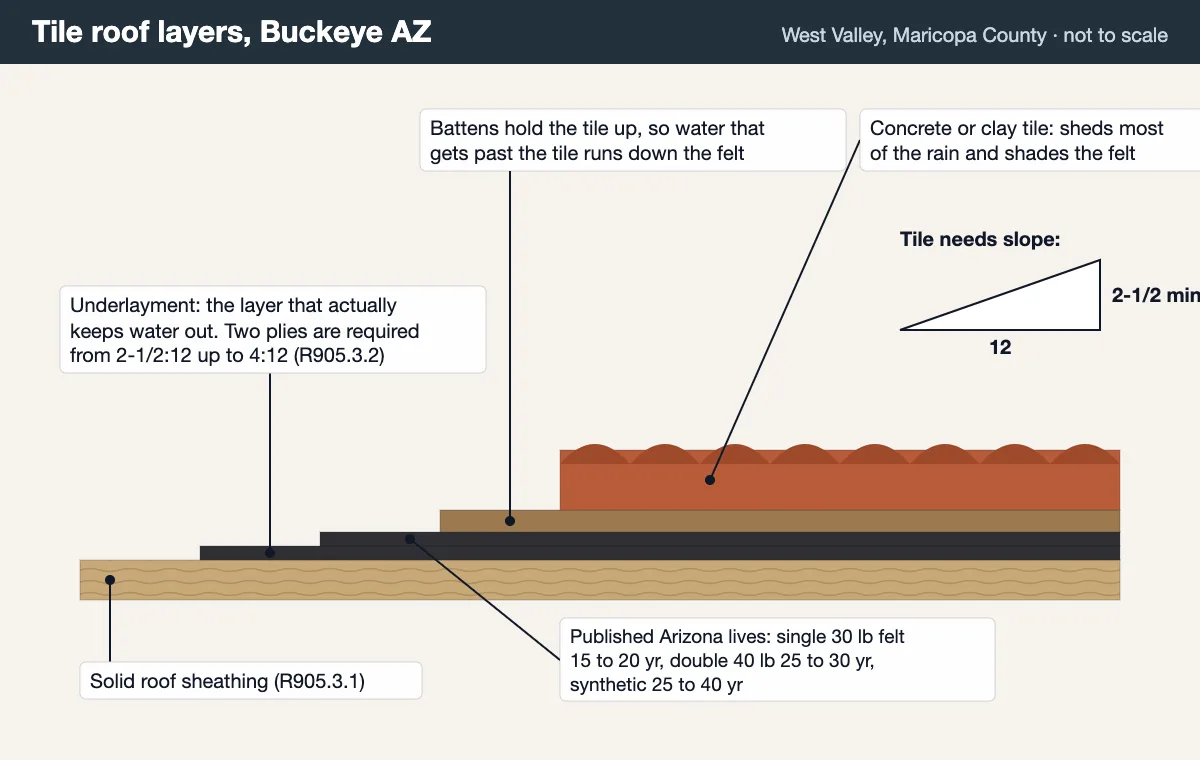
- Structure and tile choice. The roofer confirms the framing is designed for tile, then the profile and color are chosen against the HOA palette where there is one.
- Approvals. A change of material needs a City permit; HOA architectural approval is sought before scheduling.
- Deck and underlayment. The deck is repaired where needed and the specified underlayment is installed, with special attention to valleys and transitions.
- Metal and battens. Drip edge, valley metal, wall and penetration flashings and battens are installed.
- Tile installation. Tile is laid in courses and fastened to the system's requirements, with ridges and hips bedded and mechanically fastened against monsoon wind.