Buckeye Roof Experts
Buckeye, Arizona
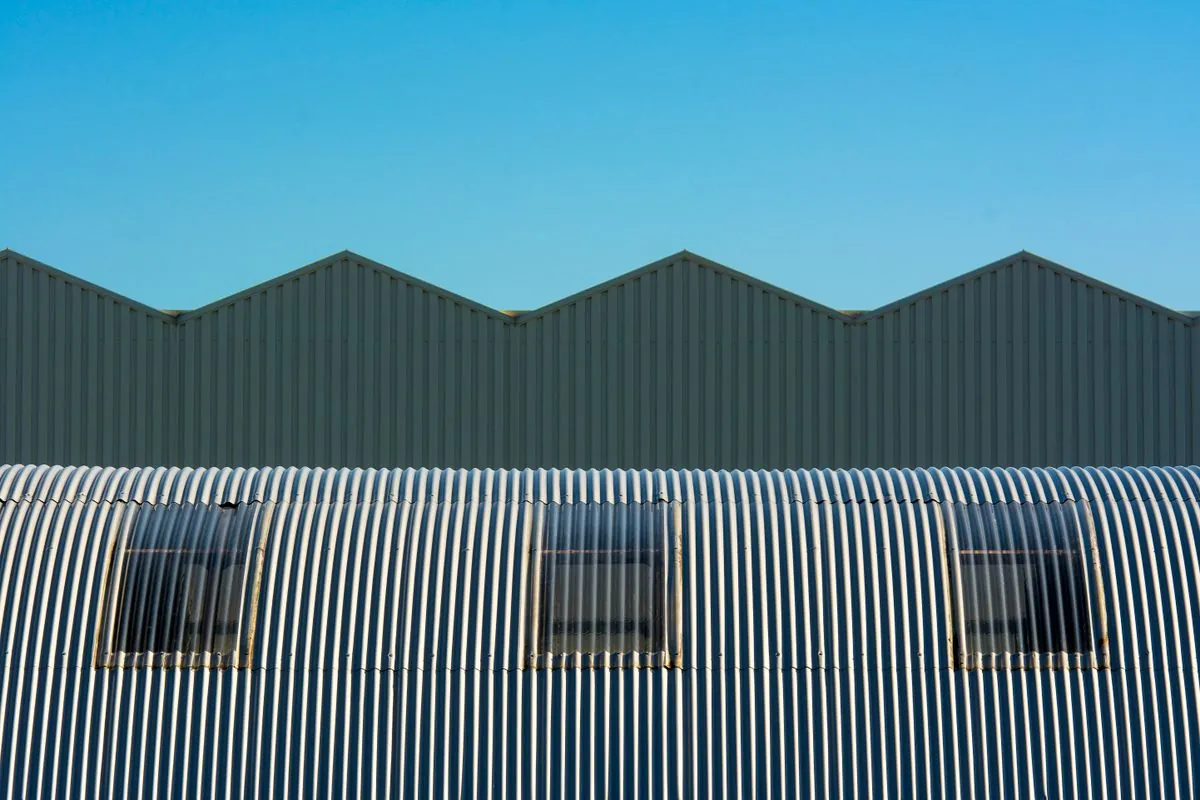
Sawtooth industrial roof with corrugated metal panels against a blue sky
Commercial Roof Coating

Commercial Roof Coating in Buckeye, AZ

Commercial roof coating in Buckeye, AZ: silicone and acrylic restoration systems over sound TPO, modified bitumen, built-up, foam and metal roofs, applied after moisture testing and repairs by C-42 licensed roofers.

  • Silicone and acrylic
  • Membrane, foam and metal
  • Moisture testing first
  • Restoration vs replacement

Restoring instead of replacing

Commercial roof coating in Buckeye, AZ is about restoring a roof that is worn but still sound, instead of tearing it off. A restoration coating system goes over the existing membrane, foam or metal after repairs, renewing the waterproof and UV-protective surface. For a building owner it means a fraction of the disruption of a tear-off, and usually a fraction of the cost.

Arizona conditions make coatings especially valuable and especially demanding. Roof surfaces can pass 160 degrees in summer, and a reflective coating keeps them far cooler. But the same sun, and the grit from monsoon dust storms, wears coatings steadily, so the system has to be specified and applied properly.
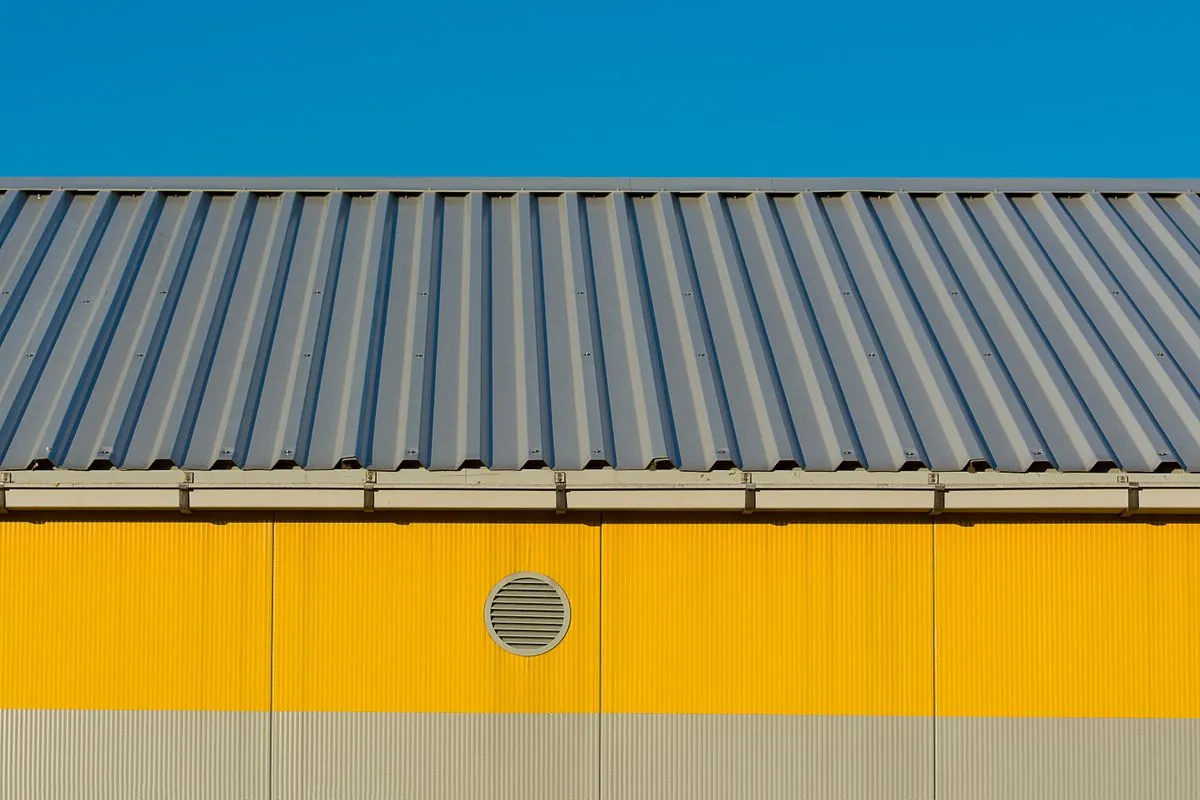
Ribbed metal roof on a commercial building against a clear blue sky
Sound metal roofs are often good candidates for restoration once fasteners, laps and rust are dealt with.

Which roofs are good candidates

Commercial roofs and restoration coatings
Existing roofGood candidate whenWatch for
TPO / single-plyMembrane intact, seams sound or repairable, insulation dryWet insulation, shrinkage at perimeters
Modified bitumen / BURSurface weathered but plies intact and dryBlisters, wet areas, alligatoring
Spray foamFoam dry and firm, coating wornWet or eroded foam over wide areas
MetalPanels sound, rust is surface onlyPerforated panels, failed structure

What a proper restoration includes

Moisture survey

Core cuts or non-destructive testing map any wet insulation. Wet areas are cut out and replaced before anything else, and a roof that is wet over large areas is not restored.

Repairs and reinforcement

Seams, curbs, penetrations, drains and perimeter flashings get repaired and reinforced, because those are where coatings fail first if the details underneath are weak.

Cleaning

Buckeye roofs collect dust from every storm. A coating applied over dust bonds to the dust. Thorough cleaning is part of the specification, not a nicety.

Coating to thickness

The system is applied at the specified rate, with extra at seams and details. The quote should name the product and the thickness so it can be checked.

Questions to ask on a coating proposal

  • Was moisture testing done, and where are the wet areas?
  • What repairs are included before coating?
  • Which product, what thickness, and how many coats?
  • What does the warranty cover, who issues it, and what maintenance does it require?
  • How will rooftop equipment, drains and foot-traffic paths be handled?
  • What does the coating choice mean for future recoats?

Read commercial roof coating vs replacement, and see commercial roof repair, commercial roofing, the service area, or request an assessment.

Coating each roof type

Over TPO and other single-ply

Single-ply restorations start with seams: every seam is checked, and open or weak seams are rewelded or reinforced before coating. The membrane is cleaned thoroughly, often primed for adhesion, and the coating applied with reinforcement at seams, curbs and penetrations.

Over modified bitumen and built-up roofs

Asphalt-based roofs are checked for blisters, splits and wet areas. Blisters are cut and repaired, loose granules and gravel removed as the system requires, and a primer or base coat used where the asphalt could bleed through a coating.

Over spray foam

On commercial foam roofs, a restoration is really a heavy-duty recoat with repairs: damaged foam is cut out and refilled, and the coating rebuilt to thickness. In the Valley, foam coatings are typically renewed about every 5 to 7 years, per a Phoenix roofer's guide.

Over metal

Metal restorations focus on fasteners, laps and rust: fasteners replaced or encapsulated, laps and seams reinforced with fabric or tape systems, rust treated and primed, and the whole roof coated.

Timing a restoration
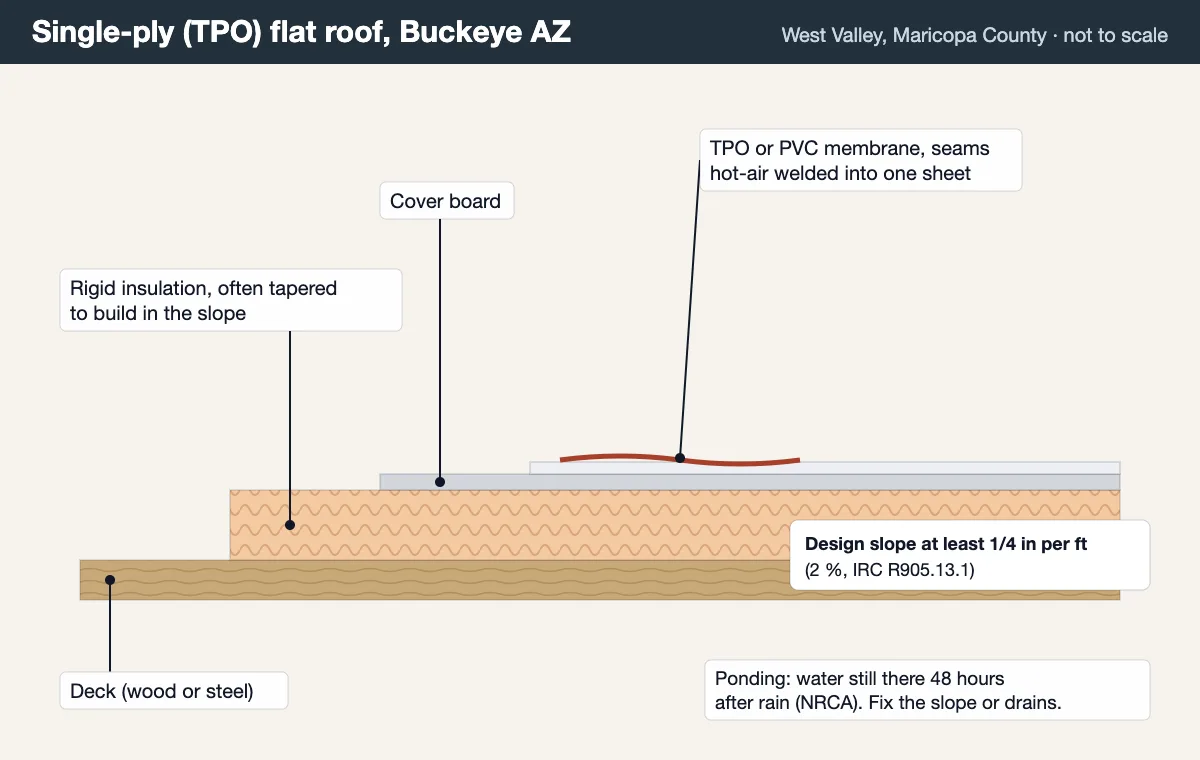
Single-ply TPO flat roof diagram: deck, tapered insulation, cover board and welded membrane, with the 1/4 inch per foot minimum slope
Most coatings go over an existing single-ply, built-up or foam roof. The drawing shows a single-ply roof: the coating only works if the membrane underneath is dry and the roof still drains at least 1/4 inch per foot. Not to scale.

The cheapest restoration is the one done while the roof is still dry. Every year a worn commercial roof goes without attention, more water gets into the insulation, and the share of the roof that must be cut out before coating grows. Past a certain point, the honest answer flips from restoration to replacement.

Why restoration timing matters
When the roof is assessedLikely outcome
Surface worn, insulation dryClean, repair details, coat
Some isolated wet areasReplace wet areas, then coat
Wet insulation over large areasReplacement, not restoration

Disruption and scheduling

Restoration is far less disruptive than a tear-off: the roof stays in place, there is little debris, and the building interior is rarely affected. The main planning points are rooftop access, protecting rooftop equipment and air intakes from overspray and fumes, and scheduling around weather. Coatings need dry conditions to cure, so the June 15 to September 30 monsoon window is best avoided for the coating stage.
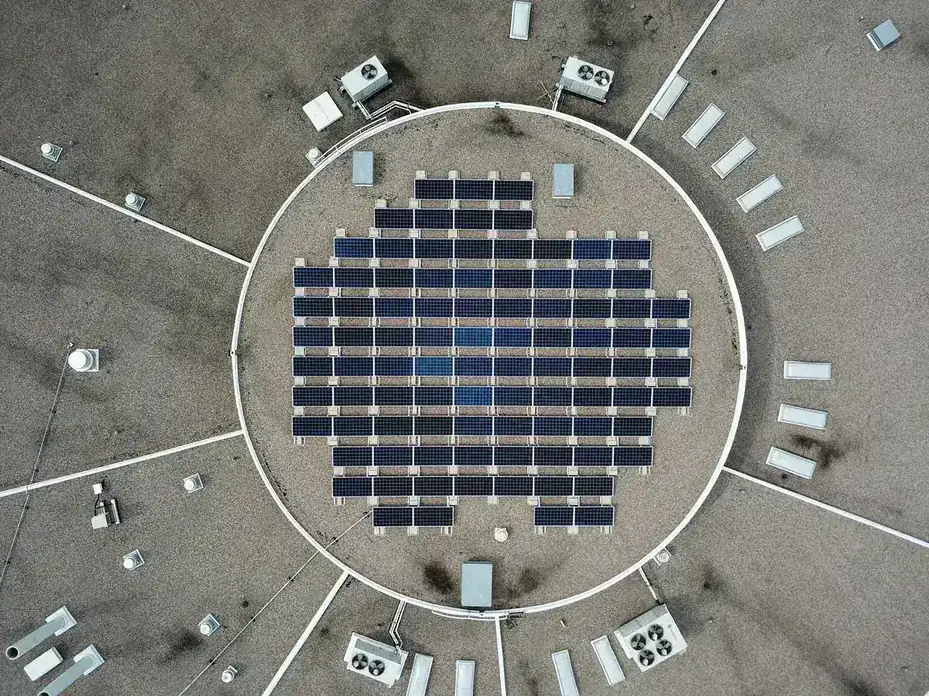
Top-down view of a commercial flat roof with rooftop units and a circular solar array
A flat commercial roof with units and solar. Restoration keeps the existing roof in place and adds a reflective, waterproof surface.

Silicone or acrylic on a Buckeye commercial roof

Silicone and acrylic are the two restoration chemistries most often proposed on Buckeye commercial roofs, and each has a natural home.

Choosing a restoration chemistry
ConsiderationSiliconeAcrylic
Roofs with ponding waterGenerally preferredLess suited where water sits
Foam roofs on a recoat cycleUsed, but future coats must be compatibleCommon on Valley foam recoats
Dirt pickup and reflectivity over timeVaries by product; keep the roof cleanVaries by product; keep the roof clean
Future recoatsGenerally silicone over siliconeRecoatable with compatible products
First costUsually higherUsually lower

General characteristics. Product data sheets and the manufacturer's system for your substrate decide the specification.

Because the first coating limits what can go over it later, the choice is really a decision about the roof's next twenty years of maintenance, not just this project.

How a commercial roof is restored
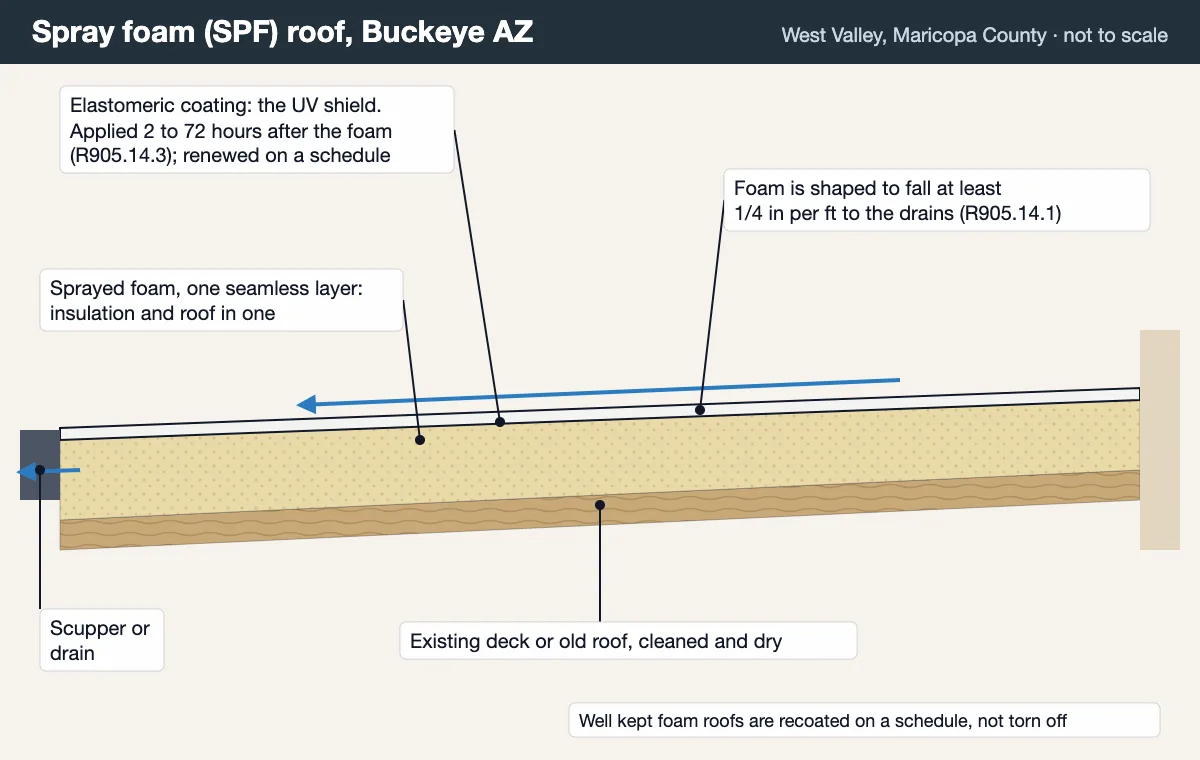
Spray foam roof diagram: foam sprayed over the deck, sloped to a scupper, under an elastomeric coating
A spray foam (SPF) roof is one seamless layer of foam, shaped to drain at least 1/4 inch per foot and protected by a coating that has to be renewed on a schedule. Not to scale.
  1. Survey and moisture test. The roof is surveyed and tested for wet insulation; wet areas are mapped.
  2. Remove wet material. Wet insulation and failed sections are cut out and replaced with dry material.
  3. Repair details. Seams, flashings, curbs, penetrations and drains are repaired and reinforced.
  4. Clean and prime. The roof is cleaned of dust and contaminants and primed where the coating system requires it.
  5. Apply the coating system. Base and top coats are applied to the specified thickness, with reinforcement at seams and details.
Request a Free Roof Quote

Four fields. A licensed Arizona roofer looks at the roof on your property in Buckeye and sends back a written quote with the ROC license number on it. Nothing is committed until you say so.

Commercial roof coating in Buckeye, AZ: frequently asked questions

What is a commercial roof restoration coating?

A fluid-applied coating system, typically silicone or acrylic, applied over an existing commercial roof after repairs and cleaning, to restore waterproofing and UV protection and extend the roof's life. It is used over sound membranes such as TPO, modified bitumen and built-up roofs, over spray foam, and over metal.

Is a coating cheaper than a new commercial roof?

Usually far cheaper, because the existing roof stays in place: no tear-off, no disposal, less disruption to the building. The catch is that the roof must be dry and structurally sound. A restoration on a wet roof is money spent hiding a problem.

How do you know if a roof can be coated?

By inspecting it and testing for moisture. Core cuts or non-destructive moisture surveys show whether insulation beneath the membrane is wet. Areas of wet insulation are cut out and replaced before coating; if wet areas are widespread, replacement is the honest recommendation.

Silicone or acrylic for a commercial roof in Buckeye?

Both are used. Silicone handles ponding water and weathering well and is common in commercial restoration; acrylic is widely used on foam and is often lower cost. Compatibility with the existing surface, the roof's drainage, and future recoat plans decide it, since silicone generally needs silicone over it later.

Can a metal warehouse roof be coated?

Yes, often very successfully. Fasteners are replaced or sealed, rust is treated, seams and laps are reinforced, and the coating system is applied over the whole roof. It can extend a sound but weathered metal roof without the cost of new panels.

Does coating a commercial roof need a permit in Buckeye?

Coating is generally treated as maintenance rather than a re-roof, but scope matters, especially if insulation or deck is being replaced. Commercial re-roofs fall outside Buckeye's residential-only re-roof exemption. Confirm with the City of Buckeye Development Services for your project.

When should a commercial roof be coated in Buckeye?

Outside the June 15 to September 30 monsoon, so coatings can cure without afternoon storms, and before the roof deteriorates to the point where replacement is the only option. Spring and autumn are ideal.

How long does a commercial roof restoration last?

It depends on the coating system, the thickness applied, the roof underneath and how it is maintained; manufacturers' warranty terms give a guide for each system. Restorations are usually designed to be renewed, so a well-maintained roof can be recoated again at the end of the coating's life rather than torn off.

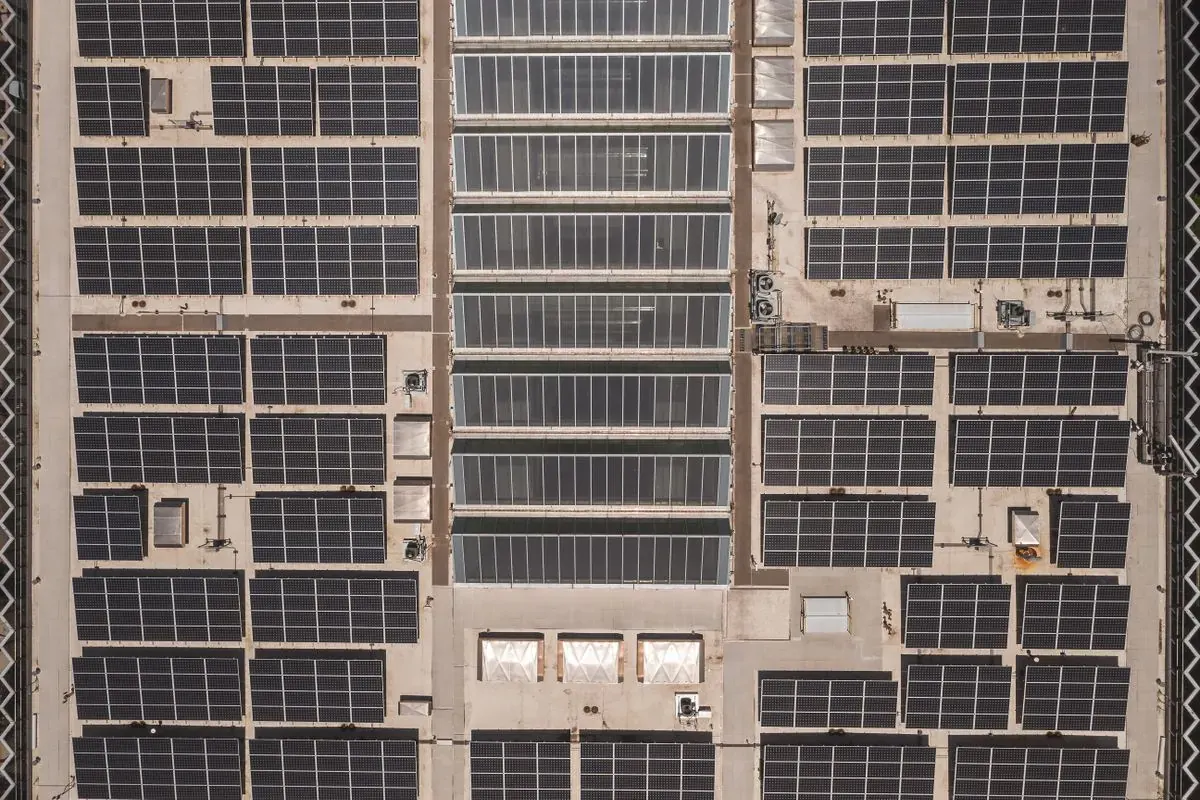
Aerial view of a large flat warehouse roof with rows of solar panels and rooftop equipment
A large flat warehouse roof with solar rows. On roofs this size, drainage and the condition under the arrays decide most repair budgets.
Will coating stop the leaks in my commercial roof?

Only after the leaks are found and repaired and any wet material is removed. The coating then protects the repaired roof. A coating applied over unrepaired leaks or wet insulation hides the problem.

Can a restoration coating qualify for a warranty?

Many coating systems carry manufacturer warranties when installed by an approved contractor to the manufacturer's specification, often with maintenance requirements. Ask who issues the warranty, what it covers, and what inspections or maintenance it requires.

Do we need to move rooftop equipment for a coating?

Usually not. Coatings are applied around curbs and units with careful detailing at each one, and equipment is protected from overspray. Units may need to be shut down briefly where air intakes are close to the work, which is planned with building management.

How is a restoration coating tested before the full roof is done?

Manufacturers commonly recommend adhesion testing on the existing surface, applying small test patches and checking how well they bond after curing, before committing to the whole roof. It confirms that the cleaning, primer and coating chosen will bond to that specific roof.

Does a restoration coating add weight to the roof?

Very little compared with a recover or a new roof system, because a coating is a thin fluid-applied layer rather than new insulation and membrane. That is one reason restoration suits buildings where adding a recover layer would be difficult.

Can a coating be applied around rooftop solar arrays?

Often, where there is access around and under the racking. Where the roof beneath the array has failed, the panels may need to come off so the roof can be repaired properly. The survey should cover the area under the array as well as the open roof.

How do we budget for future recoats?

Ask the roofer for the expected recoat interval for the system you choose, then plan for it like any other building maintenance. On spray foam, a Phoenix roofer's guide puts the realistic recoat schedule at about every 5 to 7 years.

Can your roof be restored?

A C-42 licensed roofer surveys and moisture-tests the roof, then scopes restoration or replacement in writing.

Get a Free Quote
Get a Free Roof QuoteFree written priceWhat It Costs