Roofing in historic downtown Buckeye
Roofing in historic downtown Buckeye, AZ is a different job from roofing in the newer master-planned communities. The original town grew around Monroe Avenue, and its homes and buildings span more than a century, with roofs that have often been replaced, layered or changed over the years.
That history shows up on the roofs. Downtown has shingle, flat and metal roofs alongside tile on newer infill homes, and a roofer here should expect older decks, extra layers and details that do not match current practice.
Roof types downtown
| Roof | Where you see it | What to watch |
|---|---|---|
| Asphalt shingle | Older houses and garages | Granule loss, curling, multiple layers |
| Flat foam or built-up | Houses with flat sections, older commercial buildings | Coating wear, cracking, ponding, wet areas |
| Metal | Outbuildings, shops, some homes | Fasteners, rust at laps and edges |
| Tile | Newer infill homes | The felt beneath the tile |
| Parapet flat roofs | Commercial buildings on Monroe Avenue | Base flashing, coping, drains, rooftop units |
Layers, decks and material changes
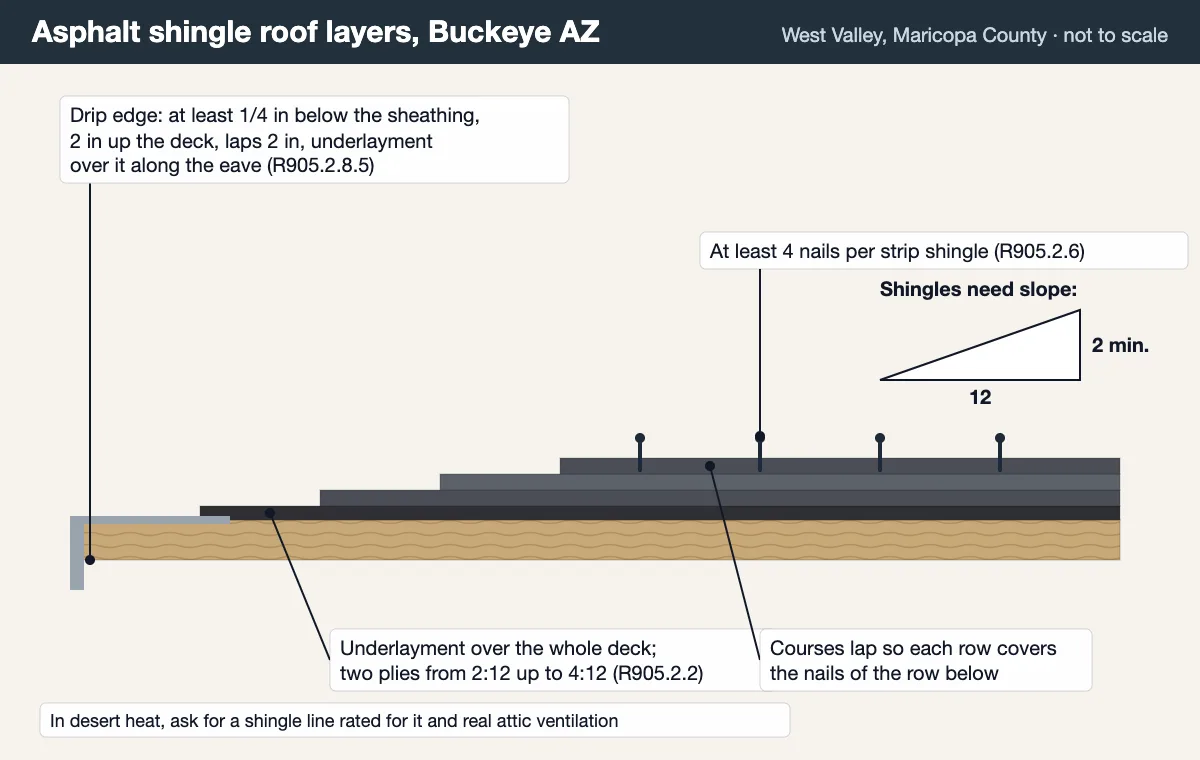
Older Buckeye roofs often carry more history than you can see. A shingle roof may sit over an earlier shingle roof; a flat roof may have been coated or recovered more than once. The City's like-for-like exemption allows no more than one shingle layer over existing shingle, so a roof that already has two needs a tear-off.
- Count the layers at the roof edge before deciding on an overlay
- Expect deck repairs on older homes once old roofing comes off
- A change of material, such as shingle to tile or metal, needs a City permit
- Switching to tile needs a structural check for the added weight
- Older flat roofs should be moisture-checked before any coating
Downtown commercial roofs
Commercial roofs along Monroe Avenue and the surrounding streets are commercial roofing work, done by roofers with a C-42 or CR-42 license, and commercial re-roofs need a permit because the City's exemption covers residential roofs only. See commercial roof repair.
Monsoon on older roofs
Older roofs feel the monsoon first. The National Weather Service defines the season as June 15 through September 30, with severe storms bringing winds of 60 mph or greater. A spring check catches the loose shingle, tired coating or failed flashing before the storms do. See shingle roofing, flat roof repair, the service area, or request a quote.
Historic buildings and older construction
Downtown Buckeye includes buildings of real historic interest. The Buckeye Union High School A-Wing is listed on the National Register of Historic Places, and a plaque at the Buckeye Valley Museum records a two-ton safe from the old Buckeye train station, which began operating in 1910. Roofing on older buildings like these calls for care with original materials and details.
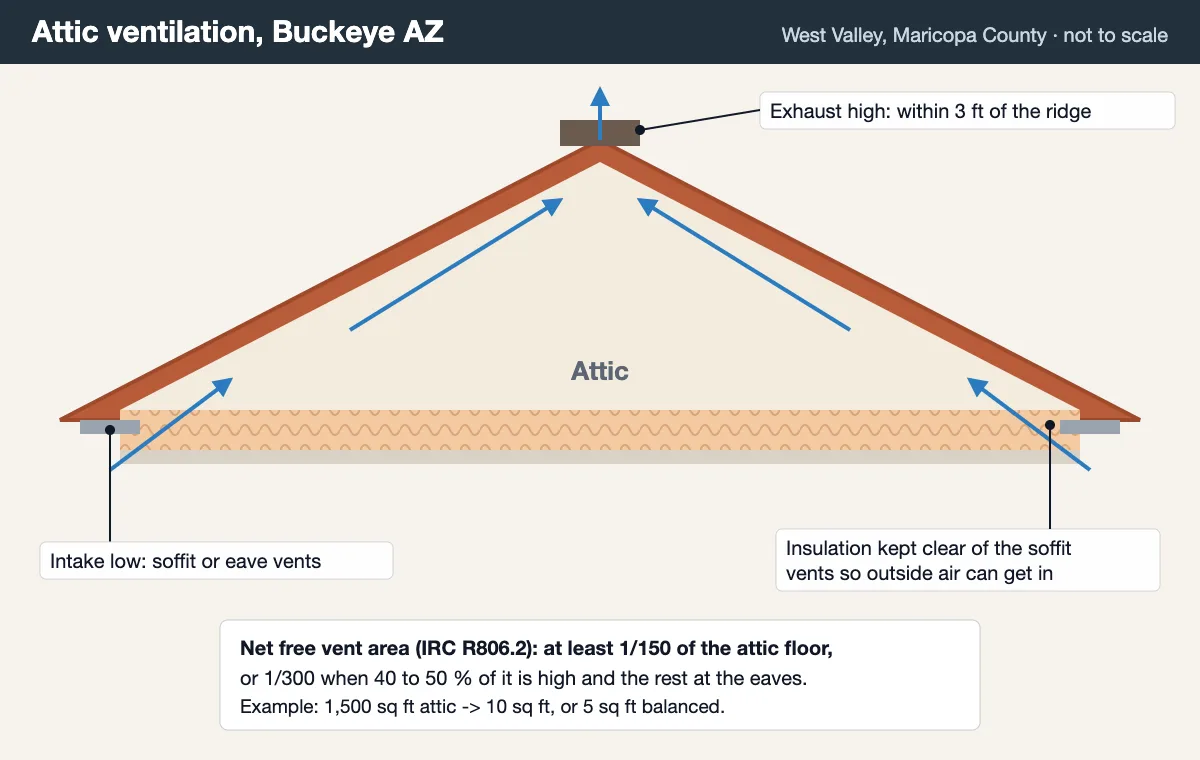
On ordinary older houses, the practical issues are more common: board sheathing instead of plywood, rafters that have sagged over decades, poor attic ventilation, and old flashings tucked into stucco or brick. A roofer should allow for deck repairs in the quote and explain what was found once the old roofing comes off.
What older-home re-roofs cost
| Roof | Published cost |
|---|---|
| Architectural shingle (Arizona 2026 guide) | $4.50 to $7.00 per sq ft installed |
| Buckeye shingle estimate, 1,282 sq ft roof | $6,483 to $8,274 |
| Spray foam flat roof (Arizona 2026 guide) | $3.50 to $7.00 per sq ft |
| Built-up roof (Phoenix-area guide) | $5.00 to $8.00 per sq ft |
| Tear-off disposal (Phoenix-area guide) | $1.00 to $3.00 per sq ft |
A town history written in its roofs
Downtown Buckeye is the oldest part of the city, and its roofs show it. The Buckeye Canal was dug from 1884 to 1886 and named by Malie M. Jackson after his home state of Ohio; the town was founded in 1888, grew up along Monroe Avenue, was incorporated in 1929, and became a city on January 1, 2014.
| Year | Event | What it means on the roof |
|---|---|---|
| 1884 to 1886 | Buckeye Canal dug | The farming town that followed set the original street grid |
| 1888 | Town founded | Some of the oldest buildings in the West Valley |
| 1929 | Incorporated | Early 20th-century homes and storefronts with decades of re-roofs |
| 2014 | Became a city | Downtown now sits beside rapid new growth |
What a roofer checks on an older downtown home
- How many layers are already on the roof, since extra layers add tear-off cost
- Whether the deck is old board sheathing or later plywood, and its condition
- Ventilation, which older roofs often lack
- Flashing at chimneys, parapets and additions built in different decades
- Flat or low-slope sections over porches and additions
How an older roof is re-roofed
- Understand the roof's history. On older homes and buildings, the roofer checks how many layers are present, what the deck is, and whether material has changed over the years.
- Inspect. Covering, flashings, parapets, drains and the deck are checked, with attention to older details.
- Scope and permit. Like-for-like residential re-roofs are exempt; material changes and commercial work need a City permit.
- Tear-off and deck repair. Old layers are removed and the deck repaired before new roofing goes on.
- New roof and details. The new roof is installed with new flashings, and parapet and drain details rebuilt where needed.