Tile roof repair on Buckeye homes
Tile roof repair in Buckeye, AZ is the most common roofing job in the city, because concrete tile is the roof on most of the homes Buckeye built after 2000. The repairs themselves are familiar: cracked tiles, tiles that have slipped out of their course, ridge and hip pieces loosened by monsoon wind, and leaks at valleys, walls and pipes.
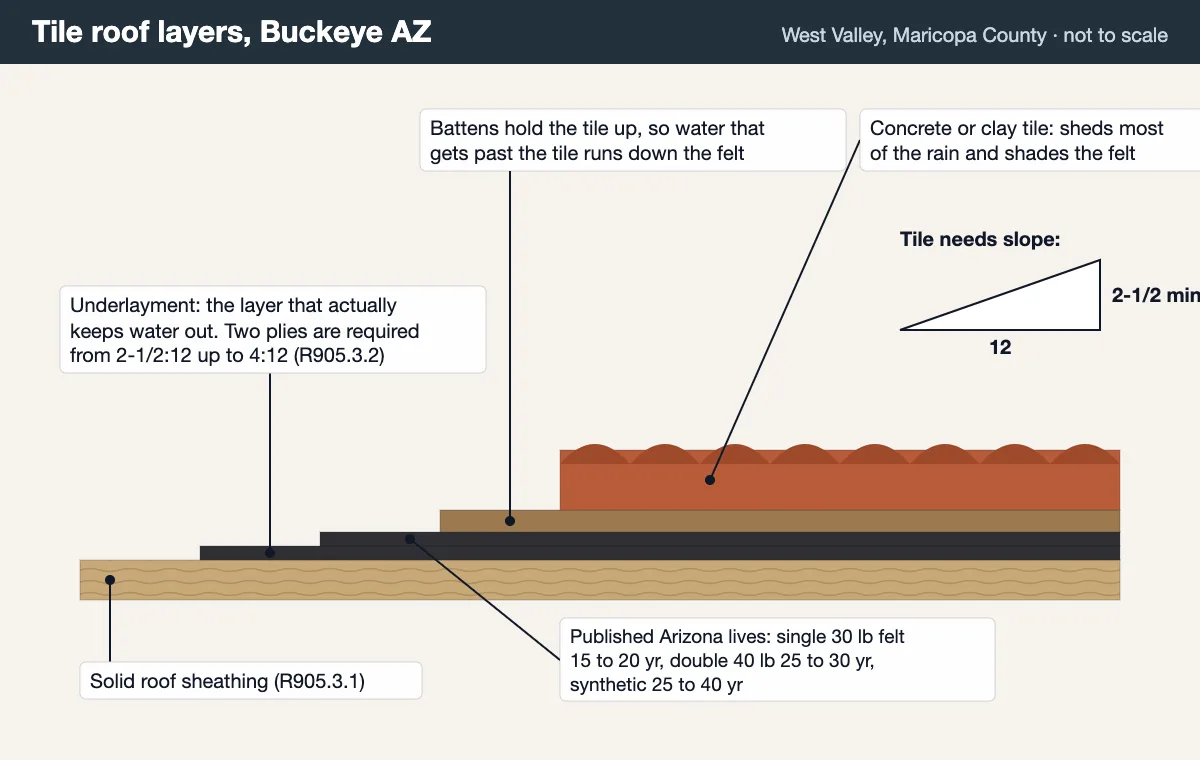
What makes tile different from every other roof is that the tile is not the waterproof layer. It sheds most of the water and shades the felt or synthetic underlayment beneath it, and that underlayment keeps the house dry. So every honest tile repair includes a look at the felt under the damaged area.
If that felt is sound, the repair is simple and lasting. If it is brittle and cracked, as single-layer 30-pound felt usually is after its published Arizona life of 15 to 20 years, the repair is a stopgap, and the roofer should say so and price an underlayment replacement alongside it.

The tile damage roofers see most in Buckeye
Cracked and broken tile
Most cracked tile on Buckeye roofs comes from foot traffic: solar crews, satellite installers, HVAC technicians on roof-mounted units, and anyone hanging lights. Tile is strong in compression on its supported end and brittle in the middle of its span. Monsoon debris and occasional hail break tile too.
Slipped tile
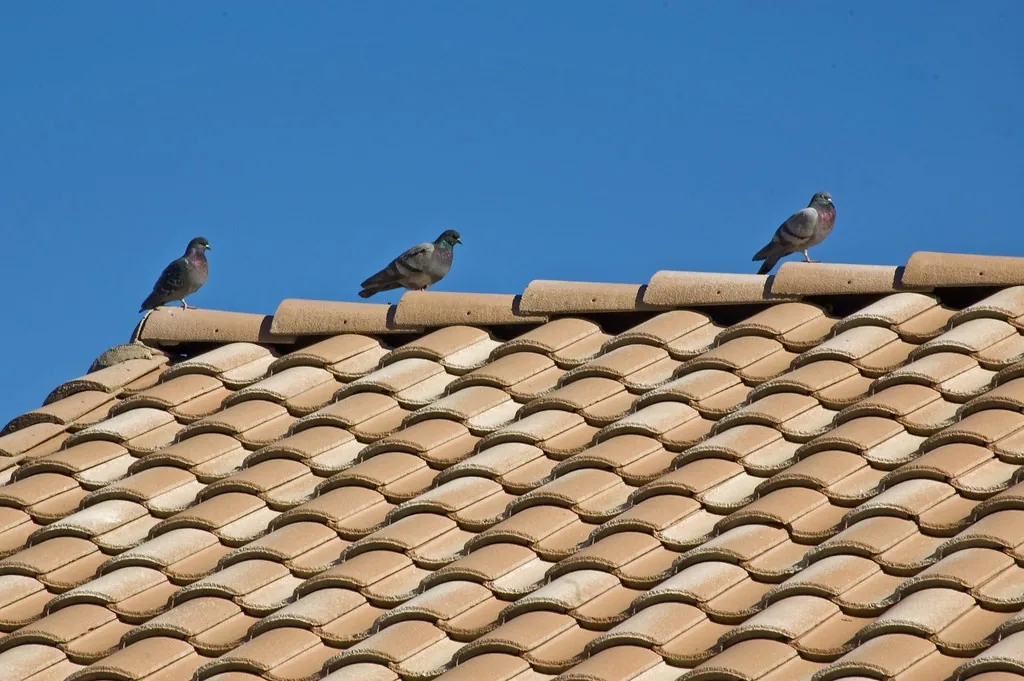
Tiles slide down the slope when their fastener or nib lets go, leaving a gap that exposes the felt to sun and water. A single slipped tile is a short job; a row of them along an eave after a storm usually means wind got under the course.
Loose ridge and hip tile
Ridge and hip pieces sit on the most exposed lines of the roof. National Weather Service severe thunderstorm warnings cover winds of 60 mph or greater, and those winds lift ridges first. Resetting them means rebedding and mechanically fastening them, not just mortaring them back.
Valleys, walls and penetrations
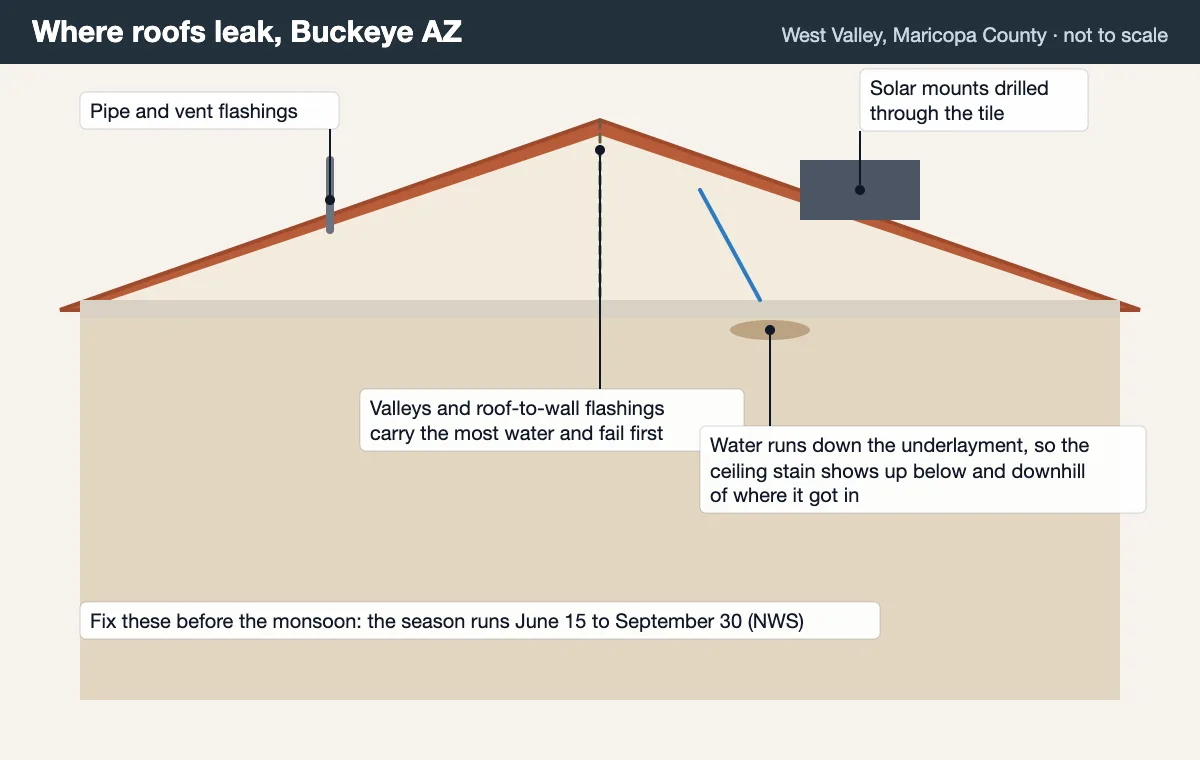
Valley metal, wall flashing and pipe flashings sit beneath the tile and carry the most water. Repairs here mean lifting the tile on both sides, renewing the metal and the felt beside it, and relaying.
| What the roofer finds under the tile | What it means |
|---|---|
| Felt flexible and intact around the damage | A tile repair will last; fix and move on |
| Felt brittle only in the damaged spot | Local felt repair plus tile reset |
| Felt brittle on every slope that is lifted | The underlayment has failed; repair only buys time |
| Battens rotted or deck soft | Wider repair needed before tile goes back |
| Tile itself breaking widely when handled | Consider a new tile system rather than a reset |
Matching tile on an older roof
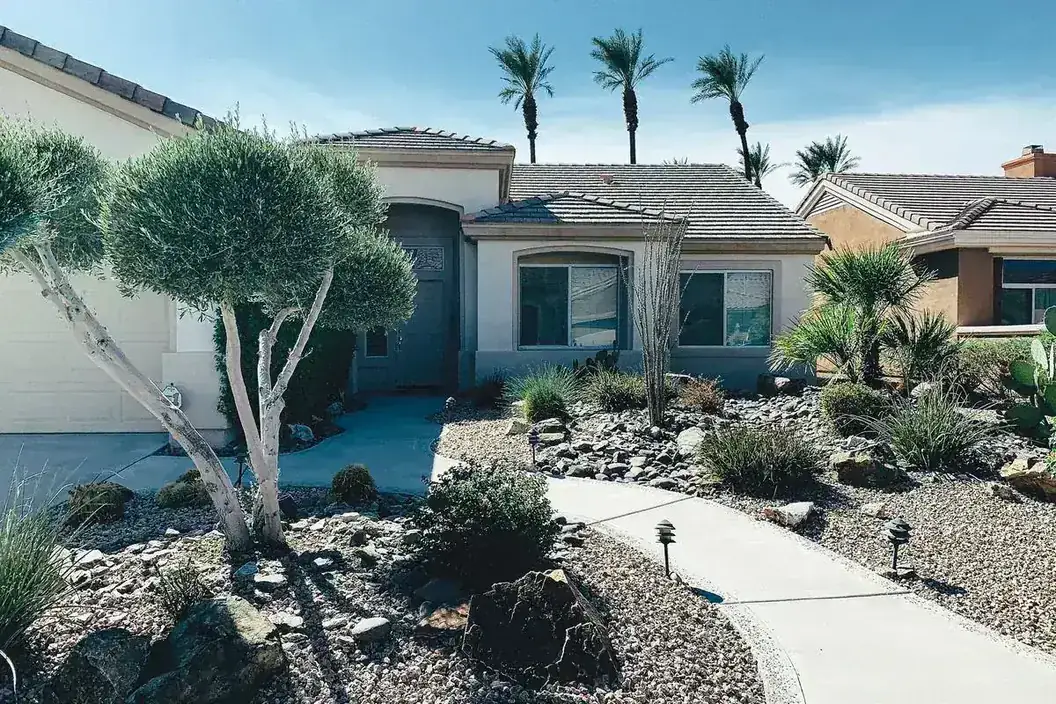
Matching tile is mostly a color question. Concrete tile fades in strong sun, so a new tile of exactly the right profile can look brighter than its neighbors for some time. Good roofers handle that by pulling a weathered tile from a hidden slope for the visible repair.
Profile is the harder problem. Tile shapes are discontinued over time, and a 2004 tile may no longer be made. Salvaged tile from suppliers, or from other parts of your own roof, fills the gap. If a repair needs a large number of tiles in a profile that cannot be found, that is a signal to talk about the whole roof.
Preventing tile damage
Most tile damage on Buckeye roofs is preventable, because so much of it comes from people rather than weather.
- Ask any solar, satellite or HVAC contractor how they will walk the tile, and photograph the roof before they go up
- Have loose ridge, hip and eave tile reset and fastened before June 15 and the start of the monsoon
- Keep valleys and roof-to-wall junctions clear of the debris dust storms leave behind
- Do not pressure-wash a tile roof; it drives water under the tile and can strip surface coatings
- Book a roof inspection every year or two, and after any storm with wind damage nearby
See roof maintenance, tile roofing, the service area, or request a tile repair quote.
Tile roofs across Buckeye's communities
The age of a Buckeye tile roof usually tracks the year its community started building, and that age is the best single predictor of whether a tile repair will hold. These start dates come from published community histories; individual homes were built across many years after them.
| Community | Building began | What it means for tile repairs now |
|---|---|---|
| Sundance | 2002 (Hancock), Meritage from 2005 | Original felt on the earliest homes is past its 15 to 20 year Arizona life |
| Verrado | Opened 2004 | Early villages are in the re-felt window; later ones are younger |
| Tartesso | 2005 boom, about 3,000 lots; building resumed late 2016 | Two very different roof ages in one community |
| Sun City Festival | 2006 to present | First homes are at 20 years; newer phases are much younger |
Sources: 55places.com community profiles, Verrado and Tartesso histories, West Valley View. Felt life from a Phoenix roofer's published Arizona underlayment table.
On a roof from the early phases of any of those communities, a roofer should assume the felt is near the end of its life until a lifted tile proves otherwise. On a newer phase, a tile repair is far more likely to be the whole answer. See the pages for Verrado, Sundance, Tartesso and Sun City Festival.
What a tile repair costs, and what to compare it with
A tile repair in Buckeye is priced by the job, because resetting three slipped tiles and rebuilding a valley are not comparable amounts of work. There is no reliable published Buckeye price list for tile repairs, so the useful benchmark is the bigger job a repair might be postponing.
| Job | Typical published cost |
|---|---|
| Underlayment replacement, tile reused (Phoenix-area size table) | $7,000 to $10,000 |
| Tile-over, tile reused (Arizona 2026 guide) | $9,000 to $17,000 |
| Full new concrete tile system (Arizona 2026 guide) | $14,000 to $28,000 |
| Full new clay tile system (Arizona 2026 guide) | $20,000 to $36,000 |
Sources: a Phoenix roofing contractor's tile underlayment guide; Arizona roof replacement cost guide, May 2026.
If a run of repairs over two or three years starts to approach the cost of an underlayment replacement, the roof is telling you something. A written quote that prices the repair and the re-felt side by side lets you make that call with real numbers.
Repairing clay tile versus concrete tile
Clay and concrete tile are repaired the same way in principle, lifted, the felt checked and the tile reset or replaced, but they behave differently in the hand. Clay tile keeps its fired color, so color matching is usually easier; it can also be more brittle in thin sections and is more expensive to replace. Two-piece clay barrel tile, used on some custom homes, has caps and pans that have to be handled as a pair.
Concrete tile is heavier per piece and fades over time in strong sun, so the color match is the main challenge. Both rely entirely on the underlayment beneath them to keep water out, which is why the felt check is part of every repair regardless of material.
Valleys and wall junctions on tile roofs
Valleys and roof-to-wall junctions cause more tile roof leaks than any single tile ever does. A valley carries the water from two slopes into one channel of metal beneath the tile; if that metal has corroded, if the felt beside it has aged, or if dust and debris have dammed it, water backs up under the tile edges. Wall junctions rely on flashing tucked behind the stucco and over the tile, and stucco cracks and settling open gaps there.
Repairing either one properly means lifting the tile on both sides, renewing the metal and the felt beside it, and relaying, which is why these repairs take longer and cost more than resetting a tile. Clearing valleys of the debris that dust storms leave is the cheapest prevention there is.
How a tile roof repair is done
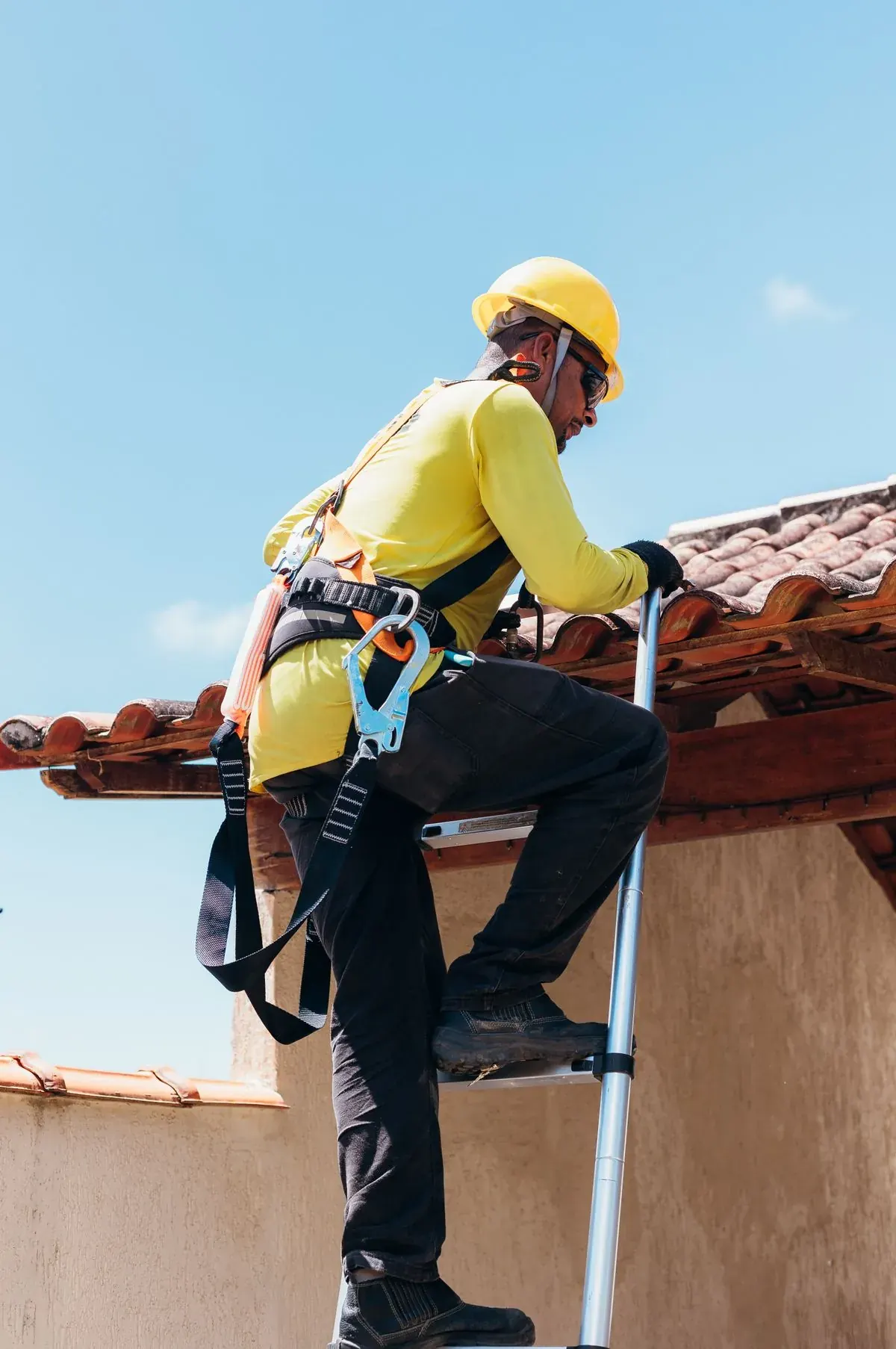
- Find the damaged tile and the felt beneath. The roofer locates cracked, slipped or missing tile and lifts the surrounding pieces to check the felt and battens below for water damage.
- Source a matching tile. A weathered tile from a hidden slope, a salvaged tile or a new tile of the same profile is chosen, with the visible elevations given the best color match.
- Repair the layer underneath if needed. Torn or brittle felt in the area is patched or replaced, and damaged battens are renewed, before any tile goes back.
- Reset and fasten. Tile is relaid in its course and fastened, ridge and hip pieces are rebedded and secured, and flashing at the repair is renewed.
- Check the rest of the roof. While on the roof, the roofer looks for other slipped tile, cracked pieces and failing details, and photographs anything that should be on your radar.