Buckeye's industrial corridor
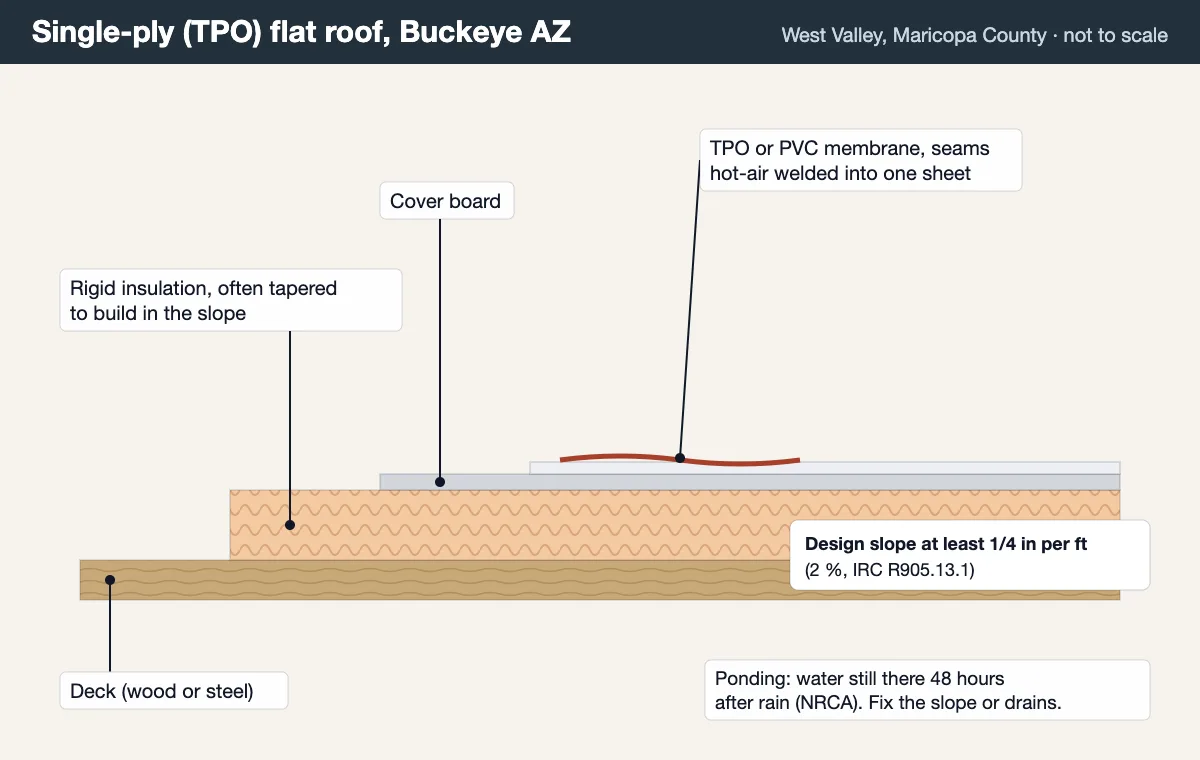
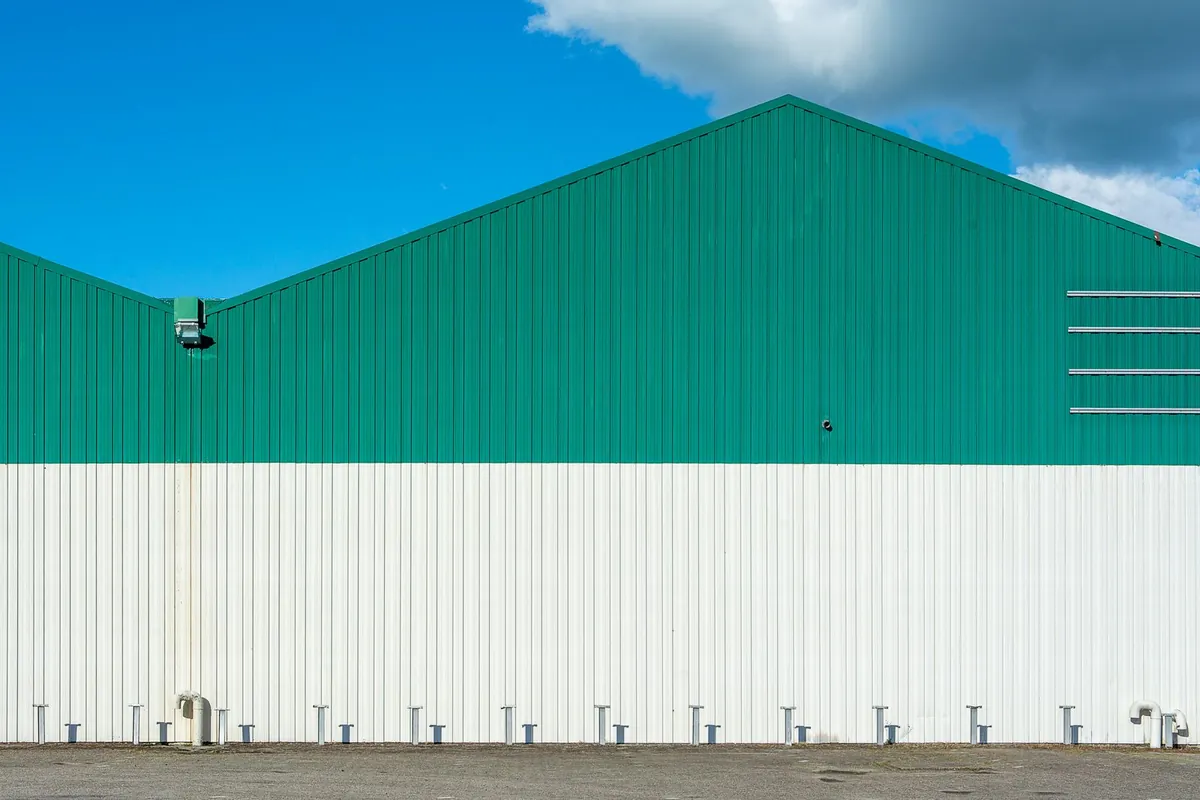
Industrial and warehouse roofing in Buckeye, AZ is driven by the I-10 corridor. Interstate 10 runs through the center of the city, and its frontage is filling with distribution, logistics and industrial buildings whose roofs are measured in acres rather than squares.
Roofs at that scale fail at the same places smaller roofs do, perimeters, penetrations, drains and seams, but a single failure can affect inventory, equipment and operations across a huge floor area.
Roof systems on industrial buildings
| System | Typical buildings | Watch for |
|---|---|---|
| TPO single-ply | Newer logistics and distribution buildings | Seams, perimeter attachment, punctures at units |
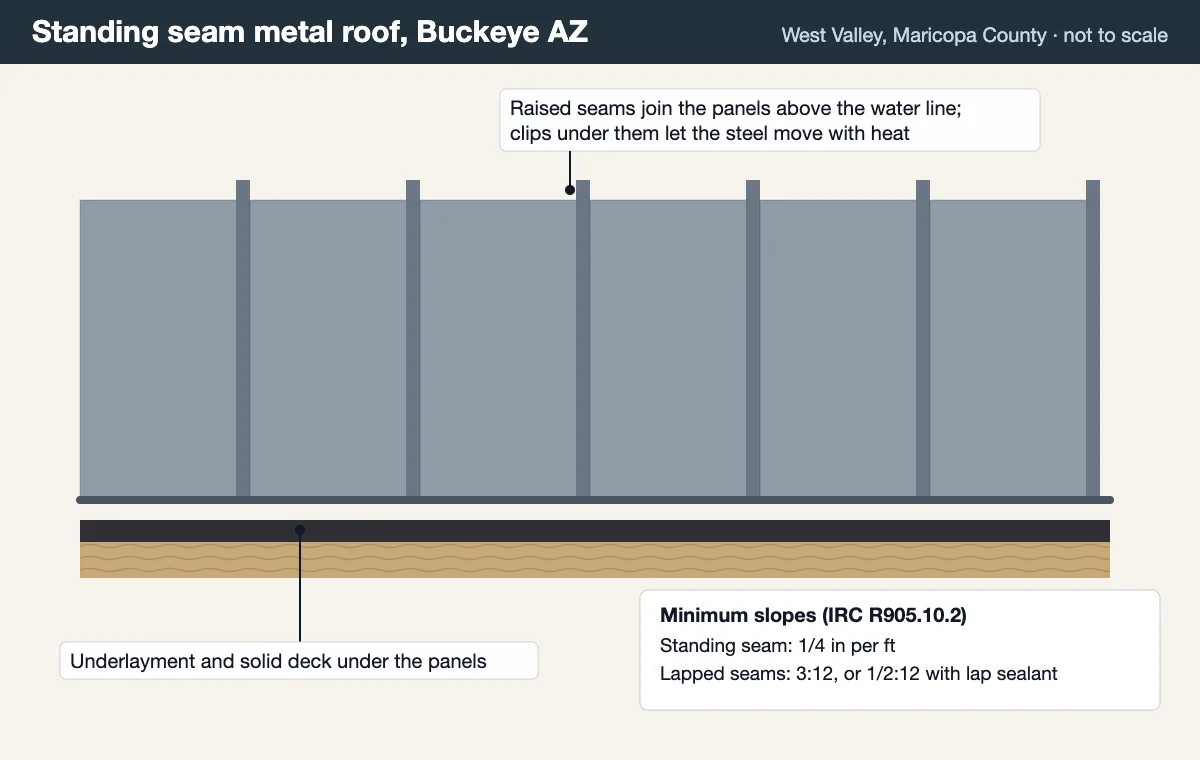
| Standing seam metal | Warehouses, industrial, shops | Clips, trims, penetrations, gutters |
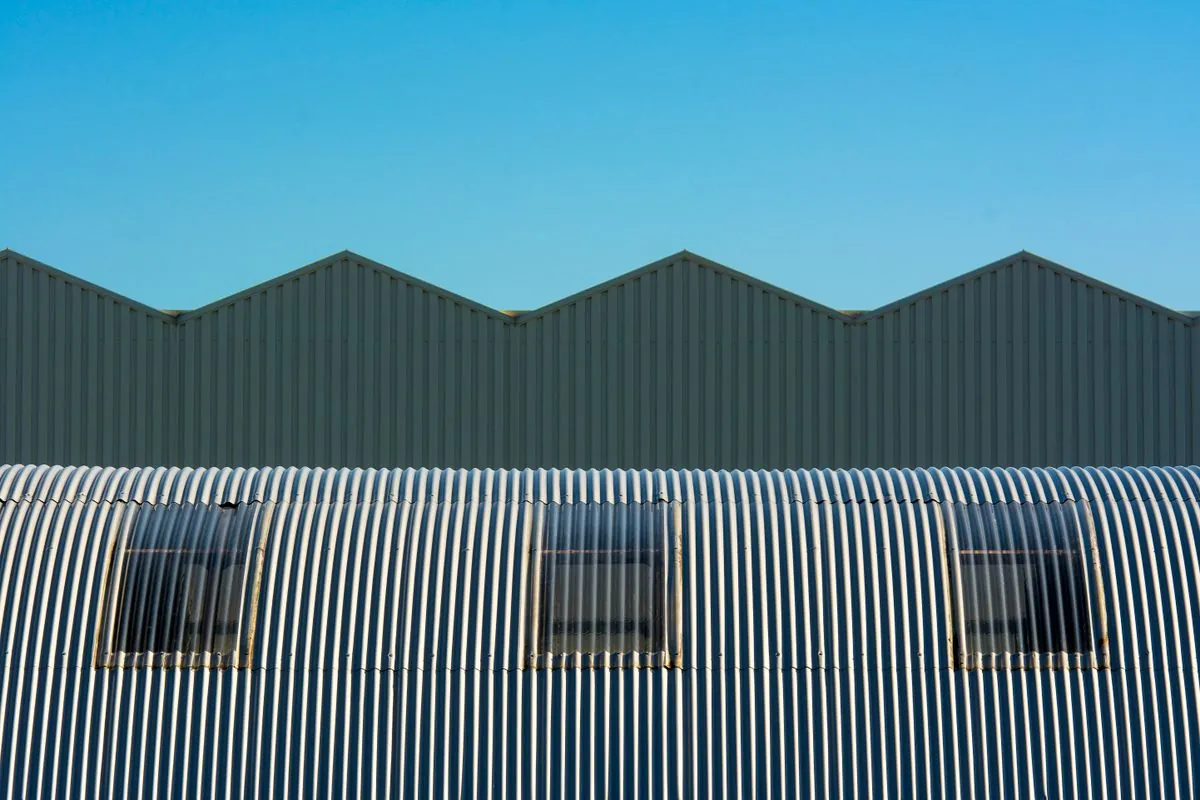
| Exposed-fastener metal panel | Older warehouses, agricultural and storage | Fasteners and washers, laps, rust |
| Spray foam | Mixed industrial and commercial | Coating wear, foot traffic, ponding |
| Modified bitumen / BUR | Older industrial | Blisters, seams, wet insulation |
Moving monsoon water off big roofs
Large roofs collect a lot of water in a short monsoon downpour, and that water has to leave through drains, scuppers and gutters that dust storms may have just filled. National Weather Service dust storm warnings come with gusts of 40 to 60 mph, and the grit ends up on the roof.
- Clear every drain, scupper, gutter and downspout before June 15 and after dust events
- Check overflow scuppers are open and not blocked by debris
- Inspect gutter seams and hangers on metal roofs, which carry heavy flows
- Note ponding areas and plan corrections at the next major work
Skylights and safety
Industrial roofs often carry skylights and translucent panels for daylight. Older plastic panels become brittle in the sun, their curbs and flashings leak, and they are a serious fall hazard. Roof work and inspections on these buildings are planned with fall protection and skylight guarding.
Restoration of older metal
Older panel roofs with surface rust and tired fasteners are often restored with a coating system after fasteners, laps and rust are dealt with. See commercial roof coating, TPO roofing, metal roofing, the service area, or request an industrial roof survey.
Replacing a warehouse roof while it stays open
A warehouse roof replacement in Buckeye is almost always done with the building in use. That changes the job from "take the roof off, put a new one on" into a phased operation, where each day's work area is opened, replaced and made watertight before the crew leaves.
- Divide the roof into sections that can be opened and dried in within a single working day
- Sequence sections around racking, sensitive inventory and loading operations below
- Keep temporary dry-in materials on the roof through the June 15 to September 30 monsoon, when storms can build in an afternoon
- Agree access, crane or hoist positions, staging areas and traffic routes with site management
- Coordinate with rooftop equipment contractors so units are disconnected and reset in step with the roofing
- Communicate the schedule to tenants and staff, especially for any work that brings noise or odour
On many industrial roofs, a recover over a sound, dry existing roof, or a restoration coating, avoids most of that disruption. Moisture testing decides whether either is possible.
Solar arrays and rooftop equipment on warehouses
Large flat warehouse roofs in Arizona are natural sites for solar arrays, and rooftop equipment such as exhaust fans, make-up air units and HVAC adds more penetrations. Every one of those is a detail that has to be flashed into the roof system and that will have to be worked around when the roof is replaced.
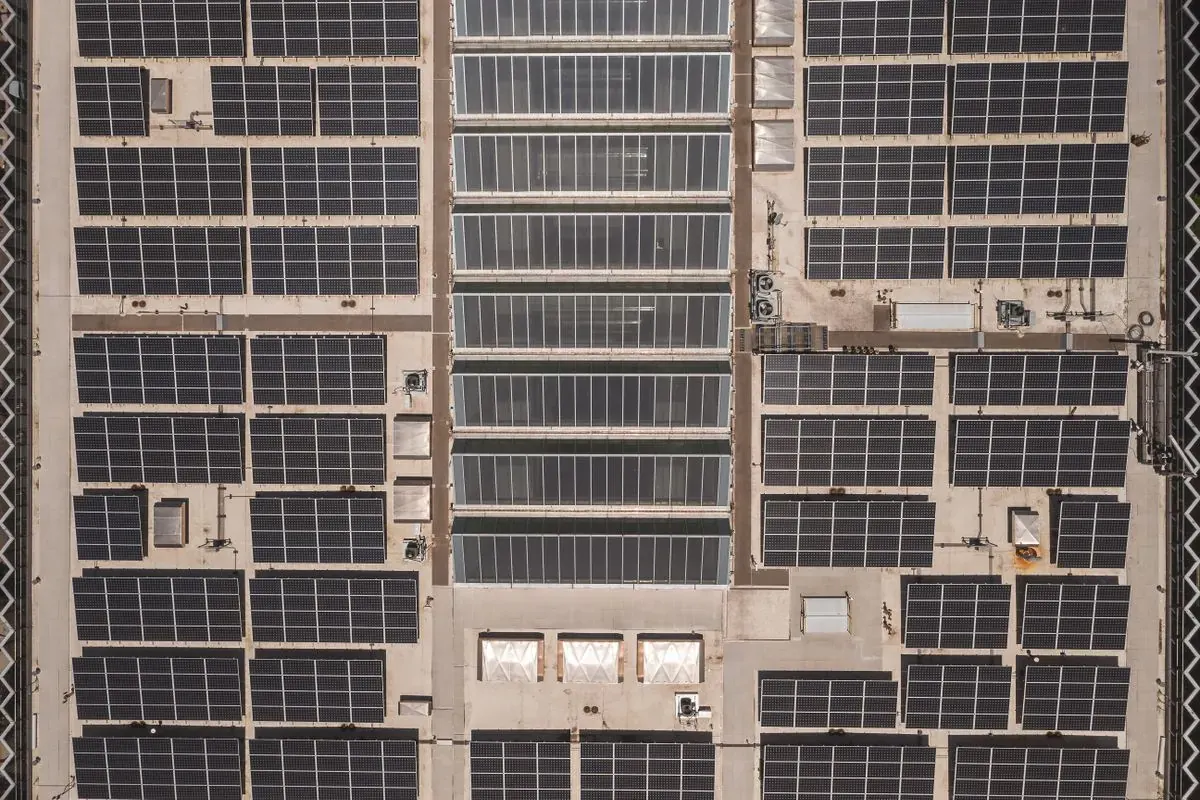
The planning point is simple: if a roof has only a few years of life left, replace or restore it before a solar array goes on top, rather than paying to remove and reinstall the array later. The same thinking applies on homes; see solar panel removal and reinstall.
Treating the roof as a capital asset
For a building owner, the roof is a capital asset with a predictable life, and managing it as one saves money. A roof that is inspected twice a year, kept draining, and restored with a coating while it is still dry can often reach a much longer service life than one that is only looked at when tenants complain about leaks.
| Roof condition | Usual decision |
|---|---|
| Sound, dry, details tired | Repairs and maintenance plan |
| Sound, dry, surface weathered | Restoration coating |
| Mostly dry, isolated wet areas | Replace wet areas, then restore |
| Wet over large areas | Recover where allowed, or full replacement |
| Structural or deck problems | Replacement with structural repairs |
A facility manager's roof checklist
- Spring and autumn inspections, with photographs, by a C-42 licensed roofer
- Drains, scuppers and gutters cleared before June 15 and after every major dust storm
- Walkway pads to every rooftop unit and around service sides
- A rule that equipment contractors report roof damage they cause or find
- Skylight guards and fall protection checked
- Interior ceilings checked under drains and units after big storms
- A file of reports, warranties and as-built roof information
Gutters, downspouts and overflow on large roofs
Many metal warehouses shed water to the eaves into large gutters and downspouts rather than to internal drains. On a long roof, those gutters carry a lot of water in a short monsoon downpour, and hangers, seams and outlets are stressed hard. Undersized or blocked gutters overflow against walls, doors and dock areas.
Clearing them before June 15 and after dust storms, checking seams and hangers, and confirming that overflow paths do not dump water onto walkways or docks are routine parts of industrial roof maintenance.
How an industrial roofing project is planned
- Survey. Roof system, structure, drainage, skylights, equipment and access are surveyed, with fall protection planned.
- Condition and moisture assessment. Membranes and assemblies are moisture-tested; metal roofs are checked for fasteners, laps, rust and panel condition.
- Scope options. Repair, restoration coating, recover or replacement are scoped and phased around operations.
- Execution. Work proceeds in phases with daily dry-in, coordinated with building operations and rooftop equipment contractors.
- Maintenance plan. A schedule of inspections and drain clearing is set to protect the roof and any warranty.