Buckeye Roof Experts
Buckeye, Arizona
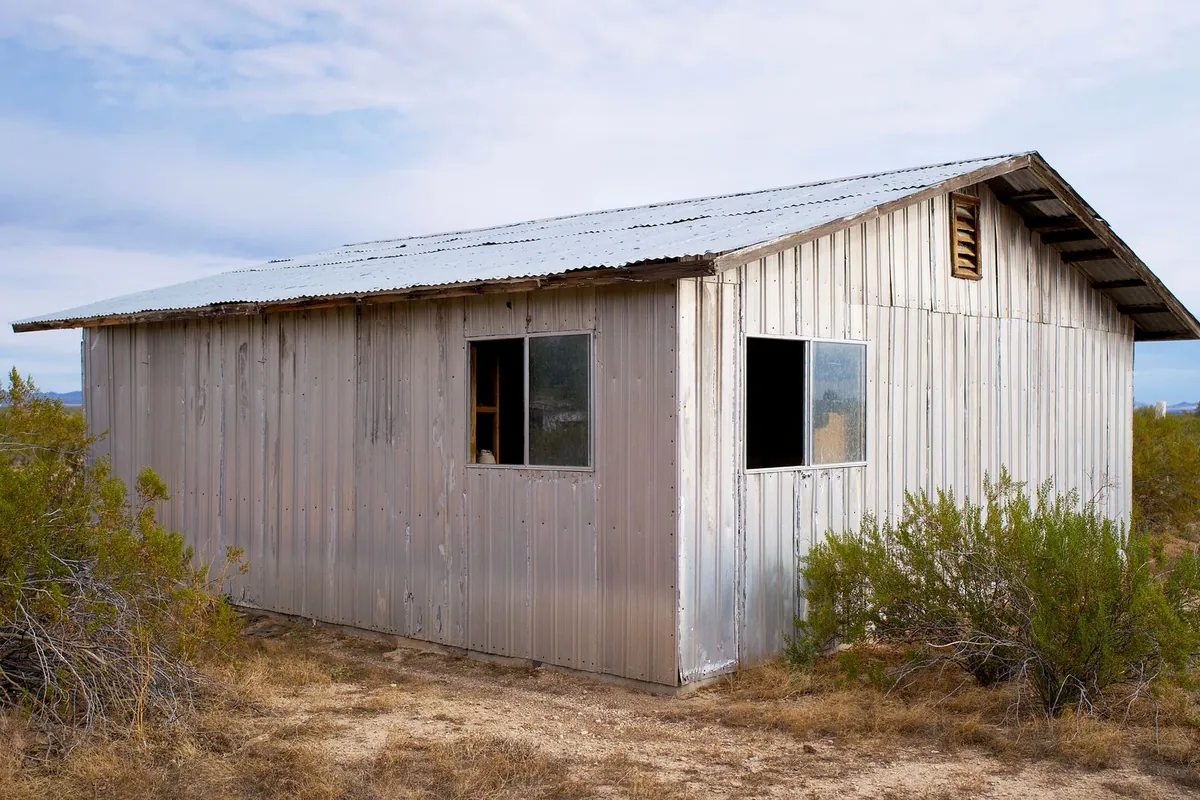
Metal-clad building with a corrugated metal roof among desert scrub
Metal Roofing

Metal Roofing in Buckeye, AZ

Metal roofing in Buckeye, AZ for homes, shops, barns and outbuildings: standing seam and exposed-fastener panel roofs that reflect the desert sun and shrug off granule loss, installed by licensed Arizona roofers.

  • Standing seam
  • Exposed-fastener panel
  • Homes, shops and barns
  • $8 to $18 per sq ft

Metal roofing in Buckeye

Metal roofing in Buckeye, AZ is most common outside the tile-roofed master-planned communities: on acreage homes, horse properties, shops, barns, garages, carports and agricultural buildings, especially across the west and south of the city and the unincorporated communities of Tonopah, Palo Verde and Arlington. It also shows up on custom homes and on commercial and industrial buildings along I-10.

It earns its place in the desert. Metal reflects a large share of the sun, has no felt layer under tile to wear out, does not shed granules like shingle, and handles monsoon rain well when its details are right. It is the priciest common residential roof: a May 2026 Arizona guide puts it at $8.00 to $18.00 per square foot installed.

The details are where metal roofs succeed or fail: the panel system, how it handles daily thermal movement, the underlayment beneath, and every flashing at walls, pipes and vents.
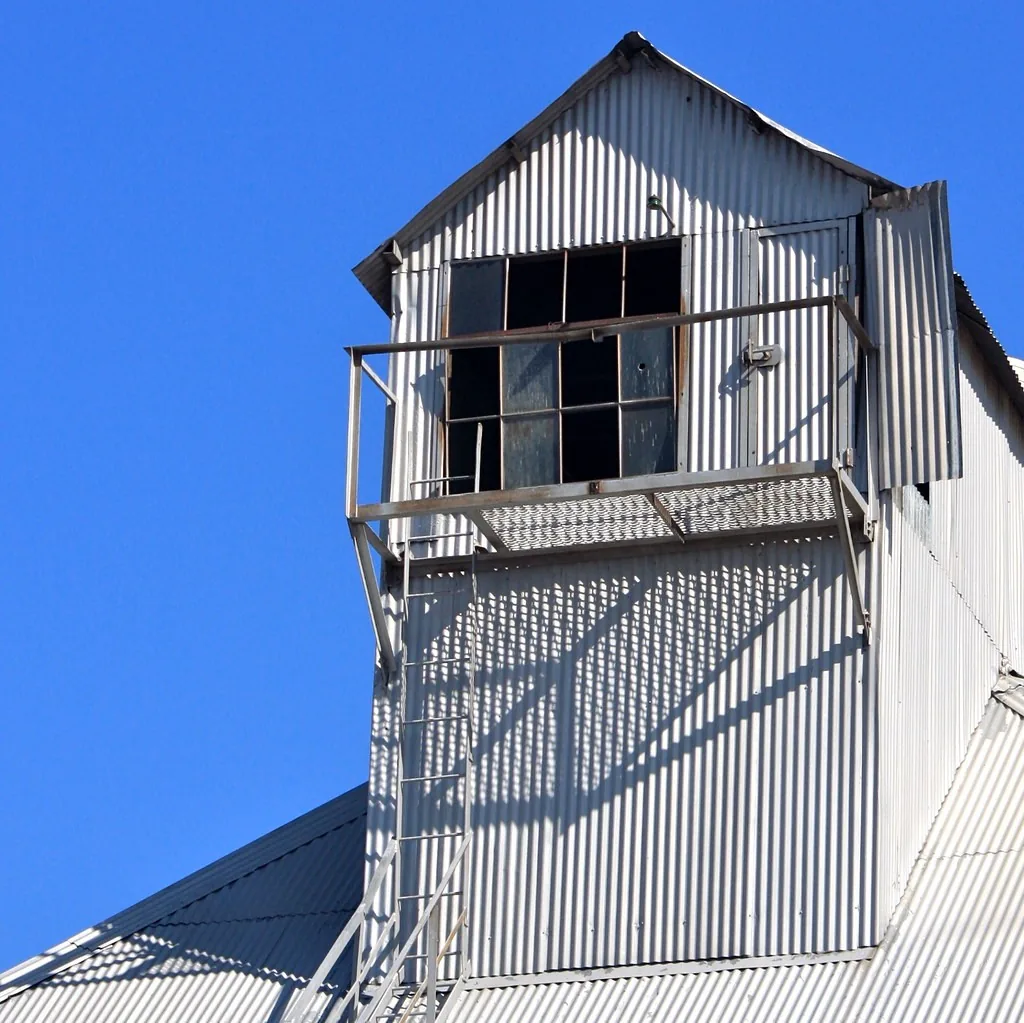
Corrugated metal tower and roof of an older building in Buckeye, Arizona
Corrugated metal in Buckeye. Exposed-fastener panels like these need their screws, washers and sealant checked as they age in the heat.

Standing seam versus exposed-fastener panel

The two metal roof families differ in how they are fastened, and that decides both cost and long-term maintenance.

Metal roof systems compared
Standing seamExposed-fastener panel
FasteningConcealed clips under the seamsScrews through the panel face
Thermal movementPanels float on clipsMovement works on the screw holes
MaintenanceLowScrews and washers checked and replaced over time
Typical use in BuckeyeCustom homes, premium re-roofsBarns, shops, carports, outbuildings
CostUpper end of $8 to $18 per sq ftFrom around $8 per sq ft

Cost source: Arizona roof replacement cost guide, May 2026: 'Exposed-fastener panel metal starts around $8 per square foot; true standing seam runs to $18 and beyond depending on gauge and finish.'

Metal and the West Valley heat

Buckeye's heat is a feature for metal and a design load at the same time. 2024 gave Phoenix a record 113 consecutive days at or above 100 degrees, and roof surfaces can pass 160 degrees. Reflective finishes keep more of that heat off the building. But metal expands and contracts every day, which is why concealed clips that let panels float, and closures and fasteners rated for the movement, matter more here than in a mild climate.
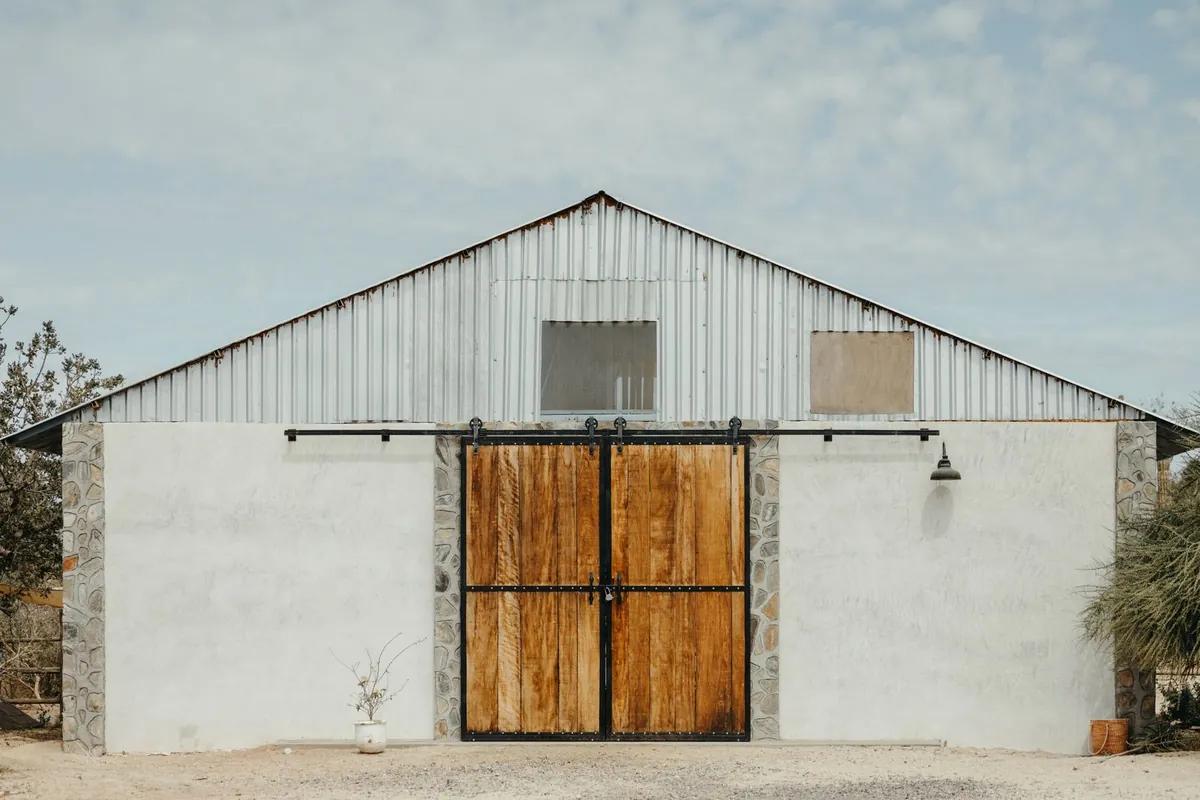
White shop building with a gabled metal roof and wooden barn doors
A metal-roofed shop. Penetrations need metal-specific boots and flashings, not generic sealant.

Metal roofs in monsoon storms

A properly fastened metal roof stands up well to monsoon wind; a poorly fastened one can peel. National Weather Service severe thunderstorm warnings cover winds of 60 mph or greater, and the edges, rakes and ridges of a metal roof take the uplift. Fastening patterns to the manufacturer's system at those edges, and sound trims, are what keep panels on.

Hail is less of a worry here than in the plains states, but the strongest monsoon cells can bring hail over an inch across. Metal usually stays watertight after hail, though it can dent.

Shops, barns and outbuildings

On acreage around Buckeye, metal roofs are as often on the shop, barn or hay cover as on the house.

  • Exposed-fastener panel roofs need their screws and rubber washers checked as they age in the sun
  • Rust at fasteners, laps and cut edges is the early warning on older panel roofs
  • Ridge caps and closures keep out wind-driven dust, rain and birds
  • Gutters on large metal roofs carry a lot of monsoon water and need sizing for it
  • A metal roof coating can extend an older panel roof that is sound but weathered

See roof coating for restoring weathered metal, industrial and warehouse roofing for larger buildings, roofing in Tonopah, the service area, or request a metal roofing quote.

Metal roof repair and maintenance

Most metal roof repairs in Buckeye are about fasteners, laps and trims rather than the panels themselves. On exposed-fastener roofs, the rubber washers under each screw age in the sun, screws back out with daily thermal movement, and a few leaks follow. On standing seam, repairs are more often at trims, penetrations and where the roof meets a wall.

  • Replace aged or backed-out screws with new fasteners and washers, one size up where the hole has worn
  • Reseal laps and end joints with a sealant made for metal roofing, not general-purpose caulk
  • Renew pipe boots with metal-roof-specific boots that conform to the panel profile
  • Treat surface rust at cut edges and fasteners before it spreads
  • Refasten ridge caps, rakes and eave trims after monsoon wind
  • Clear gutters and valleys of the dust and debris that storms leave

Coating an older metal roof

A sound but weathered metal roof, typically an older panel roof on a shop or barn, can often be restored with a coating system after fasteners are replaced and rust treated. It is usually far cheaper than new panels and adds a reflective surface. See roof coating.

Solar on metal

Standing seam takes solar well because clamps can attach to the seams without penetrating the roof. On exposed-fastener panel, attachments go through the roof and need proper flashing. If solar is in your plans, say so when the roof is specified.

Permits by location
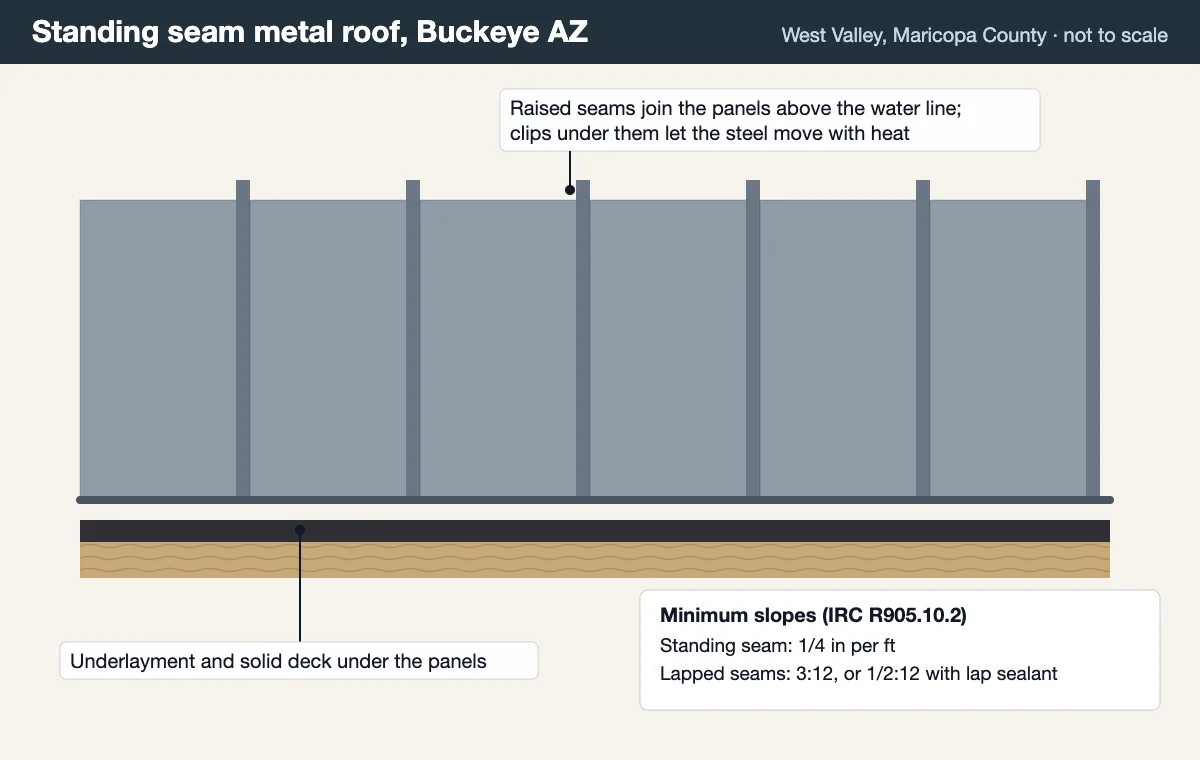
Standing seam metal roof diagram showing raised seams, underlayment and deck, with minimum slopes for standing seam and lapped panels
Standing seam panels join above the water line, which is why they can run as low as 1/4 inch per foot; lapped exposed-fastener panels need 3 in 12, or 1/2 in 12 with lap sealant (IRC R905.10.2). Not to scale.

Who issues a metal roofing permit depends on where the building sits. Inside City of Buckeye limits, like-for-like residential re-roofing is exempt under the City's amendment to IBC section 105.2, while a change from shingle or tile to metal is not. On unincorporated parcels around Tonopah, Palo Verde and Arlington, Maricopa County Planning and Development is the authority instead. Agricultural buildings have their own provisions, and Buckeye's code adoption includes Appendix C for agricultural buildings.

See the Buckeye roofing permit guide for the details.

How a metal roof is installed

  1. Choose the system. Standing seam or exposed-fastener panel, gauge, profile and finish are chosen for the building, its use and any HOA rules.
  2. Approvals. A change of material needs a permit from the City of Buckeye, or Maricopa County for unincorporated parcels, plus HOA approval where applicable.
  3. Deck and underlayment. The deck is repaired as needed and a high-temperature underlayment installed, with flashing details planned for every penetration.
  4. Panels and trim. Panels are installed with clips or fasteners to the manufacturer's system, with ridge, eave, rake and wall trims and closures.
  5. Penetrations. Pipes, vents and any solar attachments get metal-roof-specific boots and flashings rather than generic sealant.
Request a Free Roof Quote

Four fields. A licensed Arizona roofer looks at the roof on your property in Buckeye and sends back a written quote with the ROC license number on it. Nothing is committed until you say so.

Metal roofing in Buckeye, AZ: frequently asked questions

How much does a metal roof cost in Buckeye, AZ?

A May 2026 Arizona cost guide puts metal roofing at $8.00 to $18.00 per square foot installed, or $16,000 to $36,000 on a 2,000 square foot roof, with exposed-fastener panel starting around $8 per square foot and true standing seam running to $18 and beyond depending on gauge and finish. A Phoenix-area guide puts metal at $8.00 to $16.00 per square foot. It is the most expensive common residential roof up front.

Is a metal roof good in Arizona heat?

Yes. Metal reflects a large share of the sun, especially in light colors and reflective finishes, does not have a felt layer under tile waiting to fail, and does not lose granules the way shingle does. The details that matter in Buckeye are the finish system, fasteners and closures that cope with daily thermal movement, and an underlayment rated for high temperatures.

What is the difference between standing seam and exposed-fastener metal?

Standing seam panels are joined at raised seams and fastened with concealed clips, so no screw goes through the weather surface and the panels can expand and contract freely. Exposed-fastener panels, often called corrugated or R-panel, are screwed through the face, which is cheaper but relies on rubber-washered screws that age and need checking. Standing seam is the premium residential choice; exposed-fastener panel is common on barns, shops and carports.

Is a metal roof noisy in monsoon rain?

Over a solid deck with underlayment and an insulated attic, rain noise is modest. Metal over open framing, as on a barn or carport, is louder. If noise matters, roof a living space over a solid deck rather than open purlins.

Will my HOA allow a metal roof?

Some will and many will not, particularly in communities built entirely in concrete tile. Metal is far more common on the acreage parcels and custom homes around Tonopah, Palo Verde and Arlington, and on outbuildings, than in Buckeye's tile-roofed master-planned communities. Check your architectural standards first.

Do I need a permit for a metal roof in Buckeye?

If you are replacing a metal roof with metal on a house, Buckeye's like-for-like residential re-roof exemption applies. Switching from shingle or tile to metal changes the material and needs a permit. Unincorporated parcels outside City limits are handled by Maricopa County rather than the City.

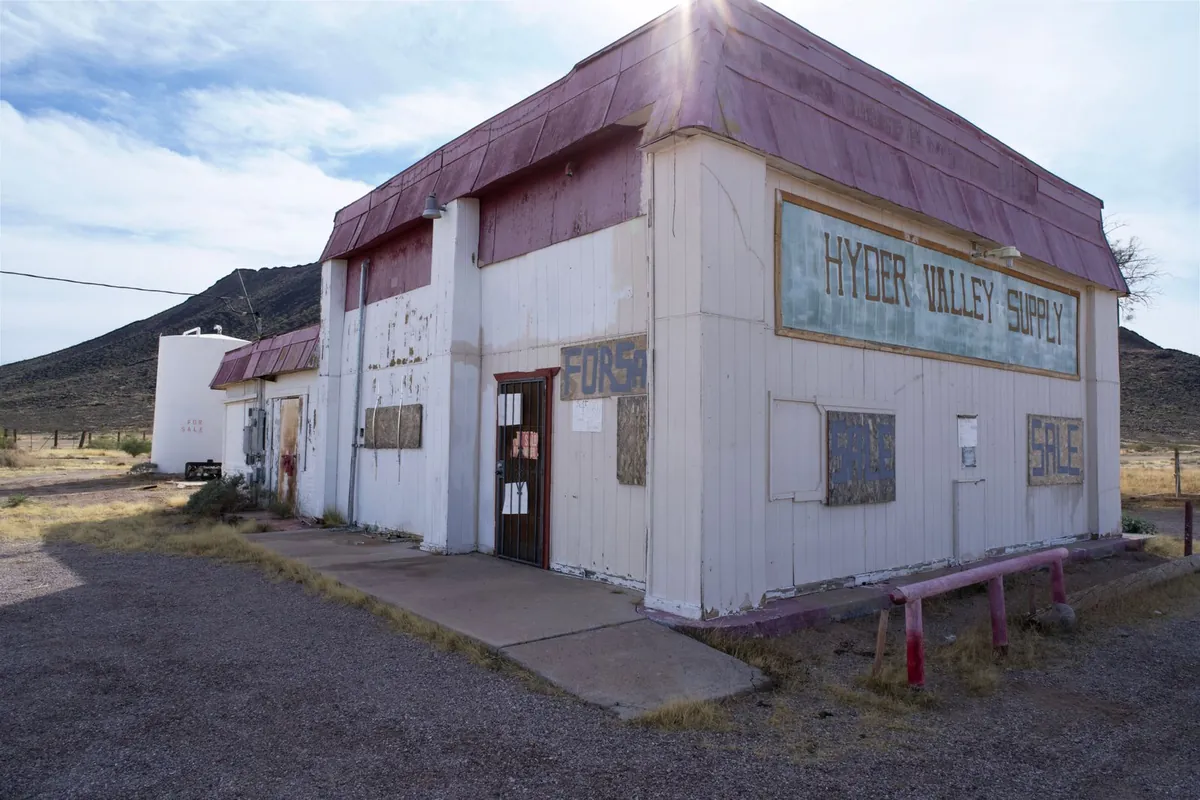
An old rural general store with a metal roof in the desert
An old metal roof on a rural store. Older metal roofs can often be restored with fastener work and a coating rather than replaced.
How long does a metal roof last?

Metal is one of the longest-lived roof coverings, and it avoids the two failure modes that dominate Buckeye roofs: felt aging under tile and UV breaking down shingle. Exposed-fastener roofs need their screws and washers maintained as they age; standing seam with concealed clips needs less attention. The finish system determines how the color and corrosion protection hold up.

Does a metal roof make a house hotter?

Not when it is specified properly. Reflective finishes and light colors reflect much of the sun's energy, and the attic ventilation and insulation beneath control how much heat reaches the rooms. A dark, unvented metal roof over a poorly insulated space will be hot; so would any roof in that situation.

Can metal go over my existing shingles?

Some metal systems can be installed over a single layer of shingle, but it is a change of material, so in Buckeye it needs a permit, and it hides the deck from inspection. A tear-off lets the roofer see and repair the deck, which is usually the better job.

Is metal a good choice for a barn or shop roof near Buckeye?

Yes. Exposed-fastener metal panel is the usual roof for barns, shops, hay covers and carports on acreage around Buckeye because it is quick to install over purlins, long-lived and inexpensive per square foot within the metal range. Plan to check and replace aging screws and washers over the years, and size gutters for monsoon downpours off a large roof.

What gauge metal roofing should I choose?

Heavier gauges (lower numbers) are stiffer and more dent-resistant, and cost more. Residential standing seam and agricultural panel are commonly specified in different gauges for that reason. The right gauge depends on the panel system, the span between supports and your budget; a roofer should name it on the quote.

What does a metal roof repair usually involve?

Mostly fasteners, laps, trims and penetrations: replacing aged screws and washers, resealing laps with a metal-roofing sealant, refastening trims after wind, and renewing pipe boots with metal-specific boots. Panel replacement is needed only where panels are perforated or badly damaged.

Get a metal roofing quote

House, shop or barn: a licensed roofer specifies and prices the right metal system in writing.

Get a Free Quote
Get a Free Roof QuoteFree written priceWhat It Costs