The short answer
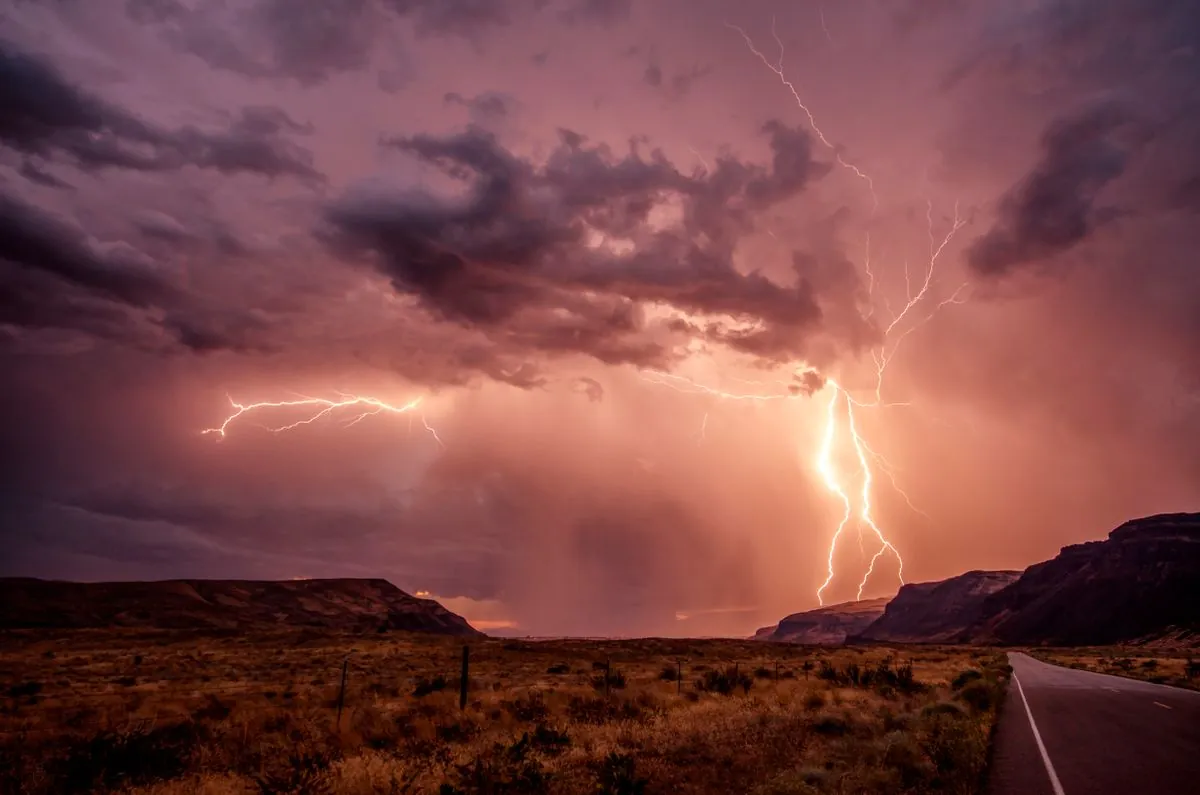
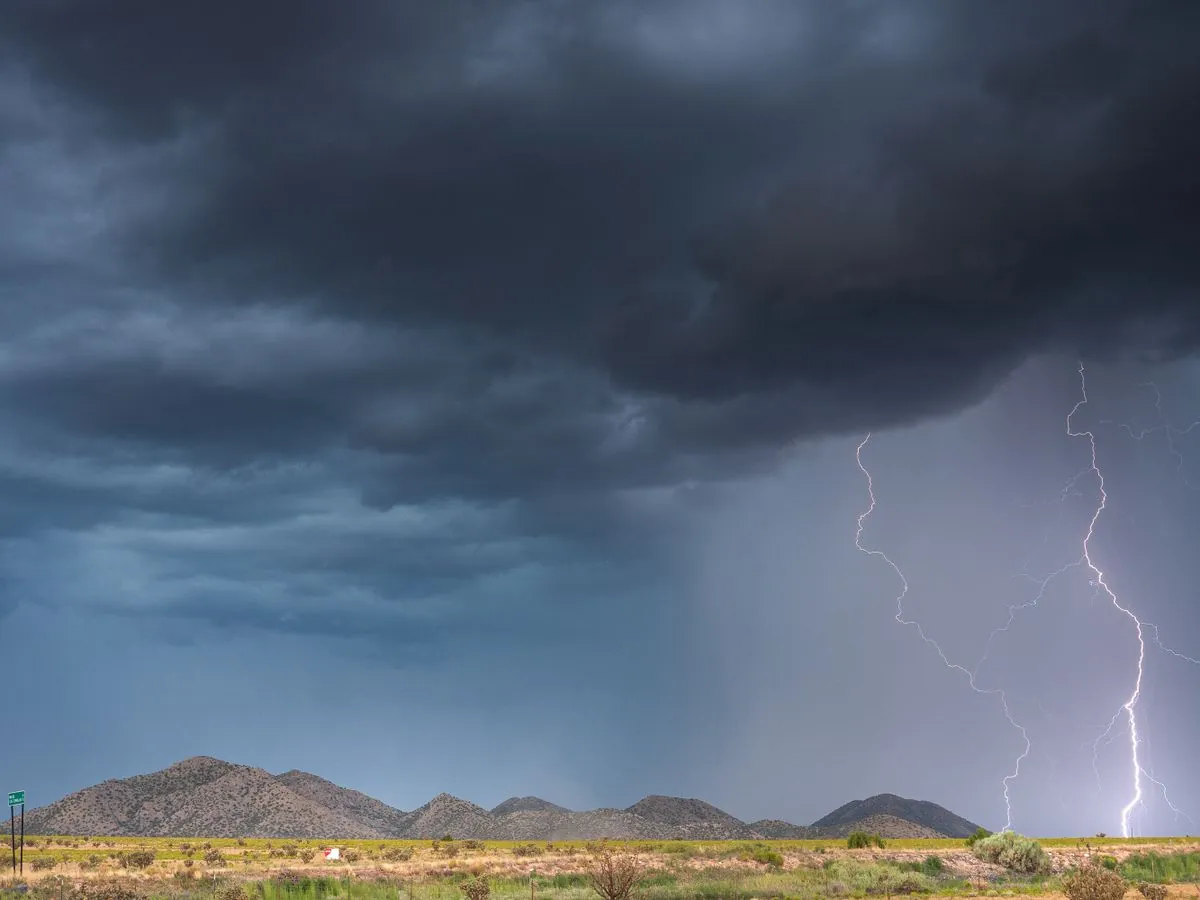
Monsoon storms damage Arizona roofs in four ways: wind lifts and slides tile, shingle and flashing; hail cracks tile and bruises shingles; dust and debris block valleys and drains; and heavy rain finds every weakness that the first three left behind. After a storm, check from the ground and inside, photograph what you find, and have a licensed roofer inspect before small damage becomes a ceiling leak.
The monsoon hazards, and what they do to a roof
| Hazard | What the NWS says | What it does to a roof |
|---|---|---|
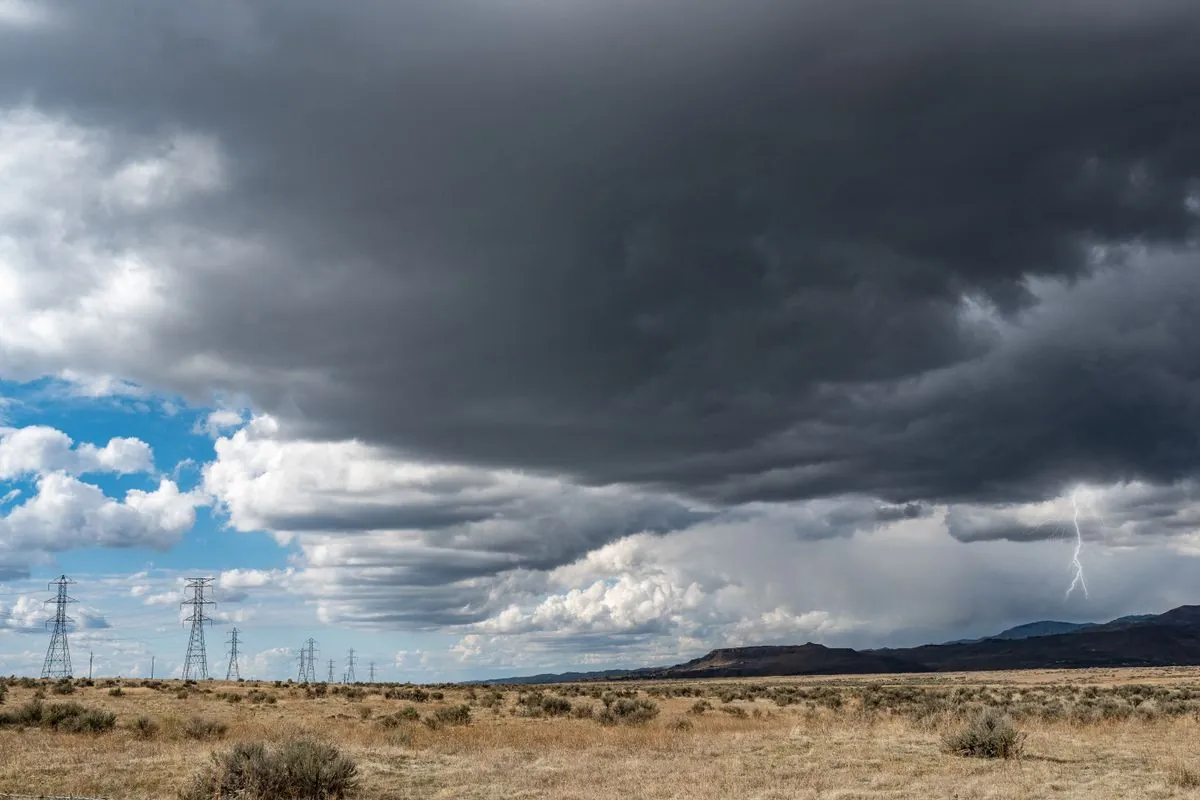
| Thunderstorm wind | Gusts almost always exceed 40 mph; the strongest can exceed 100 mph | Slides and lifts tile, tears shingles, lifts flashing and ridge caps |
| Severe thunderstorm | Warning issued for damaging winds of 60 mph or greater; hail over 1 inch possible | Wind damage plus cracked tile and bruised shingles |
| Downburst | Can reach 50, 60 and 70 mph, in rare cases exceeding 100 mph; known to topple trees, fences and poles | Impact damage from debris and falling trees |
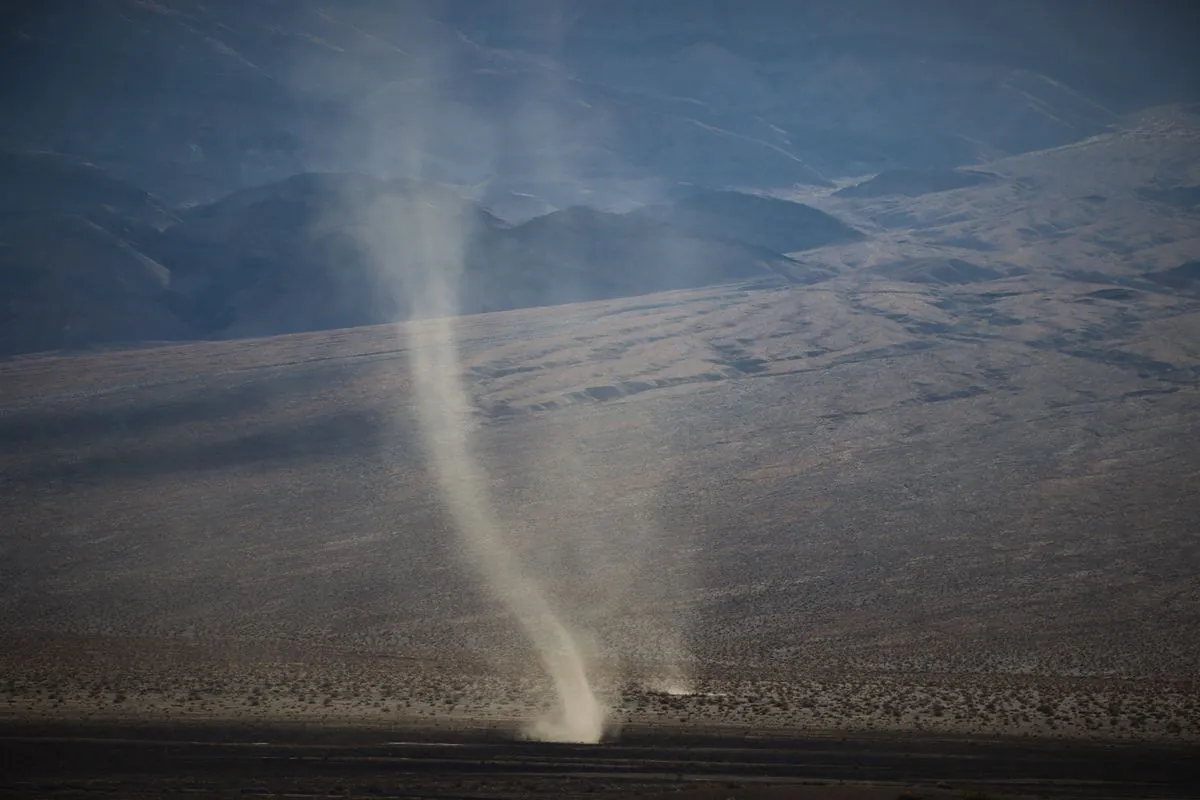
| Dust storm | Gusts between 40 and 60 mph are also likely | Fills valleys, gutters and drains with dust and debris |
| Heavy rain | Arrives with or after the wind | Backs up behind debris; finds cracked felt and open flashing |
Hazard descriptions from National Weather Service monsoon safety pages.
Monsoon damage on tile roofs
Most Buckeye homes have concrete tile, and tile roofs show monsoon damage in particular ways. A 2026 Phoenix-area price guide notes that "West Valley monsoon wind exposure makes tile displacement and lifted flashing a recurring line item."
- Slipped tiles, which open a gap and let rain straight onto the felt
- Cracked or broken tiles from hail or flying debris
- Lifted or broken ridge and hip caps along the top of the roof
- Displaced flashing at walls, chimneys and roof penetrations
- Debris dams in valleys that push water sideways under the tile
The felt is the real test
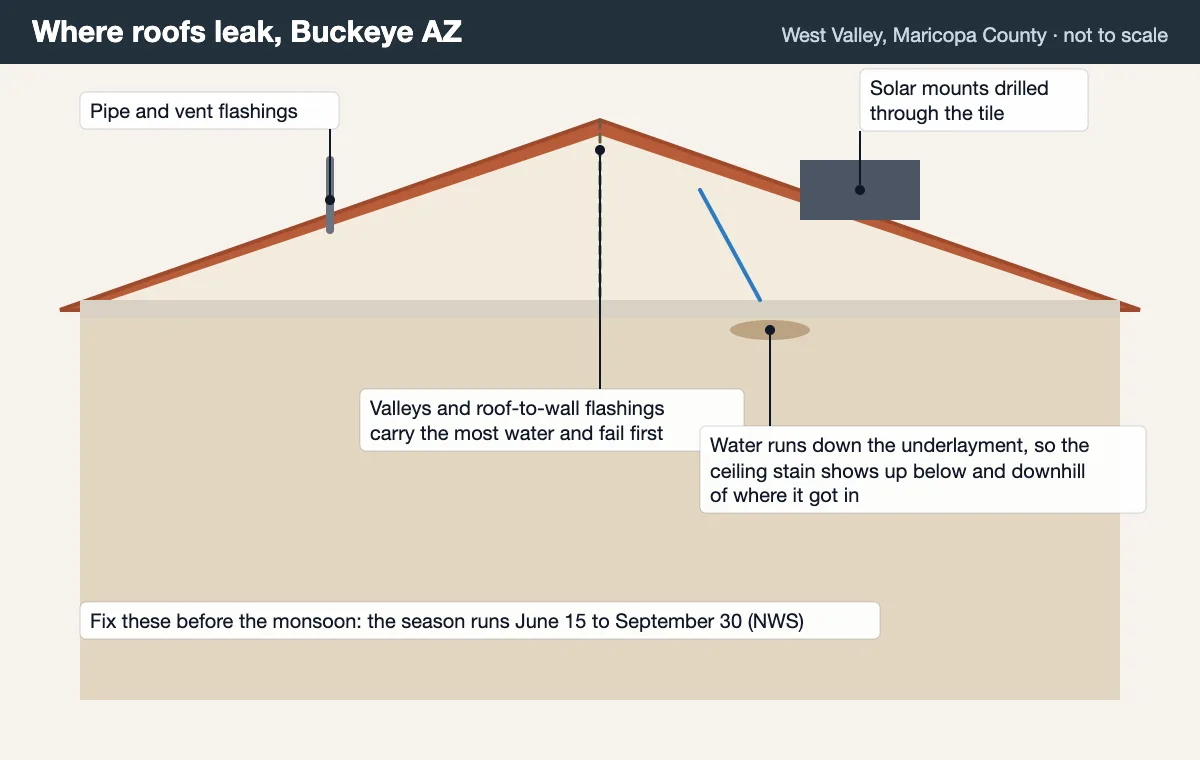
Wind-driven rain gets under tile by design, and sound underlayment carries it off. The monsoon is when aged felt fails. A Phoenix roofer's published table gives single 30-pound felt 15 to 20 years in Arizona, so a home built in Buckeye's 2000s growth on its original felt is exactly the roof that starts leaking in August with every tile in place. See tile roof repair and underlayment replacement.
Shingle, foam and flat roofs
Shingle
Wind lifts shingle tabs and can tear them off, especially on older roofs where the sealant strips have aged. Hail leaves bruises and knocks off granules. Look for missing tabs, creased shingles, and granules collecting at downspouts. See shingle roofing.
Foam and flat roofs
On flat foam, TPO and built-up roofs, the risks are punctures from debris and hail, and ponding where dust and leaves block scuppers and drains. Standing water on a flat roof after a storm is the warning sign. See flat roof repair and foam roofing.
Solar panels
Panels add mounts and penetrations, and debris can collect beneath them. After a big storm, check under the array as well as around it. See solar panel removal and reinstall.
What to check after a storm
Check from the ground first. A wet tile roof is slippery, damaged tile can break underfoot, and storms bring down lines. Walk the property and look for:
- Tile pieces, shingle tabs or flashing on the ground
- Gaps in tile rows, lifted ridge caps, or tiles out of line
- Branches or debris lying on the roof
- Gutters and downspouts blocked or pulled away
- Water stains on ceilings, around light fittings and at wall tops
- Damp insulation or daylight from the attic, if you can safely look
Prepare before June 15
The cheapest monsoon repair is the one made in May. A pre-season visit is short and catches the things storms exploit.
| Task | Why it matters |
|---|---|
| Replace slipped and broken tile | Every gap is a direct path to the felt |
| Reseal or replace lifted flashing | Flashing is where wind-driven rain gets in |
| Clear valleys, gutters, scuppers and drains | Blocked drainage pushes water sideways under tile |
| Check ridge and hip caps | They take the most wind |
| Lift sample tiles on older roofs | Shows whether the felt will survive the season |
| Inspect foam coating and flat roof seams | Small openings become big leaks in heavy rain |
| Trim branches over the roof | Downbursts are known to topple trees |
See roof maintenance and roof inspection.
After the big storms: out-of-area crews
Major storms bring door-knocking crews into Valley neighborhoods. Some are legitimate; some are not licensed in Arizona at all. Before you sign anything, check the roofer's ROC number on the Registrar of Contractors website, get an itemized written quote, and do not pay large sums up front.
See how to check an Arizona roofer's license and storm damage roof repair in Buckeye.
A storm-season calendar for your roof
| When | What to do |
|---|---|
| March to May | Pre-season inspection; replace slipped tile; reseal flashing; clear valleys, gutters and drains |
| By June 15 | All repairs done; branches trimmed; anything loose on the roof secured |
| June 15 to September 30 | Check from the ground after every major storm; act on stains and debris quickly |
| October to November | Post-season inspection; plan any re-felt, recoat or replacement for the cooler months |
| December to February | Comfortable weather for bigger roof projects, well ahead of the next season |
Monsoon dates as defined by the National Weather Service.
When to call a roofer, and how fast
| What you see | How urgent | Why |
|---|---|---|
| Water coming through the ceiling | Same day | Every storm makes it worse; a tarp limits the damage |
| Missing tiles or shingles | Within days | The underlayment is now exposed to sun and the next storm |
| Tree or large debris on the roof | Same day | Possible deck damage; do not go up yourself |
| Slipped tiles, lifted ridge caps | Before the next storm | Gaps let wind-driven rain onto the felt |
| Granules in gutters after hail | Soon | Possible hail bruising; document for insurance |
| Standing water on a flat roof | Within days | Blocked drains or low spots; leaks follow |
Monsoon and commercial roofs
Flat commercial roofs face the monsoon differently. Dust and debris collect at drains and scuppers, rooftop unit panels and curbs take the wind, and a large roof can hold a lot of water if drainage is blocked. Before the season, clear every drain, check curb flashing and unit panels, and look for punctures in the coating or membrane.
See commercial roof repair and industrial and warehouse roofing.
Why the heat matters to storm damage
The monsoon arrives at the end of the hottest months. Phoenix had a record 113 straight days at or above 100 degrees in 2024, and roof surfaces can pass 160 degrees. By the time the storms arrive, felt, sealants and coatings have had a full summer of heat, which is why roofs that seemed fine in spring start leaking in August.
Storm exposure across Buckeye
Monsoon storms hit the whole Valley, but what they find on the roof depends on where and when the house was built. A 2026 Phoenix-area price guide notes that West Valley monsoon wind exposure makes tile displacement and lifted flashing a recurring repair.
| Area | Typical roofs | Storm watch points |
|---|---|---|
| Sundance, Verrado, Tartesso, Sun City Festival (older phases) | Concrete tile on 2000s felt | Slipped tile, ridge caps, aged felt |
| Newer phases across Festival Ranch and Verrado | Newer tile roofs | Ridge caps and flashing after high wind |
| Downtown Buckeye | Mixed shingle, tile, flat and metal | Shingle tabs, flat roof drains |
| Tonopah, Palo Verde, Arlington | Metal, shingle, manufactured homes, outbuildings | Panel fasteners, open exposure to wind |
| Commercial along I-10 | Flat foam, TPO and metal | Drains, rooftop units, curb flashing |
See the community pages for Tonopah, Festival Ranch and downtown Buckeye.
Sources for this guide
- National Weather Service, monsoon safety: season dates, wind and hail thresholds
- National Weather Service, monsoon winds and dust: downburst speeds and damage
- A 2026 Phoenix-area roofing price guide, on West Valley tile displacement and flashing
- A Phoenix roofer's published Arizona underlayment lifespan table
- Local reporting of Phoenix's 2024 heat record
What to do after monsoon roof damage

- Stay safe. Stay off a wet or damaged roof. Watch for downed lines and debris.
- Photograph the damage. Dated photos from the ground and inside, before anything is moved or covered.
- Limit further water damage. Move belongings, catch drips, and have a roofer tarp the roof if needed.
- Call your insurer. Report sudden wind or hail damage promptly and ask what your policy needs.
- Get a roofer's inspection. A licensed roofer documents the damage and quotes the repair.