The short answer
A 20-year-old roof in Arizona does not automatically need replacing, but it does need inspecting. What it needs depends on the type: a 20-year-old tile roof usually needs new underlayment with the tile reused, a maintained foam roof may need only repairs and a recoat, and a 20-year-old shingle roof is usually at or near the end of its life.
The reason age matters more here than in milder places is heat. An Arizona roofing guide puts it plainly: materials that last 30-plus years elsewhere "often last only 20-25 years here." So 20 years is the right moment to check.
What 20 years means for each roof type
| Roof type | Where it is at 20 years | Usual next job |
|---|---|---|
| Concrete or clay tile on single 30# felt | Felt at or past its published 15 to 20 year Arizona life | Underlayment replacement, tile reused |
| Tile on double 40# felt or better | Felt usually still serviceable | Inspection, repairs, re-felt planned |
| Spray foam, recoated on schedule | Mid-life | Repairs and recoat |
| Spray foam, never recoated | Foam likely exposed and eroded | Major repairs or replacement |
| Asphalt shingle | At or near end of life in Arizona sun | Replacement |
| Metal | Usually mid-life | Fastener, sealant and flashing maintenance |
| TPO or other membrane | Depends on installation and seams | Inspection; repair or replace |
Lifespans from published Arizona roofer guides. Your roof's condition, not this table, decides the job.
The 20-year-old tile roof
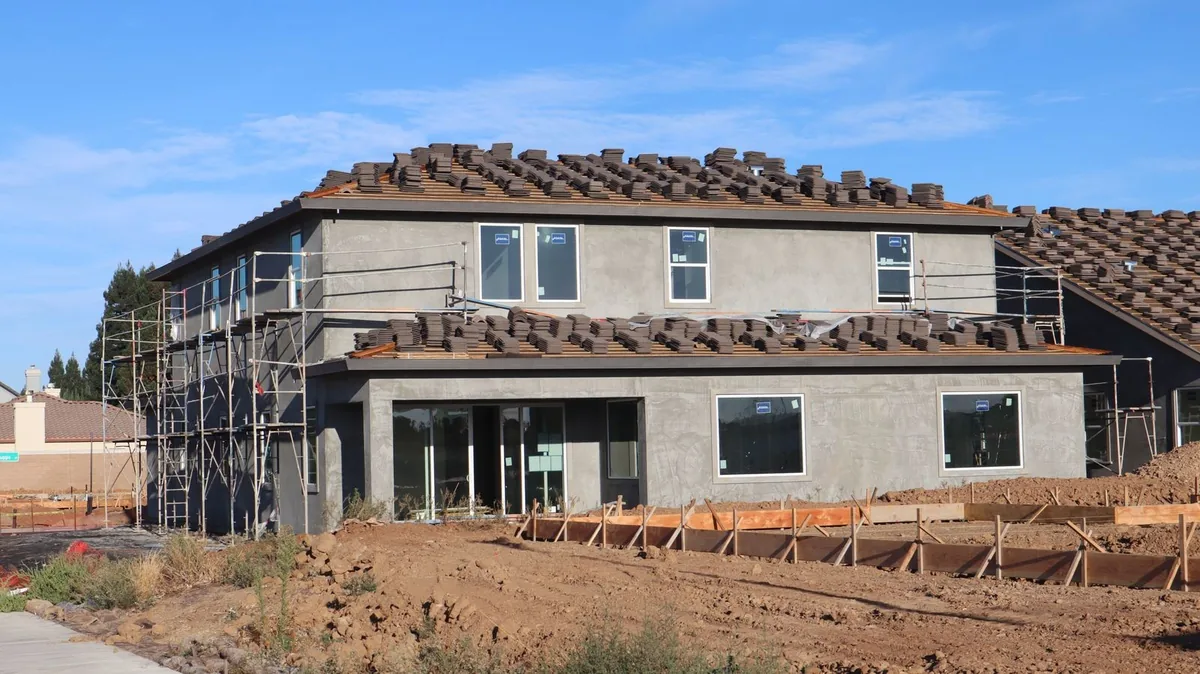
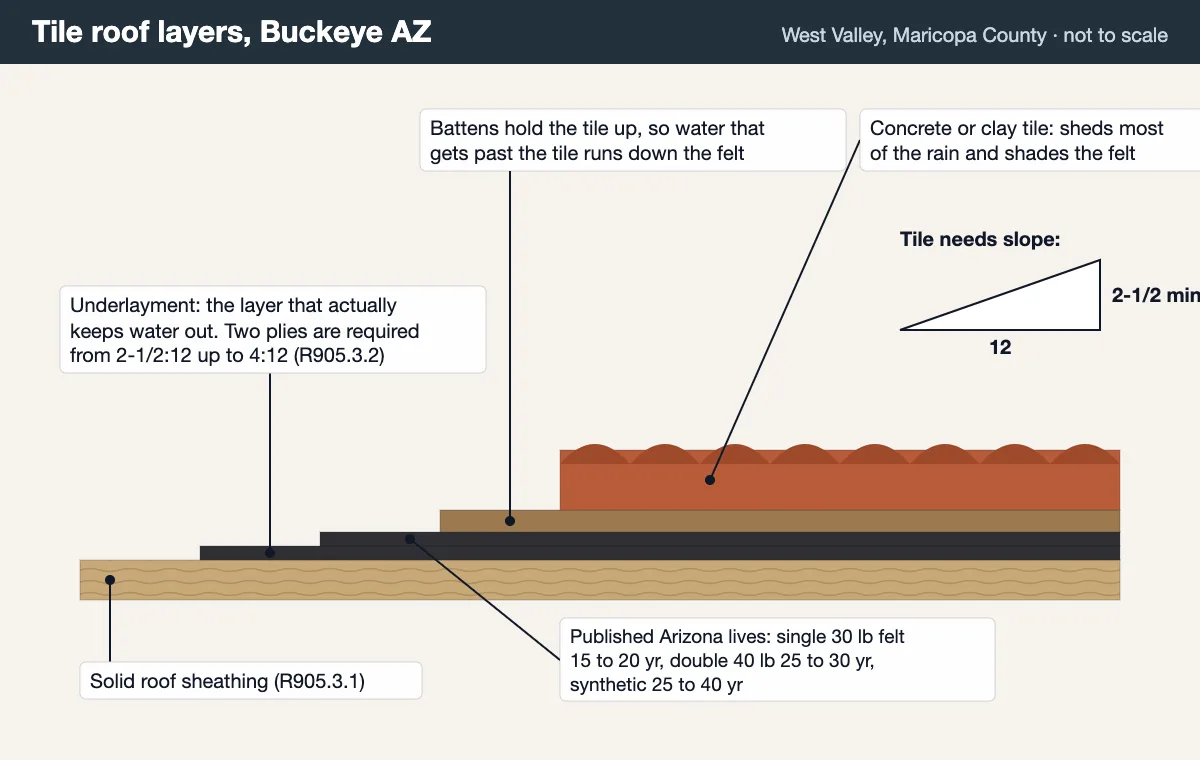
The 20-year-old tile roof is the most common case in Buckeye, and the most misunderstood. The tile usually looks fine. The felt beneath it, which is what actually keeps water out, has been baking at roof temperatures that can pass 160 degrees every summer for two decades.
When the felt goes brittle, it cracks, and water that gets past the tile in a monsoon downpour reaches the deck. That is why tile roof leaks so often appear with no broken tile in sight. Replacing the felt and reusing the tile is usually the right answer, and usually costs less than a full new tile system. See tile roof underlayment replacement and the underlayment replacement cost guide.
Buckeye's 20-year roofs
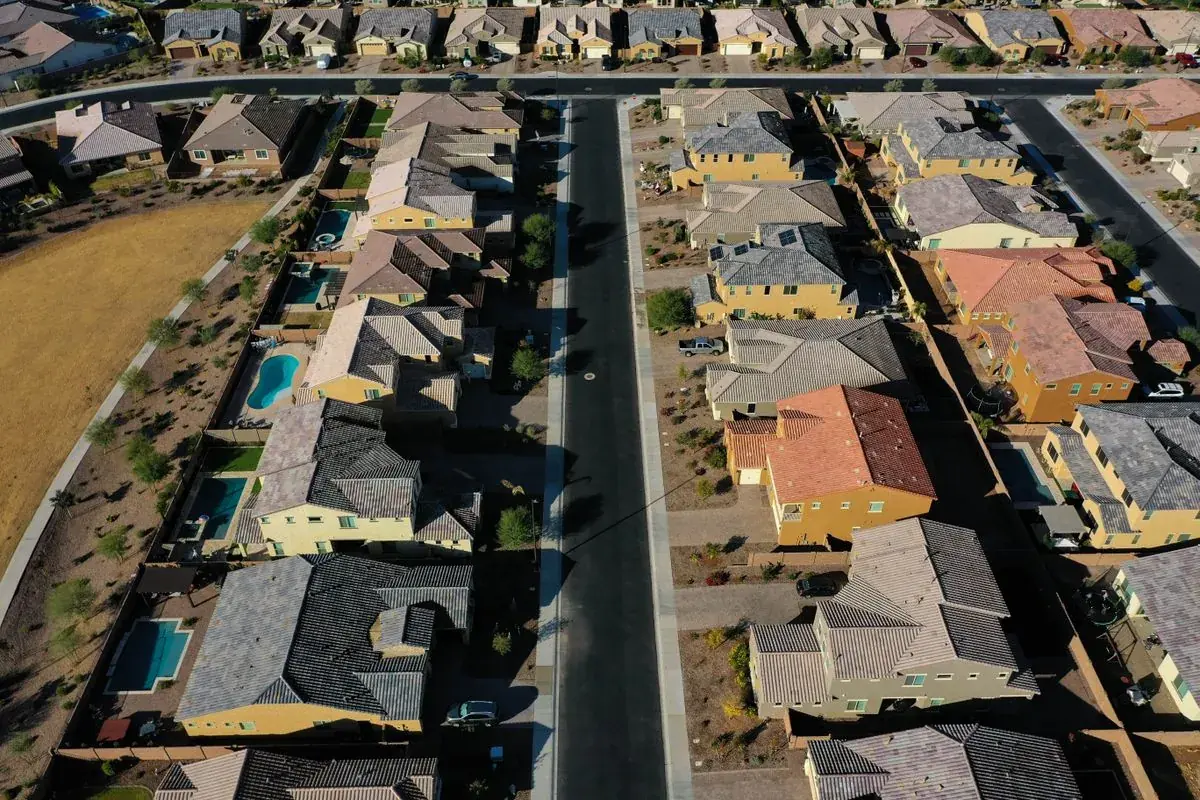
Buckeye grew from 6,537 people in 2000 to 91,502 in 2020, and the Census Bureau estimated 114,334 in July 2024. Its first big wave of tile-roofed communities came in the 2000s:
| Community | Building began | Roof age now |
|---|---|---|
| Sundance | 2002 | Up to about 24 years |
| Verrado | 2004 | Up to about 22 years |
| Tartesso | 2005 boom (about 3,000 lots before the recession) | Up to about 21 years |
| Sun City Festival | 2006 | Up to about 20 years |
A home in one of those phases on its original felt is at the age where the published Arizona lifespan runs out. See the community pages for Sundance, Verrado, Tartesso and Sun City Festival.
The 20-year-old foam roof
A 20-year-old foam roof that has been recoated on schedule is in the middle of its life. A Phoenix roofer's guide says many Arizona foam roofs can last 30 to 50 years or more with recoats about every 5 to 7 years. One that has never been recoated is a different story: the sun has been eroding the foam, and the question becomes how much sound foam is left.
- Coating intact, foam not visible: inspect, repair small damage, plan the recoat
- Coating worn through in spots: repair and recoat soon
- Foam eroded, soft, blistered or wet: core samples to see how much must be removed
- Ponding water or widespread saturation: likely partial or full replacement
See foam roofing and roof coating.
The 20-year-old shingle roof
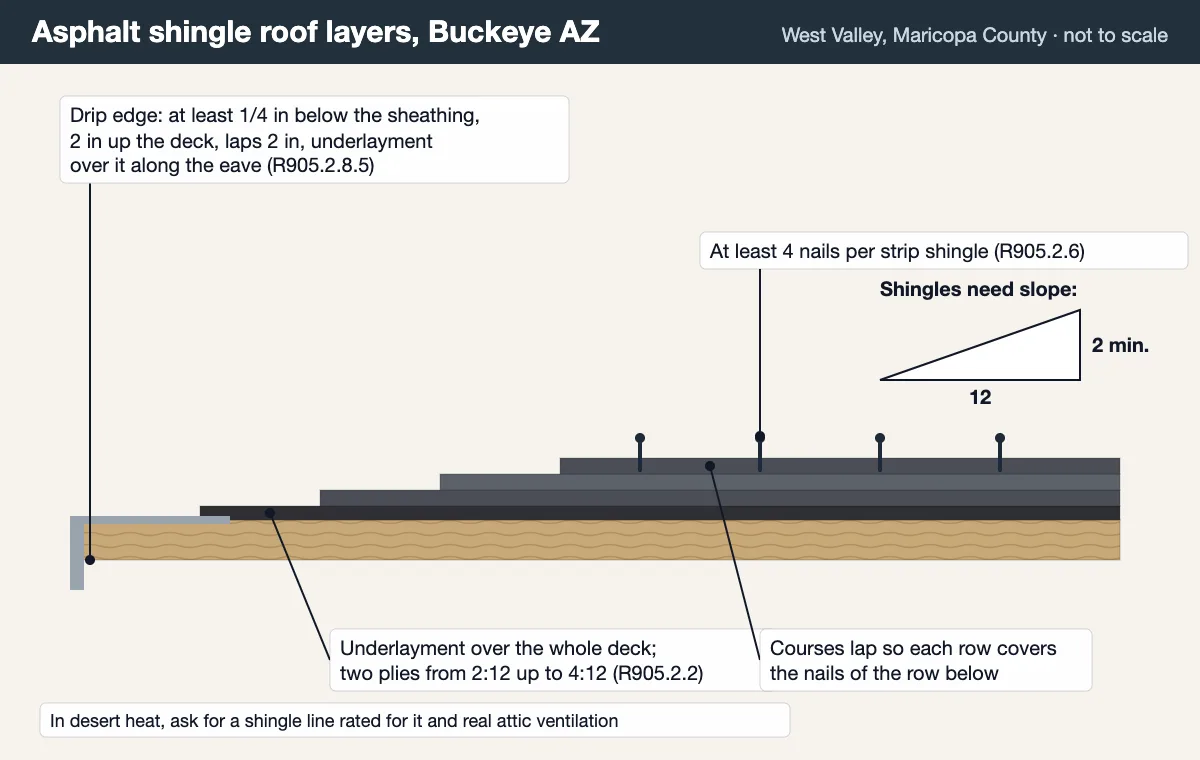
Asphalt shingle is the roof most likely to be finished at 20 years in Arizona. Sunlight and heat are exactly what break asphalt down, and the south and west slopes usually go first. Look for granules in gutters and at downspouts, shingles curling at the edges or cracking across, and bare patches where the dark mat shows.
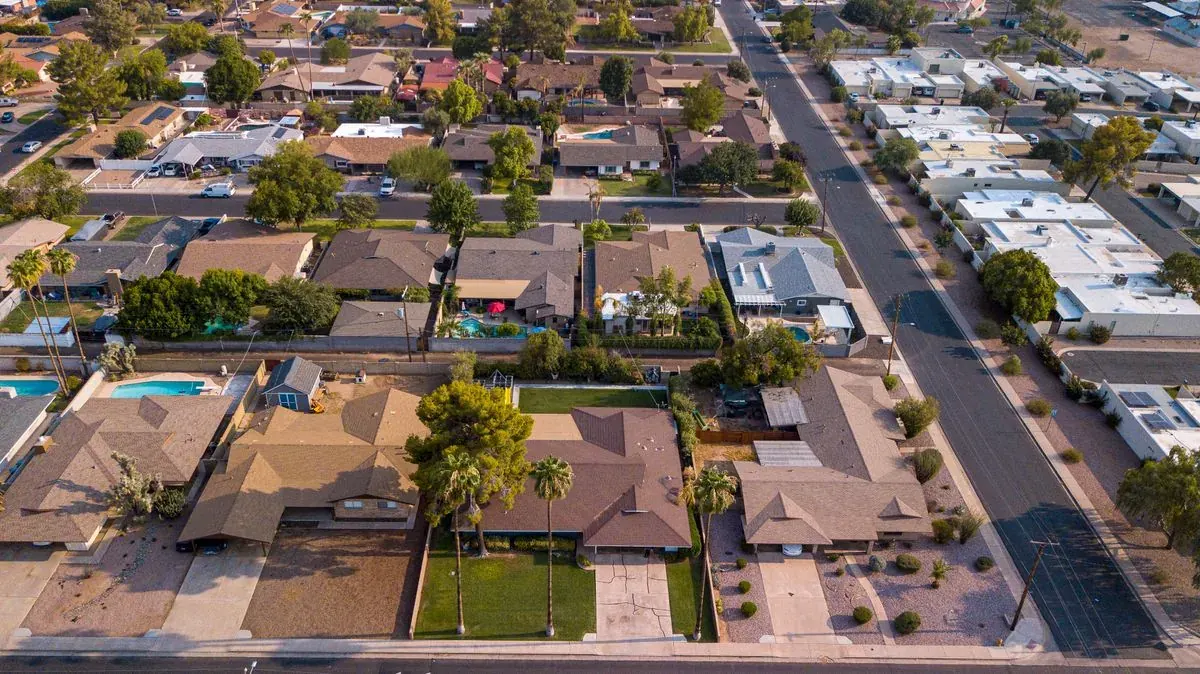
Replacement is usually the right call, and it is a chance to fix ventilation and underlayment while the roof is off. See shingle roofing.
Signs it is time, whatever the roof
- Water stains on ceilings or in the attic, especially after monsoon storms
- Daylight visible through the roof deck from the attic
- Soft or sagging areas on the roof deck
- Many slipped, cracked or missing tiles, or tiles that slide when touched
- Felt that crumbles or cracks when a tile is lifted
- Shingles curling, cracking or missing granules
- Foam exposed, eroded or soft underfoot
- Repeated repairs in the same spot
Repair, re-felt, recoat or replace: the money side
Phoenix-area price guides published in 2026 give these typical installed ranges for a 2,000 square foot roof. Use them to sense-check quotes, not as a price for your roof.
| Job | Per square foot | Typical total |
|---|---|---|
| Tile underlayment replacement, tile reused | $4.50 to $8.50 | $9,000 to $17,000 |
| Asphalt shingle tear-off and reroof | $4.50 to $7.00 | $9,000 to $14,000 |
| Spray foam | $3.50 to $7.00 | $7,000 to $14,000 |
| Concrete tile, full new system | $7.00 to $14.00 | $14,000 to $28,000 |
Published by Phoenix-area roofing price guides, 2026. Permits, deck repair and extra tear-off layers add to these.
More detail in the roof replacement cost guide. For the license check before you sign, see how to check an Arizona roofer's license.
Selling or buying a home with a 20-year-old roof
Buyers' inspectors note roof age and visible condition, and a 20-year-old roof is a predictable negotiation point. Sellers can get ahead of it with a roofer's inspection and photos, then either complete a repair or re-felt, or price the roof in. Buyers should ask what underlayment is on a tile roof and whether any re-felt has already been done.
Either way, a dated inspection report from a licensed roofer is a stronger document than a guess based on age. See roof inspection.
Re-felt or a new tile roof?
For a 20-year-old tile roof, the choice is usually between relaying the existing tile on new underlayment and installing a new tile system. The published 2026 Phoenix-area figures for a 2,000 square foot roof:
| Re-felt, tile reused | New concrete tile system | |
|---|---|---|
| Per square foot | $4.50 to $8.50 | $7.00 to $14.00 |
| Typical total | $9,000 to $17,000 | $14,000 to $28,000 |
| Tile | Same tile, breakage replaced | All new tile |
| Makes sense when | Tile is sound and matches HOA rules | Tile is damaged, discontinued or the look is changing |
Published by Phoenix-area roofing price guides in 2026.
Planning ahead instead of reacting
The most expensive way to deal with a 20-year-old roof is to wait for a monsoon leak that soaks the ceiling and insulation. Planning the work turns an emergency into a scheduled project.
- Get an inspection that lifts sample tiles or cores the foam
- Ask for a written estimate of remaining life, with photos
- Budget for the job using the published ranges
- Get HOA approval and confirm the permit question early
- Book the work for the cooler months, finished before June 15
- If solar is on the roof, include removal and reinstall in the plan
Insurance and a 20-year-old roof
Insurers look at roof age differently, and some value older roofs at less after storm damage. Wear and tear on an aged roof is usually not covered at all. Check how your policy treats the roof before a storm, not after. See roof insurance claims in Arizona.
What a 20-year roof inspection should cover
An inspection on a 20-year-old roof should answer one question: how much life is left, and what is the next job? That takes more than a look from the ladder.
- Lift sample tiles on several slopes, including the south and west faces, and photograph the felt
- Check every valley, wall flashing, chimney and vent penetration
- Look at ridge and hip caps and their mortar or fastening
- On foam, check coating thickness, exposed foam and soft spots, and core if needed
- On shingle, check granule loss, curling and sealant strips
- From the attic, look for staining, daylight and damp insulation
- Written findings with photos, and a recommendation: repair, re-felt, recoat or replace
When a second opinion is worth it
A 20-year-old roof is exactly where honest roofers can disagree: one sees a re-felt, another a repair and a few more years. A second inspection is worth getting when the recommendation is a full replacement but you see no leaks, when the quotes differ widely, or when you are told to decide on the spot.
Ask both roofers for photos of the underlayment and the problem areas. When two roofers show you the same brittle felt, the decision makes itself.
How to decide what a 20-year-old roof needs
- Find the roof's real age. Check purchase documents, permit records or the county assessor for the build year or last re-roof.
- Identify the roof type. Tile, shingle, foam, metal or membrane, and for tile, what underlayment is beneath it.
- Look for the warning signs. Ceiling stains, slipped tile, curling shingles, exposed foam, lifted flashing.
- Get an inspection. A licensed roofer lifts tiles or checks the coating and reports what is actually failing.
- Choose repair, re-felt, recoat or replace. Match the job to what failed, then compare written quotes on the same scope.