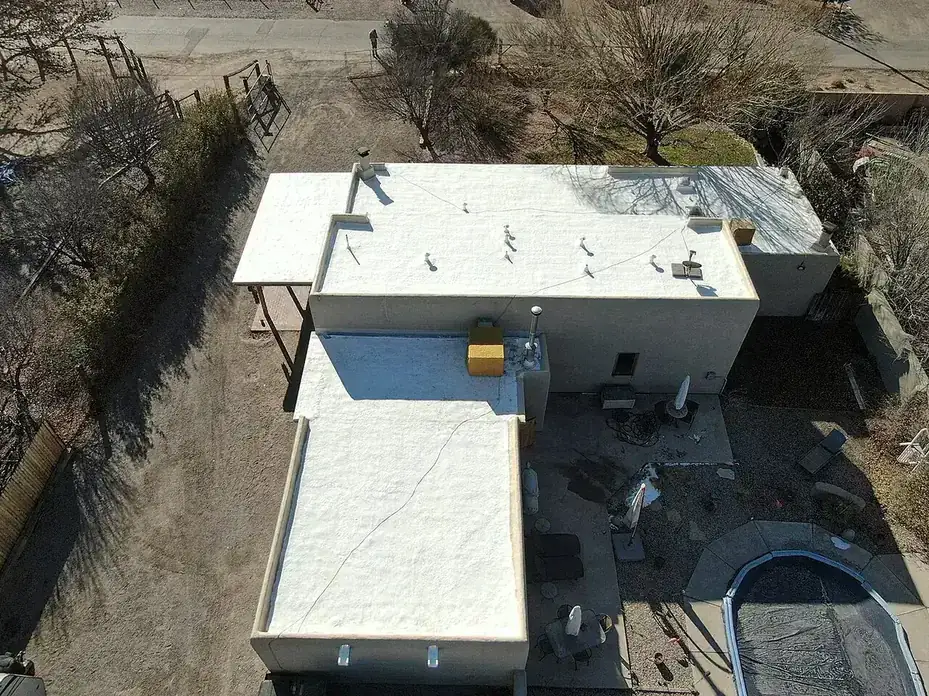
Foam roofs in Buckeye
Foam roofing in Buckeye, AZ covers most of the flat and low-slope roofs in the city: patio covers, additions, flat-roofed and Pueblo-style homes, casitas, and many commercial buildings. Spray polyurethane foam goes on as a liquid, expands into a seamless insulating layer, and is then protected by an elastomeric coating, usually acrylic or silicone.
That coating is the whole story in Arizona. It is the sacrificial layer that takes the ultraviolet light and the heat so the foam does not have to. When it chalks, thins and wears through, the sun starts breaking down the foam itself, and an Arizona foam roof that was good for decades starts to fail in a few seasons.
Foam roof cost in Buckeye
New spray foam is the lowest-cost common roof system in Arizona: $3.50 to $7.00 per square foot installed, or $7,000 to $14,000 for 2,000 square feet, in a May 2026 Arizona cost guide. The same guide notes foam goes on seamless and insulates, which is why it is the default for flat roofs in the Valley.
| System | Per sq ft installed | 2,000 sq ft |
|---|---|---|
| Spray foam (SPF) | $3.50 to $7.00 | $7,000 to $14,000 |
| Modified bitumen | $4.00 to $8.00 | $8,000 to $16,000 |
| TPO membrane | $5.00 to $10.00 | $10,000 to $20,000 |
Source: Arizona roof replacement cost guide, May 2026. A recoat of sound existing foam costs less than new foam because it renews only the coating; the written quote should separate coating, repairs and preparation.
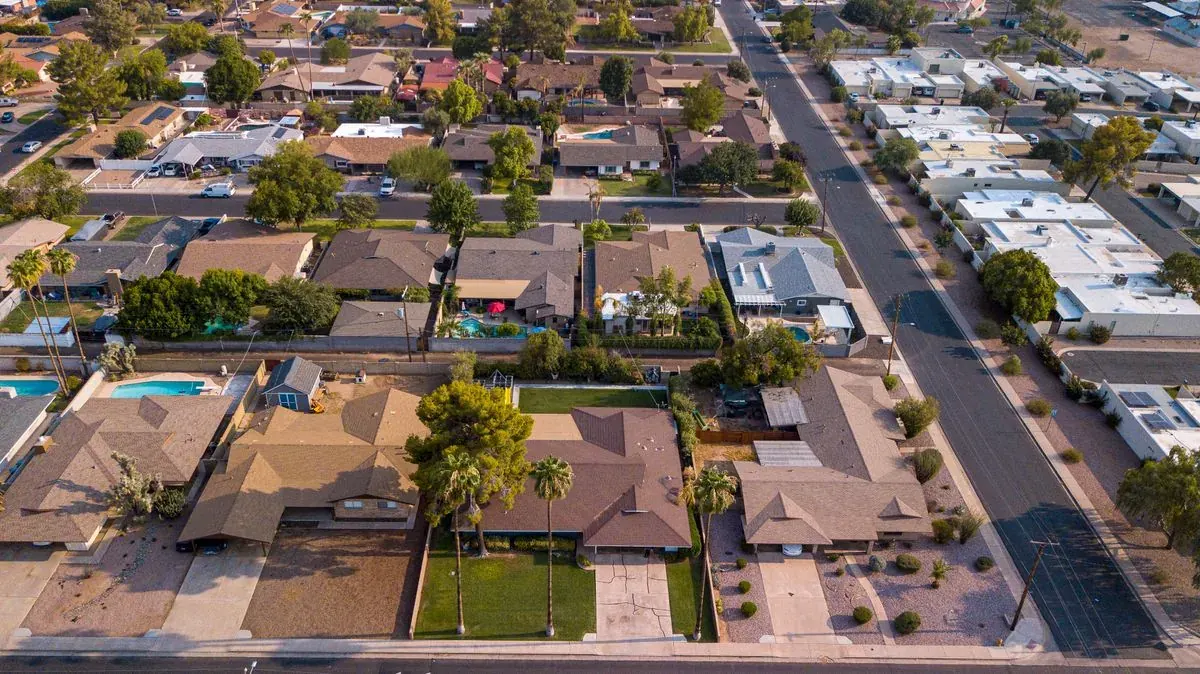
Signs your foam roof needs attention
A foam roof tells you when it needs attention, if someone goes up and looks. These are the signs, roughly in the order they appear.
- Chalky, faded or discolored coating that rubs off on your hand
- Fine cracking in the coating, often around drains and edges first
- Coating worn through so tan or brown foam shows
- Small holes and pecked areas where birds have gone after the foam
- Blisters or bubbles in the surface
- Soft, spongy spots underfoot, which can mean wet foam
- Water sitting more than a day or two after monsoon rain
Recoat, repair or replace
Recoat
If the coating is worn but the foam beneath is dry and sound, a recoat is the answer. It restarts the clock, and a Phoenix roofing guide points out that foam can be recoated multiple times over its life instead of being torn off. See roof coating.
Repair
Blisters, bird damage, cracks and small wet areas are cut out, refilled with fresh foam and coated. Most foam roofs that have been neglected for a cycle or two need some repair before a recoat.
Replace
When foam is wet, eroded or delaminated over a large share of the roof, it has to come off. That is the expensive outcome the recoat schedule exists to avoid. See flat roof repair and roof replacement.
| Approach | What tends to happen |
|---|---|
| Recoat every 5 to 7 years | Multiple recoats, no major tear-offs; roof can reach 30 to 50+ years |
| Delay recoats to 10 to 12+ years | Foam exposed in places; repairs needed before recoating |
| Skip recoats entirely | Foam erodes and takes on water; replacement |
Summarized from a Phoenix roofer's published foam maintenance guide.
Foam on commercial buildings
Spray foam is common on commercial roofs in Buckeye too, from strip retail to warehouses, because it insulates and goes on seamless around rooftop equipment. Commercial foam work is quoted by roofers with the C-42 or CR-42 classification. See commercial roofing, commercial roof coating, the service area, or request a foam roof quote.
Birds, foot traffic and other foam damage
Birds peck at foam roofs, especially where the coating is thin, and their small holes let water straight into the foam. Foot traffic does similar damage: HVAC technicians servicing rooftop units, solar installers and anyone walking the roof in work boots can crush or puncture the coating. Walkway pads to and around rooftop equipment are a simple fix.
These small punctures are cheap to repair when caught early, and expensive once water has spread through the foam. An annual look, ideally in spring before the monsoon, catches them.
Ponding and drainage on flat roofs
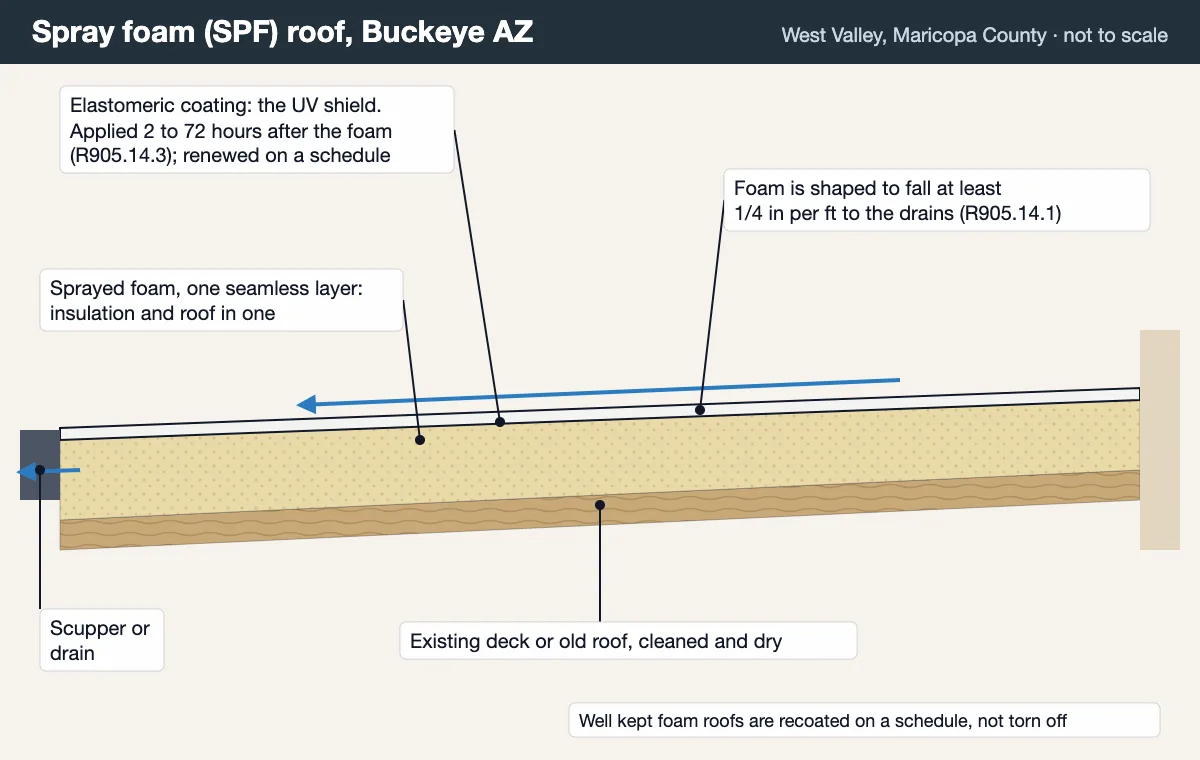
Water that sits on a foam roof for days after monsoon rain shortens the life of the coating and finds any weakness. Ponding usually comes from low spots, blocked scuppers or drains, or a roof that was never sloped well. One advantage of spray foam is that it can be built up in thicker layers to create slope toward the drains during a repair or replacement.
- Keep scuppers, drains and downspouts clear, especially after dust storms
- Note where water sits after rain, and for how long
- Ask whether low spots can be built up with foam when the roof is next repaired
- Consider a coating suited to ponding where it cannot be eliminated
How a foam roof is repaired and recoated
- Inspect and moisture-check. The roofer walks the roof, checks coating thickness, and probes or moisture-tests suspect areas, because wet foam has to come out rather than be coated over.
- Clean and prepare. Dust, debris and loose coating are removed; the dust that monsoon storms leave on a flat roof stops new coating bonding properly.
- Repair the foam. Blisters, bird damage, cracks and any wet or damaged foam are cut out and refilled with new foam.
- Recoat. A compatible acrylic or silicone coating is applied to the specified thickness, often in two coats, sometimes with granules embedded for durability.
- Check drainage. Ponding areas and roof drains or scuppers are checked, and foam can be built up to improve slope where water sits.