The short answer
Tile roof underlayment replacement in Arizona typically costs $7,000 to $10,000 for a 2,000 square foot roof, according to a Phoenix roofing contractor's published table, and $4.50 to $8.50 per square foot for a tile-over that reuses the existing tile in a May 2026 Arizona cost guide.
| Roof size | Typical cost range | Notes |
|---|---|---|
| 1,500 sq ft | $5,000 to $7,000 | Smaller single-story homes |
| 2,000 sq ft | $7,000 to $10,000 | Standard home |
| 3,000+ sq ft | $10,000 to $15,000+ | Larger or complex rooflines |
Source: a Phoenix roofing contractor's published tile underlayment guide. 'Prices vary depending on roof pitch, accessibility, product selection, and necessary repairs.'
Why tile roofs need this job at all
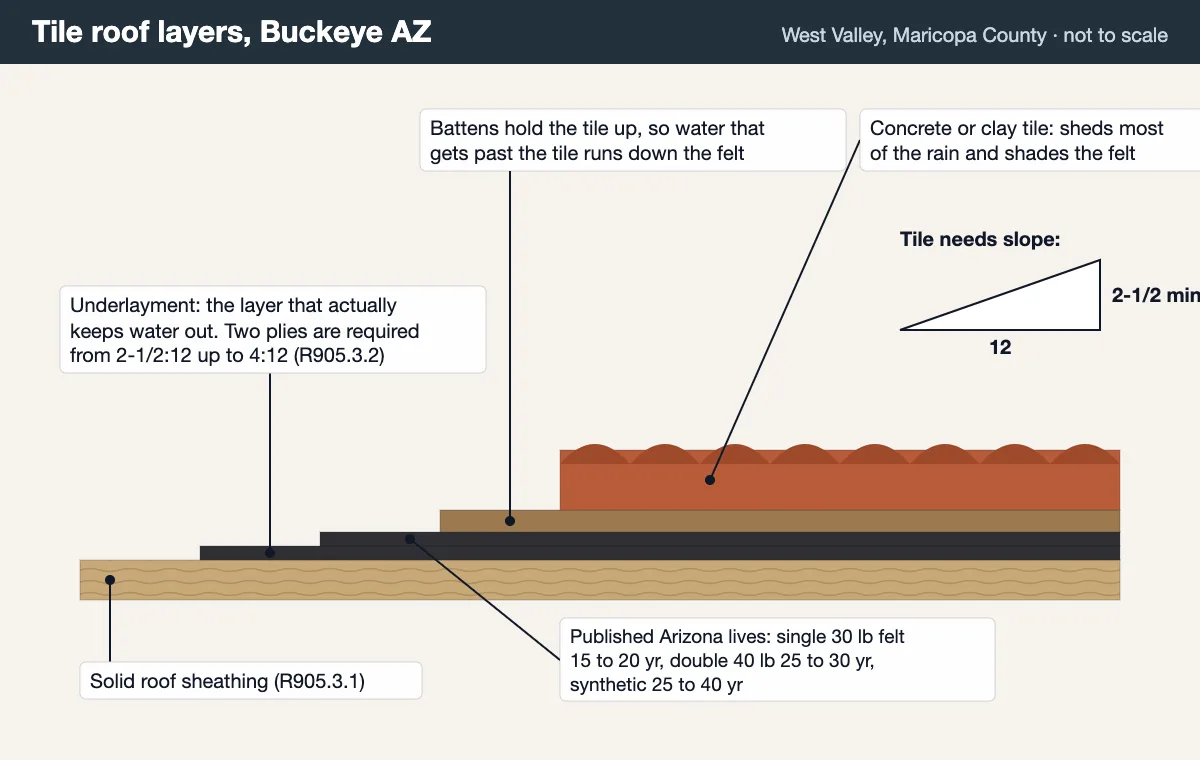
Tile roofs need underlayment replacement because the two layers of the roof age at different speeds. The tile sheds most of the water and shades what is beneath; the underlayment is the actual waterproof membrane, and it sits under dark tile on a deck that cooks every summer. An Arizona roofing guide notes that products lasting 30 years or more in milder climates often last only 20 to 25 years here.
The lifespans that set the schedule
| Underlayment | Arizona lifespan | Source note |
|---|---|---|
| 30# felt, single layer | 15 to 20 years | Common on homes built before 2005; degrades quickly in heat |
| 40# felt, double layer | 25 to 30 years | Standard for mid-grade tile roofs |
| G40 / modified bitumen | 25 to 35 years | Handles expansion and contraction well |
| Synthetic | 25 to 40 years | Lightweight, tear-resistant, UV-stable |
| Peel-and-stick / rubberized | 30 to 40 years | Self-sealing; premium in valleys and transitions |
Source: a Phoenix roofer's published Arizona underlayment table. Another Arizona guide gives ordinary felt about 12 to 20 years.
What drives the price
- Roof area and pitch: steeper roofs need more safety work and are slower to handle tile on
- Complexity: valleys, hips, walls, dormers and chimneys all need new flashing
- Underlayment grade: synthetic and self-adhered cost more and last longer
- Deck repair: damaged sheathing found once the felt is off
- Battens: whether the tile system needs new battens
- Tile breakage and matching: replacement tile for pieces broken in handling
- Solar: panels detached and reset, with new flashed mounts
- Access and staging: two-story homes, tight lots and alley access
Underlayment replacement versus a new tile roof
| Job | Cost |
|---|---|
| Underlayment replacement (Phoenix-area size table) | $7,000 to $10,000 |
| Tile-over, tile reused (Arizona 2026 guide) | $9,000 to $17,000 |
| New concrete tile system (Arizona 2026 guide) | $14,000 to $28,000 |
| New clay tile system (Arizona 2026 guide) | $20,000 to $36,000 |
On a roof with sound tile, the underlayment job is clearly the better value. A new tile roof is the right call when the tile itself is failing, when the profile is discontinued and cannot be matched for breakage, or when an HOA is requiring a change anyway.
When to do it
The right time is before the leaks become serious, and outside the monsoon. In Arizona that usually means October through May. A Phoenix guide notes that when underlayment is more than 15 to 20 years old, spot repairs are usually a short-term solution at best, so once the felt is confirmed failing, planning the full job is cheaper than chasing leaks.
Signs it is due
- Leaks after rain with no broken tile visible
- Brittle, cracked felt at the eaves or under slipped tile
- Felt that crumbles when a tile is lifted
- Staining in the attic along rafters
- A roof aged 15 to 20 years on its original single-layer felt
The Buckeye angle
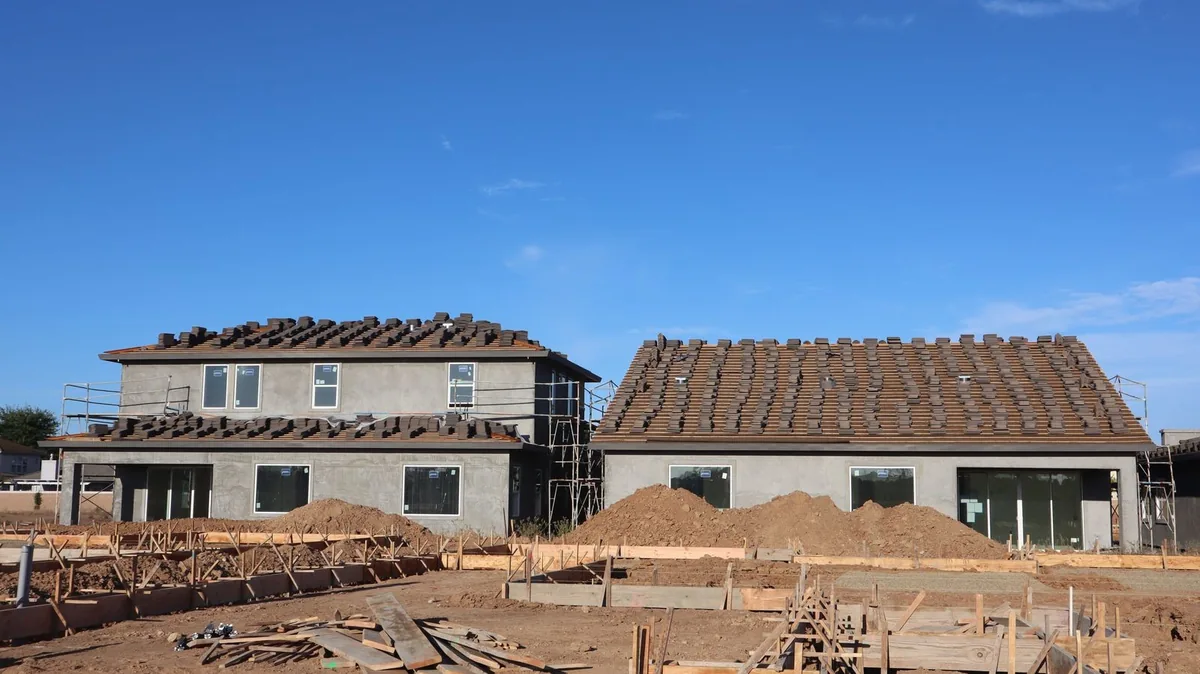
Buckeye is a clear example of why this job is so common in the West Valley right now. The city grew from 6,537 residents in 2000 to 50,876 in 2010, and its big master-planned communities started building in that decade: Sundance from 2002, Verrado from 2004, Tartesso in the 2005 boom and Sun City Festival from 2006. Homes from those years on original single-layer felt are now at or past its published life.
See tile roof underlayment replacement in Buckeye, roof replacement cost, or request a written quote.
What happens on a re-felt
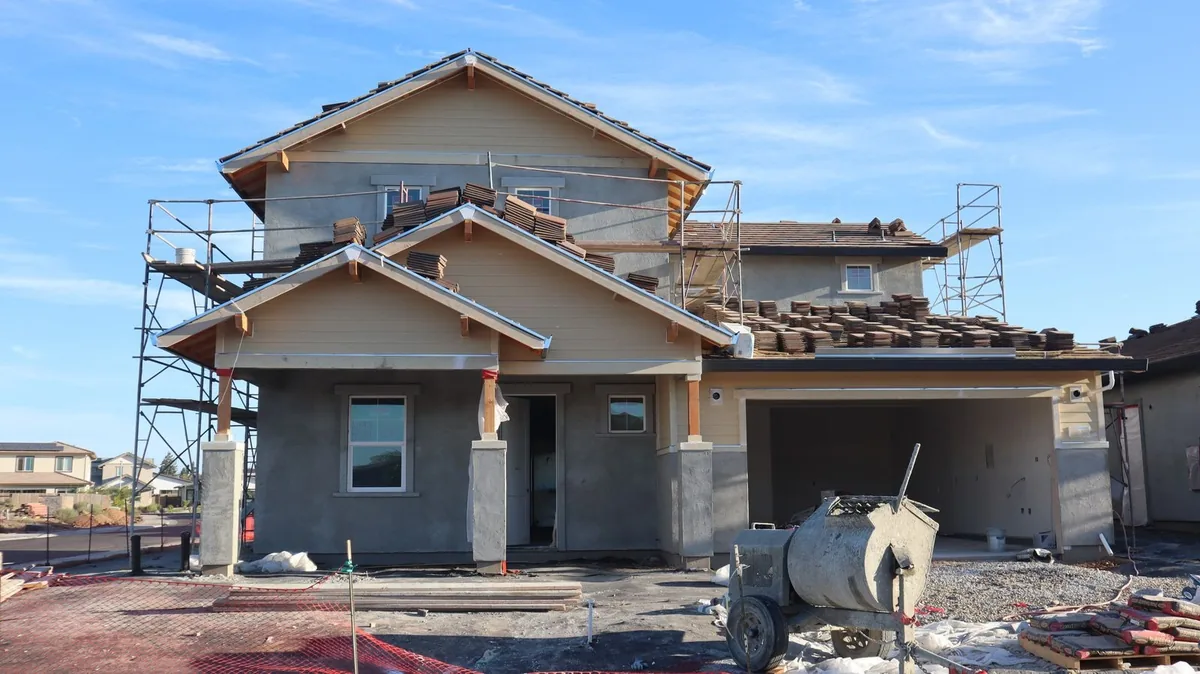
A tile underlayment replacement is a careful lift-and-relay job, not a demolition. On a typical Buckeye home it runs in this order.
- Protect the property. Landscaping, pools and patios covered; a dumpster placed for old felt.
- Lift and stack the tile. Tiles are removed and stacked on the roof or on pallets, and broken ones set aside.
- Strip the old underlayment and battens. Down to the roof deck.
- Inspect the deck. Soft, delaminated or rotten sheathing is replaced at the price agreed in the quote.
- Install the new underlayment. The product you chose, lapped and fastened to the manufacturer's instructions.
- Replace flashings. Valleys, wall and chimney flashings, pipe and vent flashings, and edge metal.
- New battens, then relay the tile. The same tile goes back down, with replacements for any breakage.
- Ridge, hips and clean-up. Ridge and hip caps set, debris removed, final walk-through with photos.

Choosing the new underlayment
The underlayment you choose sets the next cycle, so it is worth more attention than any other line in the quote.
| Underlayment | Arizona life | Notes |
|---|---|---|
| Single 30# felt | 15 to 20 years | The original on many 2000s Buckeye homes; the lowest-cost option |
| Double 40# felt | 25 to 30 years | Two layers of heavier felt |
| G40 / modified | 25 to 35 years | Modified felt with better heat resistance |
| Synthetic | 25 to 40 years | Light, strong sheets |
| Peel-and-stick | 30 to 40 years | Self-adhered; high-temperature rubberized products are rated up to 250 degrees |
Lifespans from a Phoenix roofer's published Arizona table; temperature rating from an Arizona roofer's underlayment guide.
Ask for the quote with two or three underlayment options priced side by side. The difference in price is usually small next to the difference in years.
Tile breakage and matching
Some tile breaks when it is lifted, especially older concrete tile. A good quote states how breakage is handled: an allowance of replacement tile, a per-tile price beyond the allowance, and where matching tile will come from. Profiles and colors change over the years, so the roofer may move salvaged originals to the most visible slopes and put the closest match on the least visible ones. If your HOA controls tile color, check that the plan satisfies it.
Roof area is not floor area
Prices are quoted on roof area, which is larger than the home's floor area because of pitch, overhangs and any patio covers. A home with 2,000 square feet of living space can easily have a larger roof. Using the published per-square-foot range for a re-felt with tile reused, $4.50 to $8.50, the arithmetic looks like this.
| Roof area | Calculated range |
|---|---|
| 1,500 sq ft | $6,750 to $12,750 |
| 2,000 sq ft | $9,000 to $17,000 |
| 2,500 sq ft | $11,250 to $21,250 |
| 3,000 sq ft | $13,500 to $25,500 |
Arithmetic on a 2026 Arizona price guide's per-square-foot range, not a quote. Deck repair, permits and access change the real number.
The deck under the felt
A re-felt is the one moment in a tile roof's life when the roof deck is fully exposed. Felt that has leaked for a while can leave sheathing soft, stained or delaminated, often around valleys, walls and penetrations where water concentrates. Replacing damaged sheathing while the roof is open is far cheaper than coming back later.
Sources for this guide
- A Phoenix roofer's published Arizona underlayment table, with lifespans and Phoenix-area replacement costs by roof size
- A 2026 Arizona roofing price guide, for the per-square-foot re-felt range
- An Arizona roofer's underlayment guide, for felt lifespan and high-temperature underlayment ratings
- Buckeye community build years from community and Census records
After the re-felt
Keep the paperwork: the final invoice, the underlayment product name, completion photos, and both warranties. Note the date, because it resets your roof's clock. Then keep the new felt protected the same way as the old: reset slipped tiles after storms, keep valleys clear, and make sure anyone working on the roof later, such as a solar installer, knows how to walk tile and how to flash a penetration.
How to get a fair quote

- Confirm the felt has failed. Have a roofer lift tiles on several slopes and photograph the felt.
- Get the roof area measured. Quotes should state roof area in squares, not floor area.
- Choose the underlayment. Compare the quoted price difference between felt, synthetic and self-adhered underlayment.
- Check the breakage plan. Ask how broken tile will be replaced and matched, and at what price.
- Compare itemized quotes. Compare deck repair unit prices, flashing scope, solar handling and warranty.