Roof replacement in Buckeye, AZ, start to finish
Roof replacement in Buckeye, AZ means one of two different jobs, and the difference is worth thousands of dollars. On a shingle, foam or metal roof it means a full tear-off and a new covering. On the concrete tile roofs that cover most of the city, it very often means keeping the tile and replacing only what is under it.
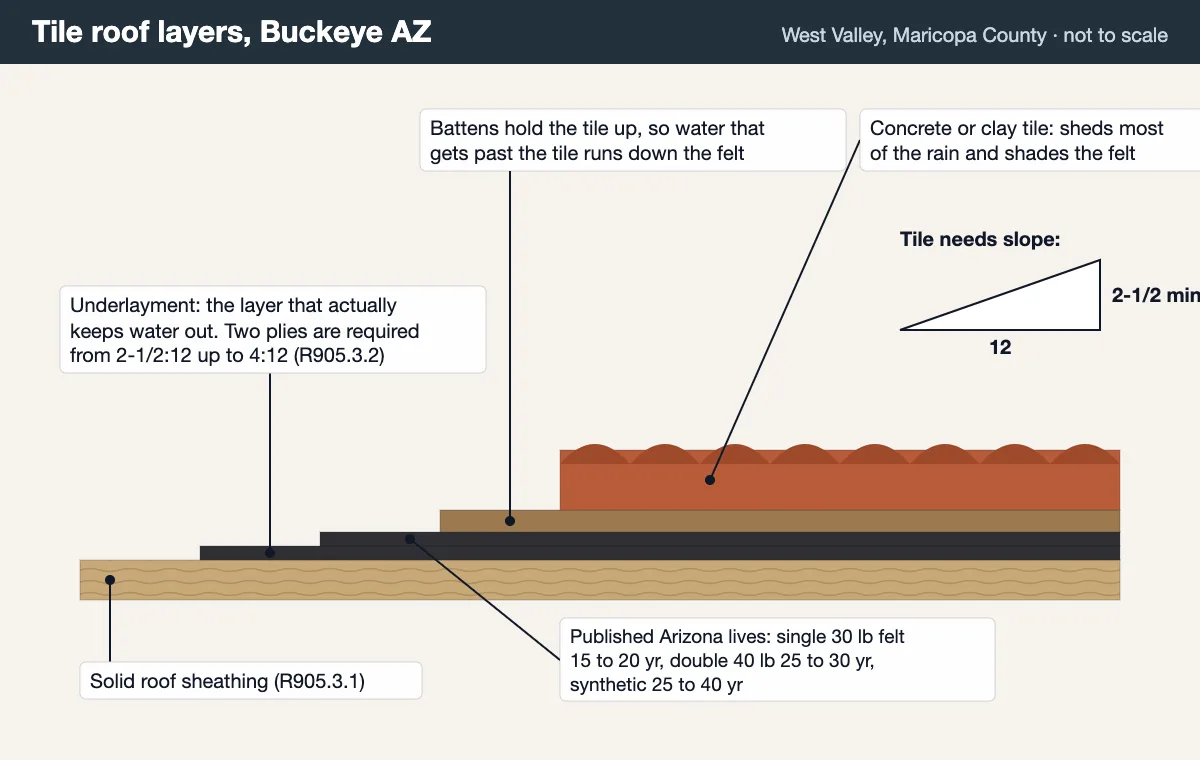
That is because a tile roof is a two-layer system. The tile sheds most of the water and shades the layer beneath; the underlayment, felt or synthetic, is what actually keeps the house dry. In Buckeye's sun the underlayment ages far faster than the tile. A Phoenix roofer's published Arizona table puts single-layer 30-pound felt at 15 to 20 years and describes it as "common on homes built before 2005", while the tile above it is routinely reused.
So the first job of a good roofer on a Buckeye tile roof is to lift tiles and look. If the tile is sound, you are buying a tile roof underlayment replacement, not a new roof. If the tile itself is failing, or the house has shingle, foam or metal, you are buying a full replacement, and the rest of this page is about doing that well. One choice worth settling early: if a rooftop package unit sits up there, the reroof is the natural moment to decide whether it goes back on the roof or moves to a ground-level AC pad.
Why so many Buckeye roofs are due at once
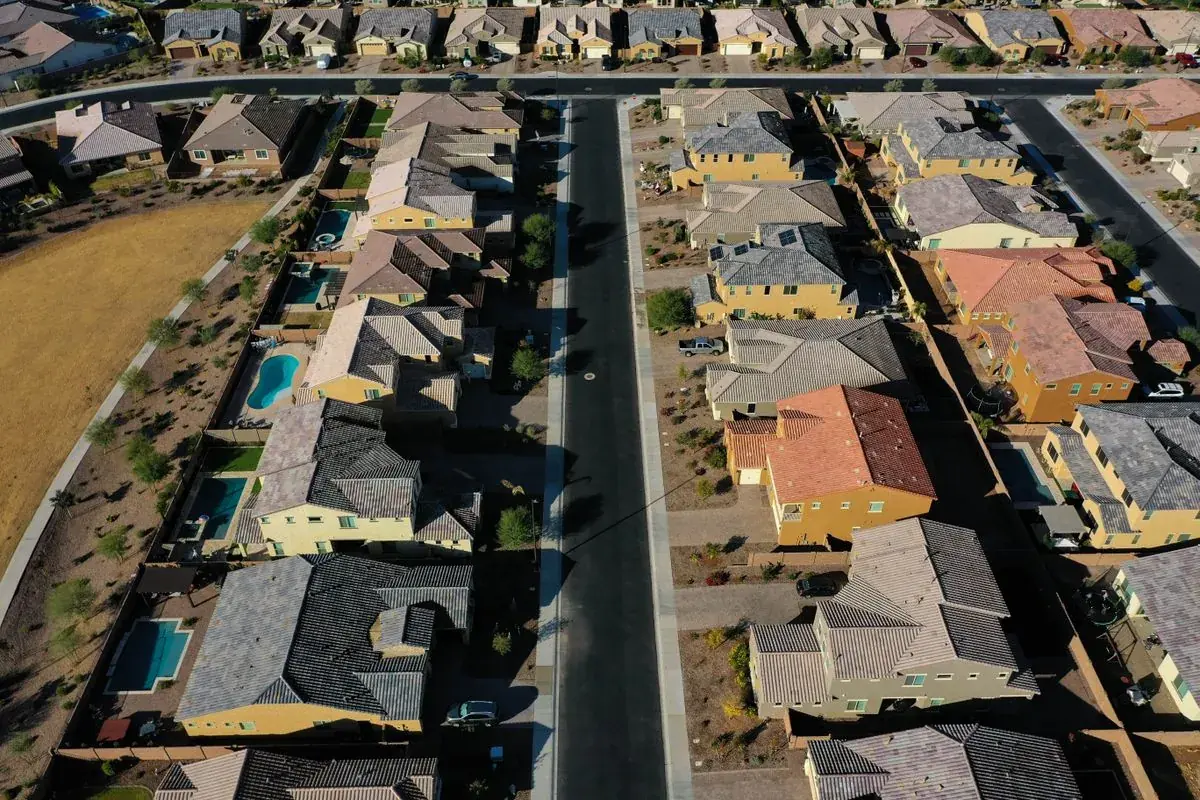
Buckeye's roofs are reaching replacement age in waves because the city was built in waves. Buckeye had 6,537 residents in 2000, 50,876 in 2010, 91,502 in 2020 and 114,334 in the Census Bureau's July 2024 estimate. The big master-planned communities started early in that run: Sundance from 2002, Verrado, which opened in 2004, Tartesso, which completed about 3,000 lots in the 2005 boom before the recession stopped it, and Sun City Festival from 2006.
Homes from that era were almost all roofed in concrete tile over felt. Set a 15 to 20 year felt life against a 2002 to 2008 build date and the result is the situation many Buckeye homeowners are in now: tile that looks fine from the street, felt underneath that has gone brittle, and the first monsoon leaks showing up on ceilings.
What a roof replacement costs in Buckeye, AZ
A Buckeye roof replacement on a 2,000 square foot roof typically costs $9,000 to $14,000 in architectural shingle, $14,000 to $28,000 in a new concrete tile system, and $9,000 to $17,000 if the existing tile is reused over new underlayment. These are the published 2026 Arizona bands; the West Valley sits on them because metro Phoenix shares the same crews, suppliers and wage rates.
| Roof system | Per sq ft installed | 2,000 sq ft roof |
|---|---|---|
| Spray foam (flat and low-slope) | $3.50 to $7.00 | $7,000 to $14,000 |
| Modified bitumen (flat) | $4.00 to $8.00 | $8,000 to $16,000 |
| Architectural asphalt shingle | $4.50 to $7.00 | $9,000 to $14,000 |
| Tile-over: underlayment replaced, tile reused | $4.50 to $8.50 | $9,000 to $17,000 |
| TPO membrane (flat) | $5.00 to $10.00 | $10,000 to $20,000 |
| Concrete tile, full new system | $7.00 to $14.00 | $14,000 to $28,000 |
| Metal, panel to standing seam | $8.00 to $18.00 | $16,000 to $36,000 |
| Clay tile, full new system | $10.00 to $18.00 | $20,000 to $36,000 |
Source: Arizona roof replacement cost guide, published May 7, 2026. The guide states most Arizona homeowners pay between $9,000 and $28,000, adds $150 to $650 for a re-roof permit where needed, and gives Avondale, the nearest listed city to Buckeye, a range of $11,100 to $23,300.
What moves a Buckeye quote up or down
- Whether the existing tile can be reused: reusing sound concrete tile is the single biggest saving available on a Buckeye roof
- Deck condition found at tear-off: delaminated or water-damaged sheathing is replaced before anything goes over it
- Roof complexity: every valley, hip, wall, chimney, skylight and pipe needs its own flashing and labor
- Underlayment grade: single 30-pound felt, double felt, synthetic or self-adhered, which sets how long the new roof lasts
- Solar: panels and racking have to be detached before the work and reset and reflashed after it
- HOA requirements on tile profile and color, which can rule out cheaper options
- Disposal: a Phoenix-area guide puts tear-off disposal at $1.00 to $3.00 per square foot
- Permit, where the job falls outside Buckeye's like-for-like exemption
The full breakdown, including how to read a quote line by line, is in the Buckeye roof replacement cost guide.
Choosing the new roof: four options for a Buckeye house
The right replacement roof in Buckeye depends on the roof's pitch, your HOA, and how long you intend to own the house. These are the four realistic choices and where each one fits.
Concrete tile on upgraded underlayment
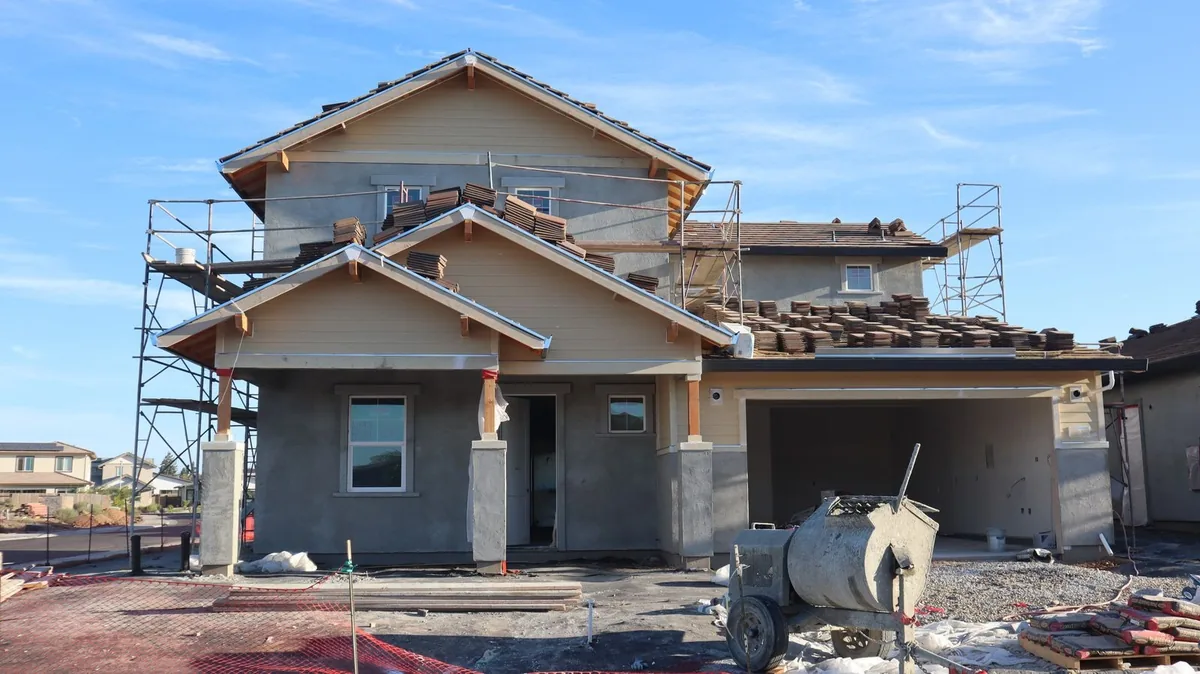
Concrete tile is the default for pitched roofs in Buckeye's master-planned communities and the choice most HOA palettes are written around. The decision that matters is the underlayment under it: published Arizona lives run from 15 to 20 years for single 30-pound felt to 25 to 40 years for synthetic and 30 to 40 years for peel-and-stick. Paying for the better sheet is how a new tile roof avoids a second re-felt in twenty years. See tile roofing in Buckeye.
Architectural asphalt shingle
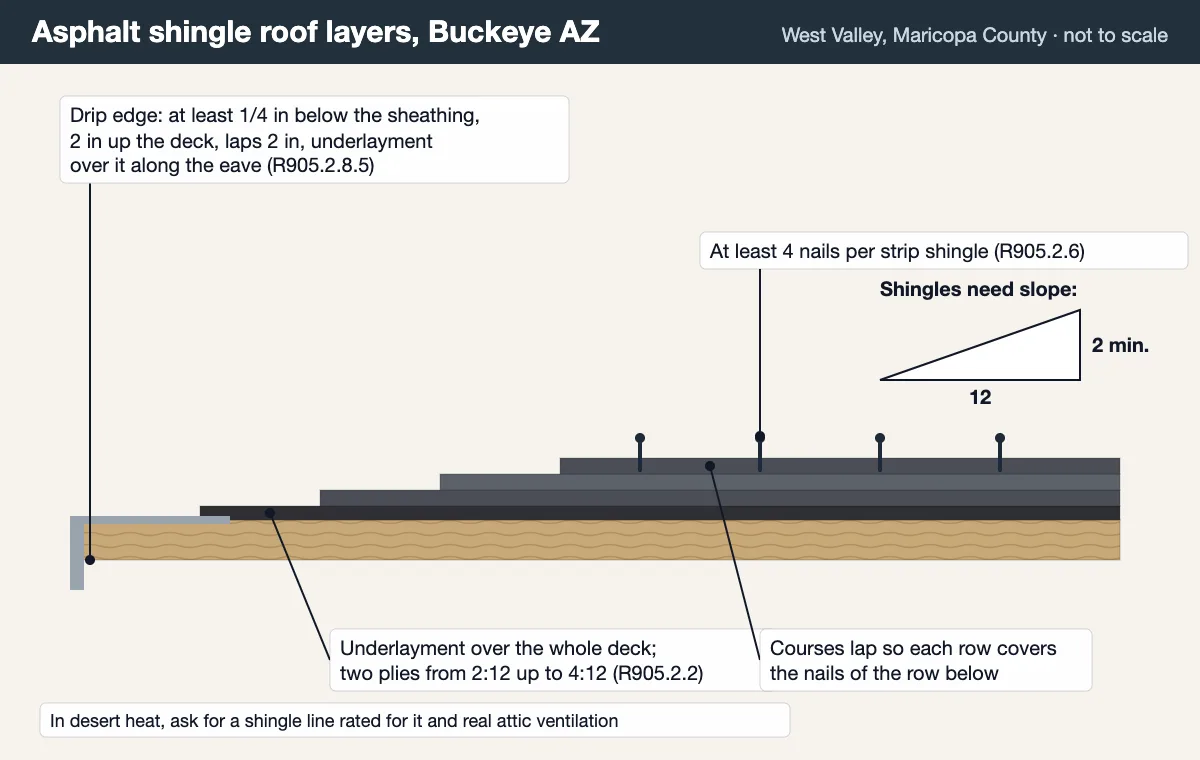
Shingle is the lowest-cost pitched roof, at $4.50 to $7.00 per square foot installed in the 2026 Arizona figures, and the quickest to install. It is also the covering that the West Valley sun ages fastest, so the shingle line, ventilation and underlayment specification all matter. It suits older downtown homes, rentals and outbuildings. See shingle roofing.
Metal
Metal, from exposed-fastener panel to standing seam, is the premium residential choice at $8.00 to $18.00 per square foot and the natural fit for acreage homes, shops and barns around Tonopah, Palo Verde and Arlington. It reflects a lot of sun and has no underlayment-under-tile problem. See metal roofing.
Spray foam or TPO on the flat sections
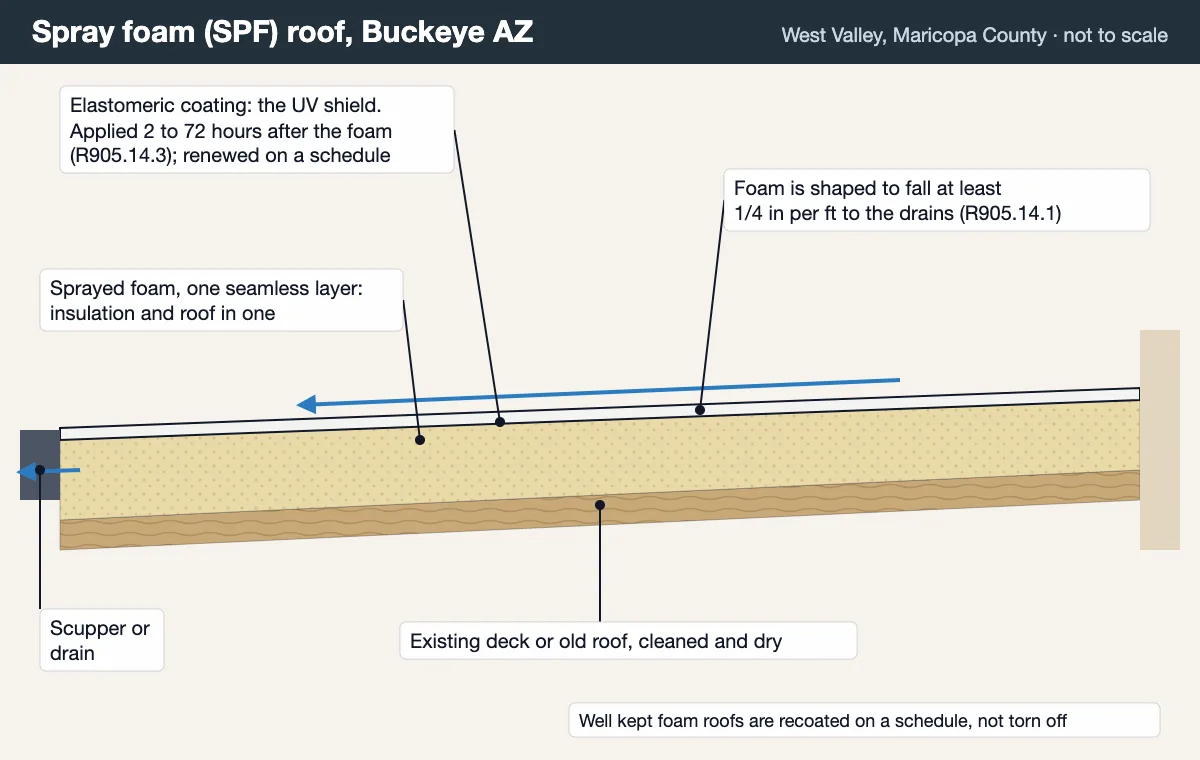
Many Buckeye homes combine a pitched tile roof with a flat section over a patio, an addition or a mechanical area. Those flat sections are usually spray foam, at $3.50 to $7.00 per square foot, or a single-ply membrane. Replacing the pitched roof without addressing a tired flat section next to it is a common false economy. See foam roofing.
| Underlayment | Arizona lifespan | Note from the source |
|---|---|---|
| 30# felt, single layer | 15 to 20 years | Common on homes built before 2005; degrades quickly in heat |
| 40# felt, double layer | 25 to 30 years | Standard for mid-grade tile roofs |
| G40 / modified bitumen | 25 to 35 years | Handles expansion and contraction well |
| Synthetic | 25 to 40 years | Lightweight, tear-resistant, UV-stable |
| Peel-and-stick / rubberized | 30 to 40 years | Premium waterproofing, good in valleys |
Source: a Phoenix roofing contractor's published guide to tile roof underlayment in Arizona. In the Phoenix metro, the guide notes, materials tend to age at the faster end of these ranges.
Permits, HOAs and licenses for a Buckeye re-roof
Buckeye's adopted code exempts most like-for-like residential roof replacements from a building permit, though the City's Permit Center should still be asked. The City adopted the 2024 International Building Code and Residential Code, and amended the IBC's section 105.2 list of work exempt from permit to include:
Read closely, that exemption is narrow. It covers a house, the same type of material, and at most one shingle layer laid over shingle. A switch from shingle to tile, from tile to foam or metal, structural repairs, and every commercial re-roof sit outside it. Properties outside City limits, in unincorporated Tonopah, Palo Verde or Arlington, deal with Maricopa County instead. The Buckeye roofing permit guide covers each case.
The license rule is simpler. Roofing in Arizona is licensed by the Registrar of Contractors as R-42 residential, C-42 commercial or CR-42 for both, and A.R.S. 32-1124 requires the license number, preceded by "ROC", on every written bid and estimate. Every quote arranged through this site carries it. See how to check a roofer's license.
When a replacement is the right call
A replacement is the right call when the roof covering itself has reached the end of its life, not just when there is a leak. These are the conditions that usually decide it on a Buckeye house.
- Shingles that are shedding granules heavily, cracking or curling across whole slopes rather than in one spot
- Concrete tile that is breaking widely when walked, has eroded through its surface, or is a discontinued profile that can no longer be matched
- Felt that crumbles when a tile is lifted, across several slopes, combined with tile that is also failing
- A foam roof whose coating was neglected long enough for the foam itself to erode, blister and hold water
- Repeated leaks in different places after repairs, which usually means the whole underlayment has failed
- Deck damage found in several areas, which a covering cannot be relaid over
If only one of those is true and the roof is otherwise young, a roof repair is likely the honest answer. If the tile is good and the felt is not, it is an underlayment replacement. Not sure? Start with a roof inspection.
How a roof replacement runs in Buckeye
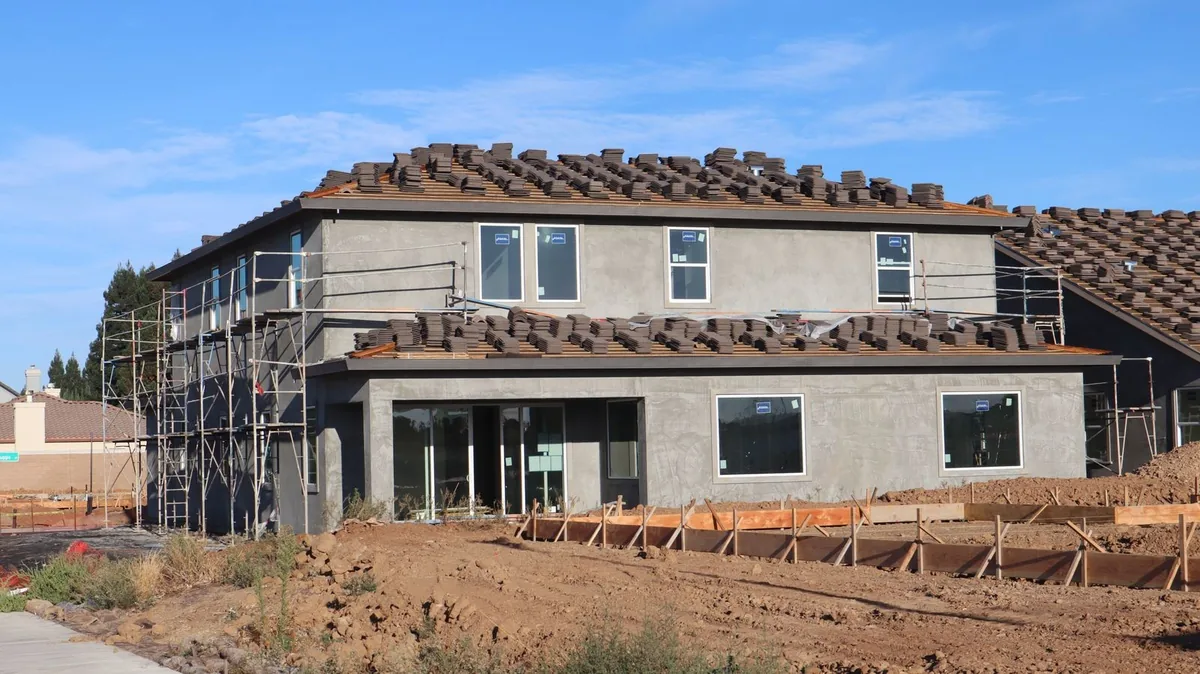
A Buckeye roof replacement runs in seven stages, and the most important one is the fourth, when the deck is exposed and any damage under the old roof can be seen and fixed. Ask for photographs of that stage.
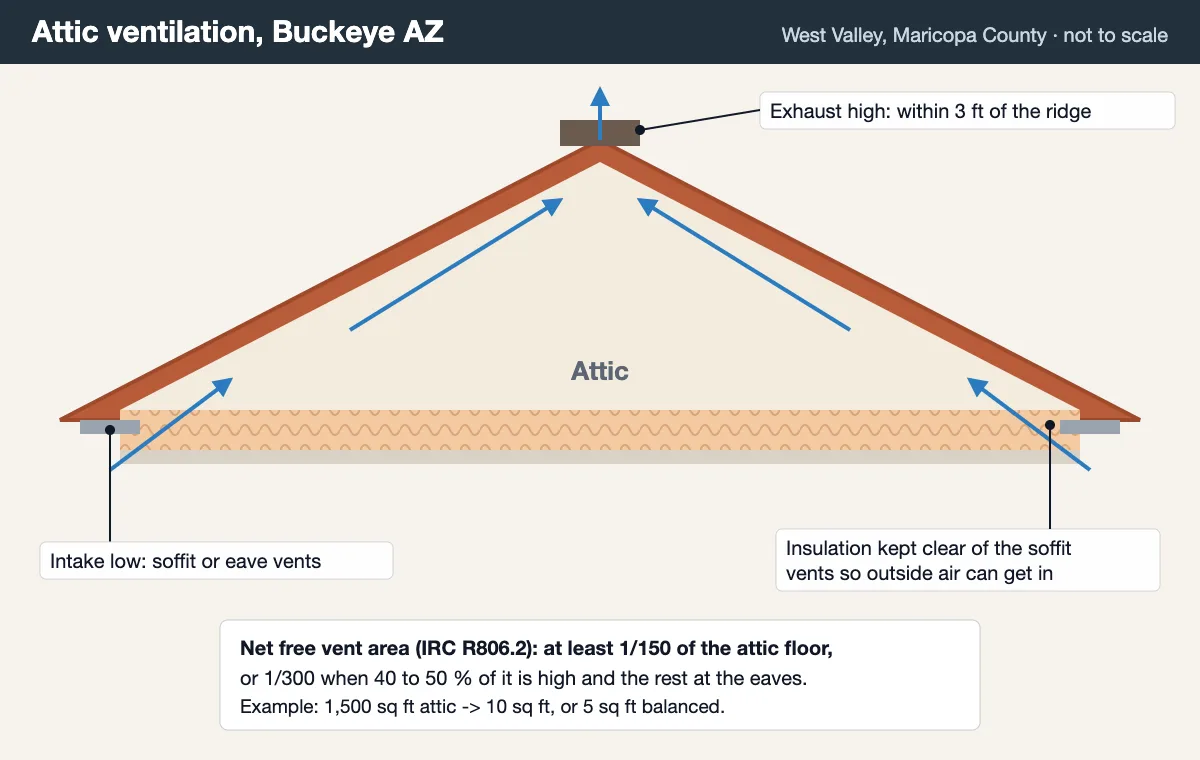
- Inspection with tiles lifted. A licensed roofer walks the roof and lifts tiles in several places, including valleys, eaves and the south and west slopes that take the most sun, to see the condition of the felt, battens and deck. On a shingle roof the check is granule loss, nail pops, lifted tabs and the deck feel underfoot.
- Repair, re-felt or replace: priced side by side. The written quote separates the options honestly: a repair if the roof is young and sound, an underlayment replacement if the tile is good and the felt is not, and a full new system if the covering itself is failing. Each option names the underlayment product, the flashing scope and the disposal line.
- Approvals. Buckeye's 105.2 code amendment lists a like-for-like residential re-roof as exempt work; because the City's Permit Center lists re-roofs among projects needing permits, the roofer confirms with the Permit Center. A change of material, structural work or a commercial roof needs a permit. HOA architectural approval, where the community has one, is requested before the job is scheduled.
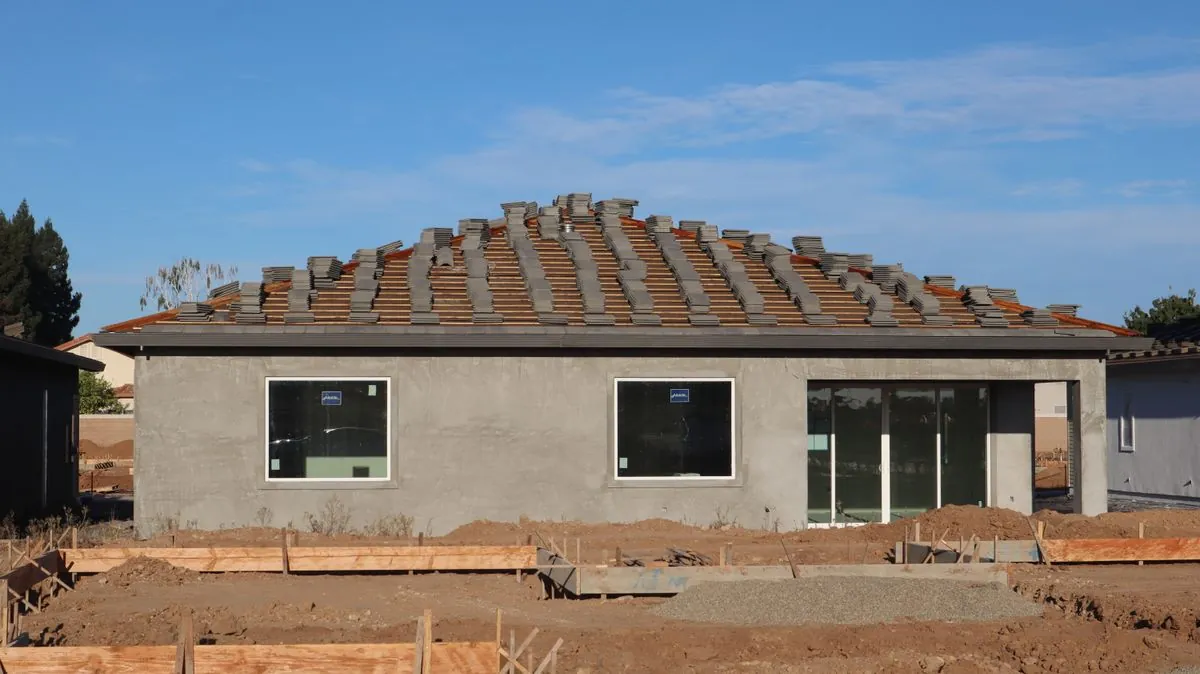
- Tear-off and deck repair. The old covering and underlayment come off down to the deck. Damaged or delaminated sheathing is cut out and replaced, and any soft fascia or rafter tail is flagged before new material goes over it. On a tile job, reusable tile is stacked on the roof rather than lowered and lifted again.
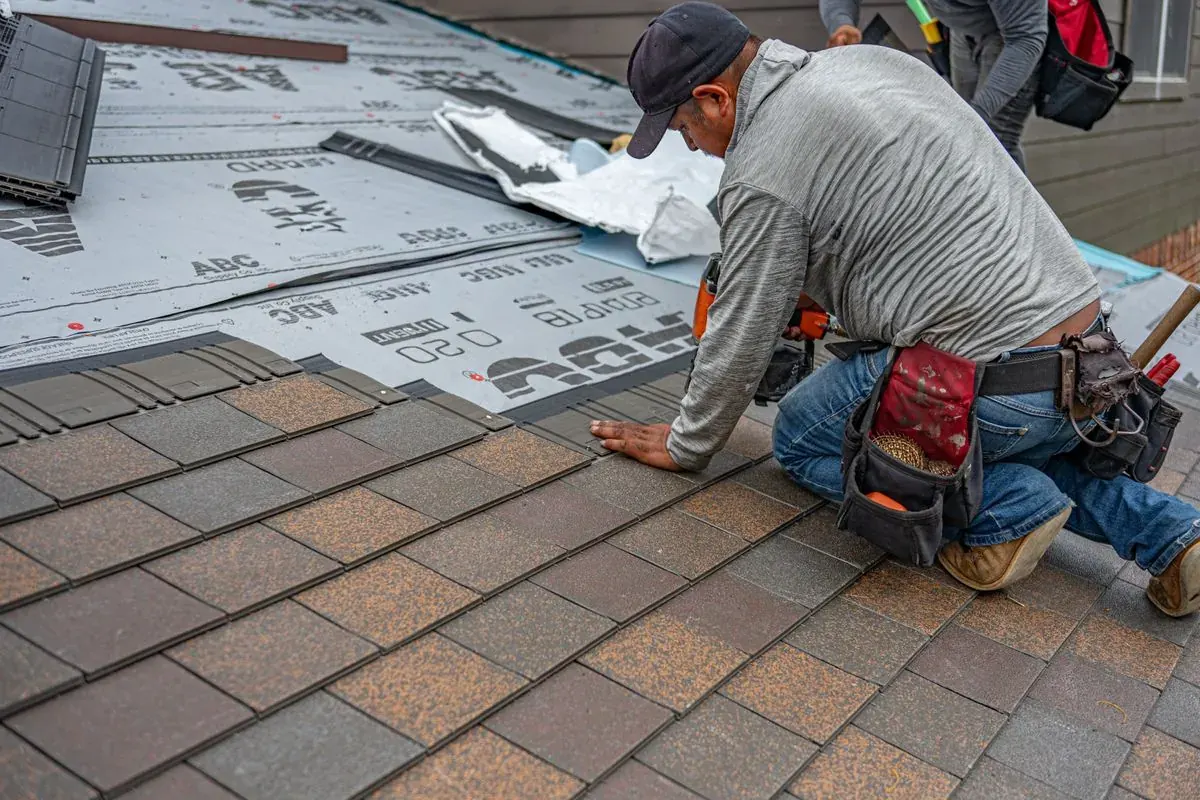
- Underlayment, battens and flashing. New underlayment goes down in full, then the metal: drip edge, valley metal, wall and step flashing, chimney and skylight flashing, and a new flashing at every pipe and vent. On tile, new battens are set where the system calls for them.
- The roof covering. Tile is relaid or new tile installed, with ridge and hip pieces bedded and fastened; shingle is nailed to the manufacturer's pattern; foam is sprayed to thickness and coated; metal panels are set and seamed. Solar racking goes back on with new flashings at each attachment.
- Clean-up and close-out. The site is cleared of nails and debris, the gutters are emptied, and you receive photographs of the deck and underlayment stage, the written warranty terms, and any permit close-out paperwork.
The best time of year to replace a roof in Buckeye
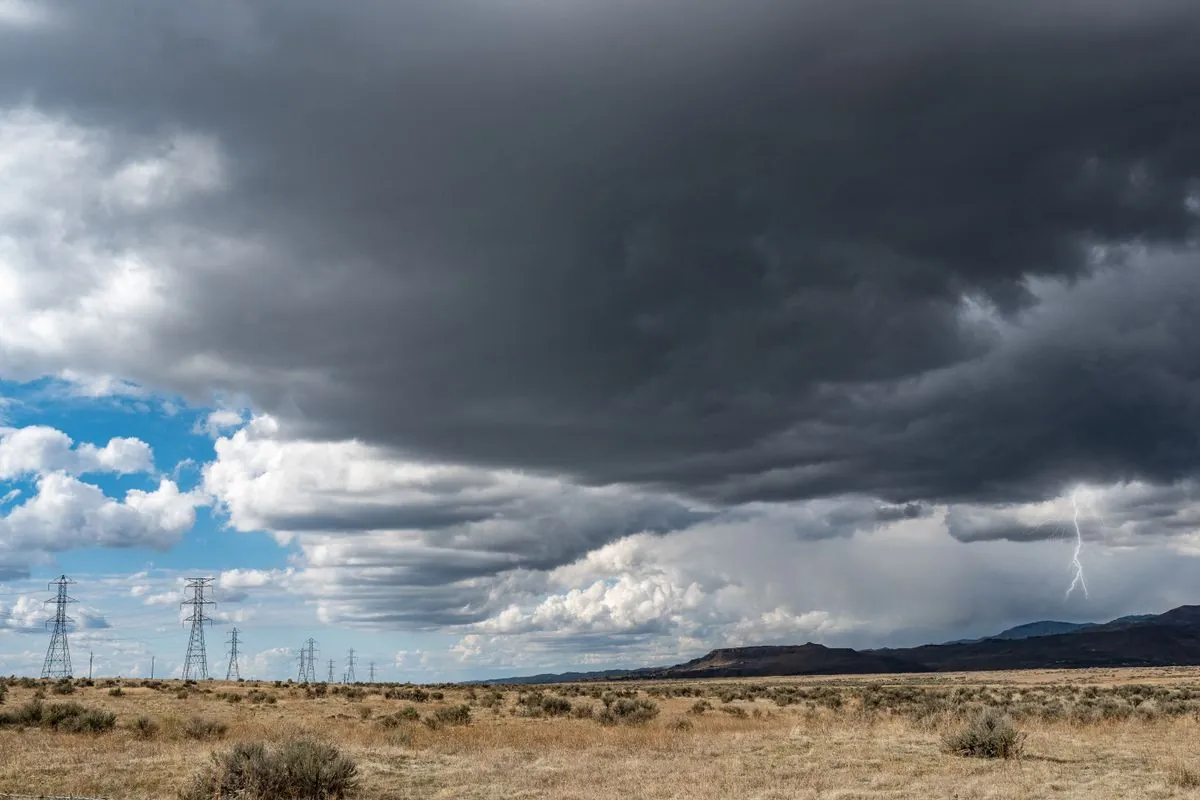
The best time to replace a Buckeye roof is between October and May, ahead of the next monsoon. Summer work happens, but crews start early to stay out of afternoon heat, roof surfaces in full sun can pass 160 degrees, and from June 15 to September 30 a monsoon cell can arrive with an open roof. Booking the inspection in winter or spring gives time for HOA approval and material ordering without racing the weather.
If a roof is already leaking in summer, a temporary dry-in or a targeted repair to get through the season, followed by the full job in autumn, is a sensible plan rather than a sales tactic. See roof leak repair and the Buckeye service area, or request a quote.