Roof maintenance in the desert
Roof maintenance in Buckeye, AZ is shaped by the weather's odd rhythm. Most of the year the roof sits in dry heat, with roof surfaces that can pass 160 degrees in summer, slowly ageing felt, coatings and shingle. Then the monsoon, which the National Weather Service defines as June 15 through September 30, tests every weakness at once with wind, rain, dust and sometimes hail.
That makes timing the whole point of maintenance here. A loose ridge tile, a split pipe boot or a blocked valley costs very little to fix in April. The same defect after a downburst and an evening of rain is a wet ceiling, damp insulation, and a busy roofer who cannot come for a week.
Maintenance is also how you plan for the big costs instead of being surprised by them: the foam recoat that comes round every few years, and the tile underlayment replacement that most Buckeye tile roofs will need once.
The pre-monsoon checklist
This is what a pre-monsoon roof visit should cover on a typical Buckeye home.
| Roof | What gets checked and fixed |
|---|---|
| Tile | Ridge, hip and eave tile reset and fastened; cracked tile replaced; valleys cleared; flashings and boots checked; felt spot-checked |
| Foam / flat | Coating wear and cracks, blisters, bird damage; drains and scuppers cleared; flashings at walls and units |
| Shingle | Lifted or missing tabs, granule loss, flashing and boots, gutters |
| Metal | Fasteners and washers, trims and closures, rust at laps and cut edges, gutters |
| All roofs | Overhanging branches trimmed, attic checked for stains, solar and equipment mounts checked |
A simple yearly schedule
Every spring
The pre-monsoon check above, done in March, April or May, before June 15.
After big storms
A look at the roof edges, valleys and any flat sections after a storm with high wind, hail or heavy dust, plus an attic check for new stains. See storm damage repair.
Every few years
A foam recoat about every 5 to 7 years, per a Phoenix roofer's guide, and on tile roofs a felt check by lifting tile as the roof approaches the published 15 to 20 year life of single-layer felt. See roof coating and underlayment replacement.
What homeowners can safely do
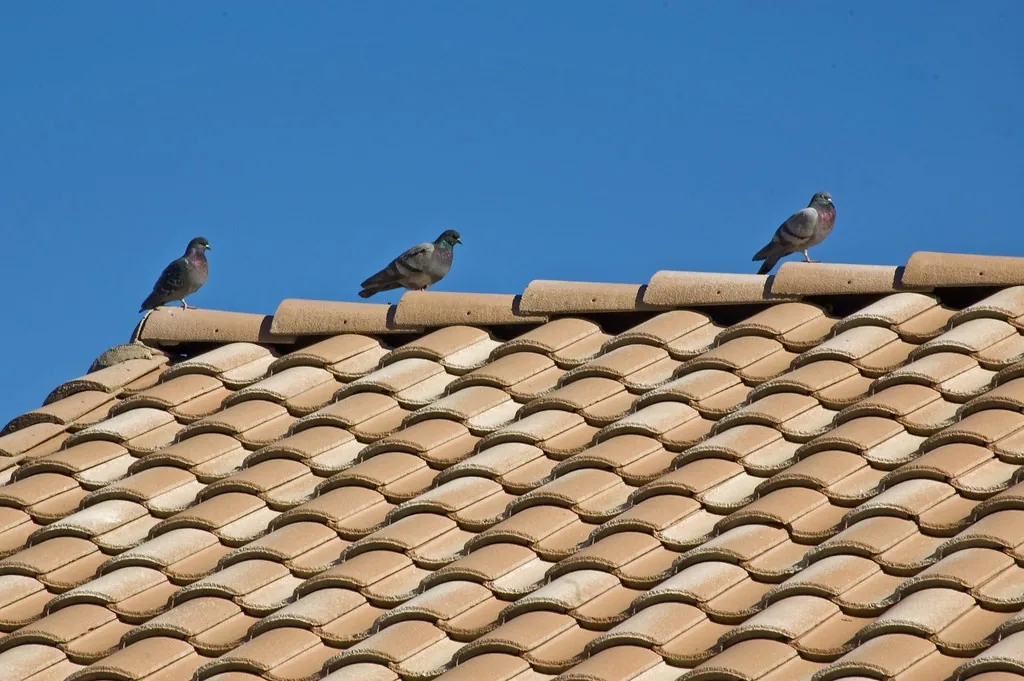
- Look over the roof from the ground after storms for slipped tile, missing shingle or debris
- Clear gutters and downspouts you can reach safely from a ladder on firm ground
- Trim trees so branches do not touch or overhang the roof
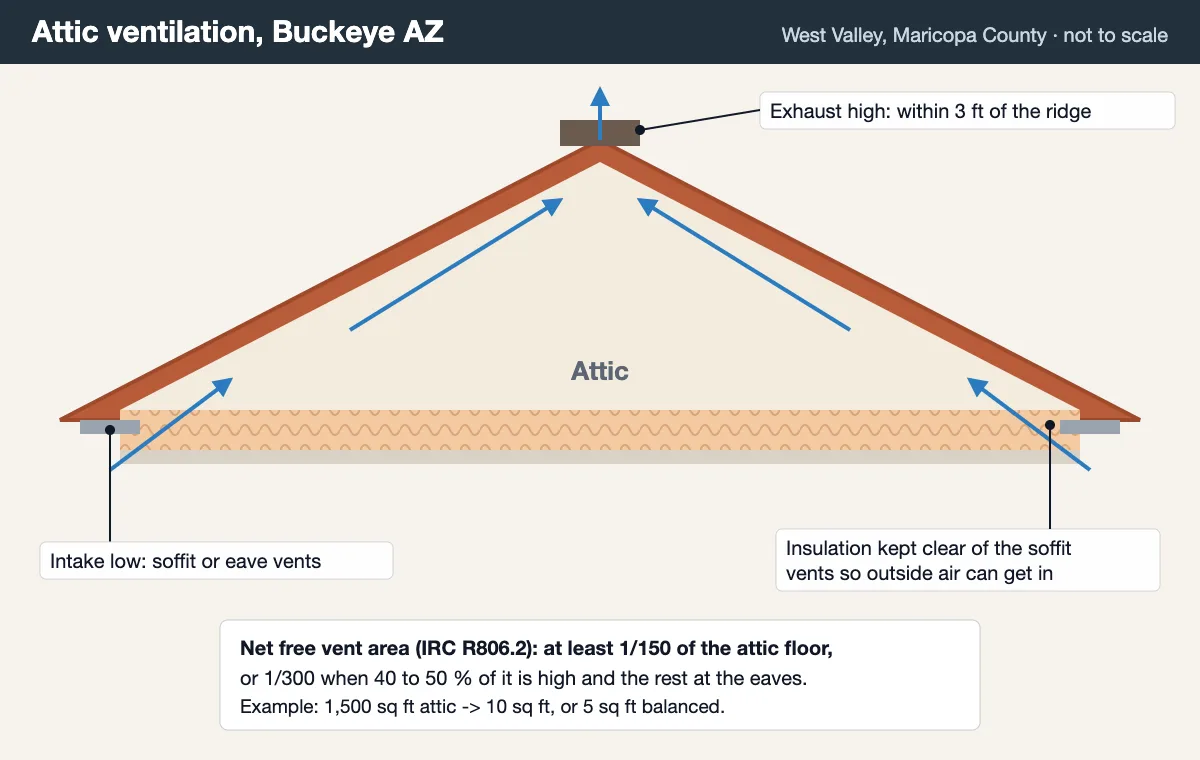
- Check the attic on a cool morning for stains, damp insulation or daylight
- Photograph the roof before and after any trade, such as solar, satellite or HVAC, works on it
- Keep a folder of roof reports, invoices and warranties
Maintenance for commercial roofs
Commercial roofs with rooftop units, many penetrations and large drainage areas benefit most from scheduled maintenance: twice-yearly inspections, drain clearing before the monsoon, and repairs to flashings and seams before they leak into tenant space. See commercial roof repair, the service area, or book a maintenance visit.
Maintenance by roof age
What a Buckeye roof needs changes as it ages, and because whole communities were built in a few years, a neighborhood's roofs tend to move through these stages together.
| Roof age | Focus |
|---|---|
| 0 to 10 years | Annual check of ridges, eaves, flashings and boots; keep valleys clear; fix trade damage |
| 10 to 15 years | Add felt spot-checks by lifting tile on sun-facing slopes; renew boots and tired flashings |
| 15 to 20 years | Plan the underlayment replacement; single 30-pound felt reaches its published Arizona life |
| 20+ years on original felt | Expect leaks; schedule the re-felt before the next monsoon rather than repairing piecemeal |
Felt life from a Phoenix roofer's published Arizona underlayment table: single 30-pound felt 15 to 20 years.
Gutters and downspouts in the desert
Many Buckeye homes have few or no gutters, and the ones that exist mostly sit idle for months, then carry a monsoon downpour all at once. Dust and debris settle in them during dry spells, so the first big storm overflows them, often against stucco walls and foundations. Clearing them in spring, and after big dust storms, keeps them doing their job.
Keeping roof records
- The year the roof was installed or last re-felted, and the underlayment used
- Every inspection report and repair invoice, with photographs
- Foam recoat dates and the coating product used
- Solar installation details and attachment method
- Warranties for the roof, the coating and any solar
- HOA approvals for roof work
A simple folder like this makes insurance claims, warranty claims and the eventual sale of the house far easier, and tells the next roofer exactly where the roof is in its life.
Planning a foam roof's recoats
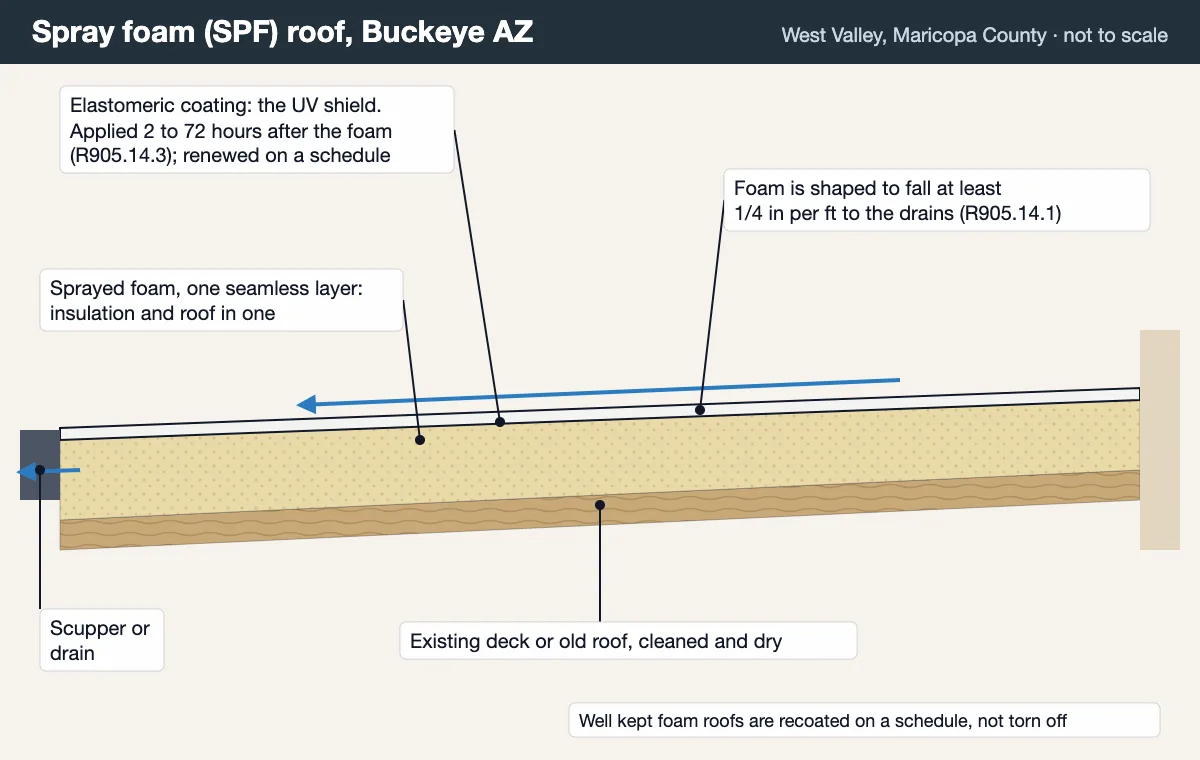
A foam roof is the clearest example of maintenance paying off. A Phoenix roofer's foam guide sets out the outcomes: recoat every 5 to 7 years and the roof sees multiple recoats with no major tear-offs; delay to 10 to 12 years and foam is exposed in places and needs repairs before recoating; skip recoats entirely and the foam erodes, takes on water and has to be replaced.
Writing the next recoat year in your roof records, and checking the coating every spring, keeps the roof on the cheap side of that table. See foam roofing.
What a maintenance visit involves
- Clear the water paths. Valleys, gutters, downspouts, scuppers and roof drains are cleared of dust, leaves and debris.
- Secure the edges. Ridge, hip, rake and eave tile is checked, reset and fastened; shingle tabs and metal trims are secured.
- Check the penetrations. Pipe boots, vent flashings, chimney and skylight flashing, and solar and equipment mounts are checked and renewed where needed.
- Check the surface. Cracked tile is replaced, foam coatings checked for wear, and shingle checked for granule loss.
- Report. You receive photographs and a short written note of what was done and what is coming up, such as a recoat or a re-felt.