The short answer
Homeowners insurance usually covers roof damage that is sudden and accidental, such as wind or hail damage from a monsoon storm, and usually does not cover wear and tear, ageing materials or poor maintenance. Whether your claim is paid, and how much, depends on your policy's wording, your deductible, and evidence that a storm caused the damage.
Storm damage versus wear and tear
The dividing line in most roof claims is cause. Insurers generally pay for damage caused by a covered event and not for a roof that has simply worn out.
| Damage | Typical treatment | Why |
|---|---|---|
| Tiles or shingles blown off in a monsoon storm | Often covered | Sudden wind damage |
| Tiles cracked by hail | Often covered | Sudden hail damage |
| Tree or debris falling on the roof | Often covered | Sudden impact |
| Leak from felt that has aged out under tile | Usually not covered | Wear and tear |
| Foam roof eroded because it was never recoated | Usually not covered | Lack of maintenance |
| Shingles worn bare by sun | Usually not covered | Ageing |
Typical treatment only. Your policy wording decides.
Why this matters for older Buckeye roofs
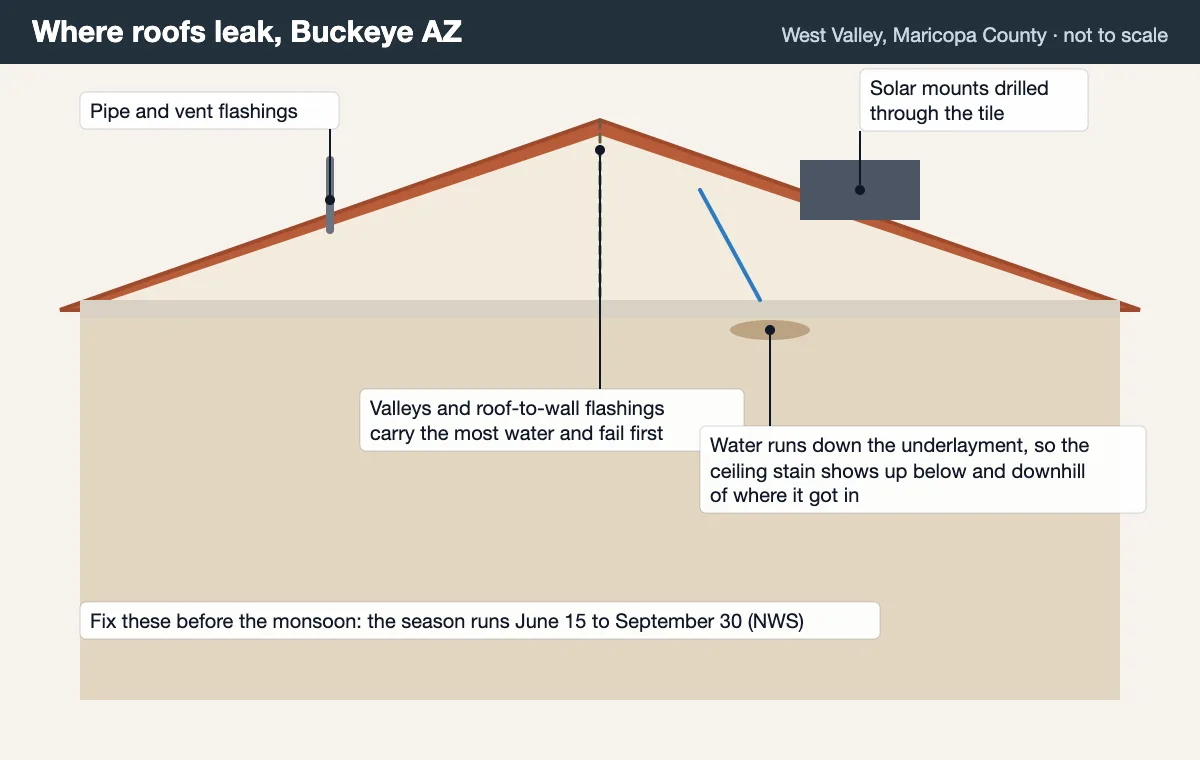
Many Buckeye tile roofs from the 2000s are on original felt that has reached its published 15 to 20 year Arizona life. When one of those roofs leaks in a storm, the insurer will look at whether the storm damaged the roof or simply exposed felt that had already failed. A roofer's report with photos of the tile, flashing and felt helps answer that honestly. See how long roofs last in Arizona.
Document the damage properly
Good evidence is the difference between a quick claim and a long argument. Start before anything is cleaned up or repaired.
- Dated photos and video of the roof from the ground, from every side
- Close photos of debris, broken tile pieces and shingle tabs on the ground
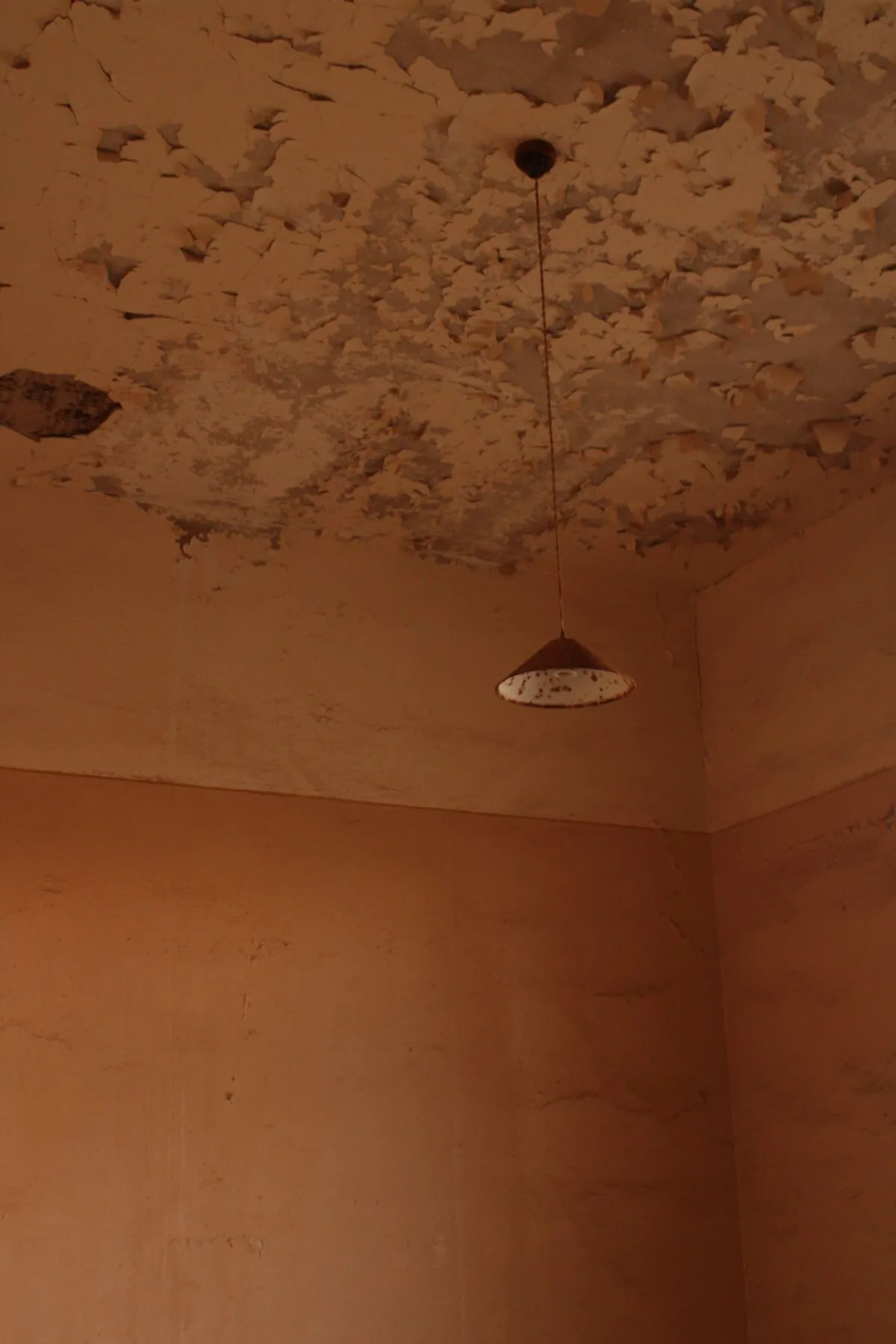
- Interior photos: ceiling stains, wet insulation, damaged belongings
- The storm date and time; the National Weather Service records warnings and storm reports
- Damaged pieces kept, not thrown away
- Receipts for emergency tarping and any temporary repairs
- A licensed roofer's written inspection report with photos from on the roof
Read the parts of your policy that matter
| Term | What to look for |
|---|---|
| Covered perils | Whether wind and hail are covered, and any exclusions |
| Deductible | The amount you pay first; some policies have a separate wind or hail deductible |
| Replacement cost or actual cash value | Whether the roof is paid at replacement cost or depreciated for age |
| Roof age provisions | Some policies limit payment on older roofs |
| Reporting conditions | How soon you must report damage and what you must do to protect the property |
| Matching | How the policy handles repairs where new tile or shingle cannot match the existing roof |
Matching tile
Concrete tile profiles and colors change over the years, and a repair with mismatched tile stands out, especially in communities with HOA design rules. Ask your roofer whether matching tile is available, whether salvaged tile from less visible slopes can be used, and how your policy treats it.
Working with the adjuster
After you report the claim, the insurer usually sends an adjuster to inspect the roof. It helps to be prepared.
- Have your photos, storm date and roofer's report ready
- Ask whether your roofer can be present to point out damage
- Ask the adjuster to note every damaged area, including flashing and ridge caps
- Get the adjuster's estimate in writing and compare it line by line with your roofer's
- Ask about supplements if hidden damage is found once work starts
If the claim is denied or underpaid
Ask for the decision and the policy language it relies on in writing. If you disagree, you can send more evidence, such as a second roofer's report, and ask about the appeal or appraisal process in your policy.
The Arizona Department of Insurance and Financial Institutions regulates insurers in Arizona and handles consumer questions and complaints: difi.az.gov →
Cautions after a storm
- Check the roofer's ROC license before signing anything
- Be wary of anyone who asks you to sign over your insurance claim
- Do not sign a contract on the doorstep the day after a storm
- Do not pay a large deposit before work starts
- Get an itemized written quote that matches the claimed damage
See how to check an Arizona roofer's license, monsoon roof damage and storm damage roof repair in Buckeye.
Temporary repairs and tarping
Most policies expect you to take reasonable steps to stop further damage after a loss. In practice that means getting water off the inside of the house and a tarp on the roof where tiles or shingles are missing.
- Photograph the damage first, then protect the home
- Have a roofer tarp or temporarily seal the damaged area; do not climb a wet roof yourself
- Move furniture and belongings away from leaks, and catch drips
- Keep every receipt for tarping, drying and temporary repairs
- Do not make permanent repairs before the adjuster has seen the damage, unless your insurer agrees
How a roof claim usually unfolds
Insurers differ, but most roof claims move through the same stages. Knowing them helps you keep the paperwork in order.
| Stage | What happens | What you do |
|---|---|---|
| Report | You notify your insurer and get a claim number | Note the number, date and who you spoke to |
| Inspection | An adjuster inspects the roof and interior | Have photos and the roofer's report ready |
| Estimate | The insurer issues its estimate of covered damage | Compare it line by line with your roofer's |
| Payment | The insurer pays according to the policy, less the deductible | Check whether depreciation is held back |
| Repair | Your roofer completes the work | Keep the invoice and completion photos |
| Close-out | Any held-back amount is claimed if the policy allows | Send the final invoice if the insurer asks for it |
General outline only. Your insurer's process and your policy's terms apply.
Replacement cost, actual cash value and depreciation
How your policy values the roof changes the check more than almost anything else. Under a replacement cost policy, some insurers first pay the depreciated value, then release the rest once the work is done and invoiced. Under an actual cash value policy, the payment reflects the roof's age, and an older roof can be worth much less than the cost of replacing it.
Interior damage

A storm leak can damage ceilings, insulation, walls, floors and belongings. Photograph it, dry it quickly to limit further damage, and include it in the claim. How resulting interior damage is treated when the roof itself is not covered varies by policy, so ask.
Commercial property claims
Business property policies differ from homeowner policies in deductibles, valuation and conditions. Property managers and HOAs should involve their broker early, keep a roof maintenance record, since it helps show damage was sudden rather than gradual, and get a C-42 licensed roofer's written report.
See commercial roof repair in Buckeye.
What a good roofer's report contains
The roofer's written report is often the most useful document in a roof claim, because it records damage that neither you nor an adjuster standing in the yard can see.
- The property address, inspection date and the storm date you reported
- The roofer's business name and ROC license number
- Roof type, approximate area and approximate age
- Photos of each damaged area, with what each one shows
- Photos of the underlayment where tiles were lifted
- Whether the damage looks sudden, such as fresh breaks and missing pieces, or long-standing
- The recommended repair, with an itemized estimate
An honest report also notes wear that is not storm damage. That helps your claim rather than hurting it: an adjuster is more likely to trust a report that separates the two.
Keep a claim file
A simple folder, paper or digital, keeps a claim on track and saves you repeating yourself.
- Claim number, adjuster name and contact, and a log of every call
- Your dated photos and video, and the storm date
- The roofer's report and estimate, and the insurer's estimate
- Receipts for tarping, drying and temporary repairs
- All letters and emails from the insurer
- Final invoice and completion photos
Before the next storm: an insurance check-up
- Find your declarations page and note your deductible and any wind or hail deductible
- Check whether the roof is valued at replacement cost or actual cash value
- Take dated photos of the roof in its current condition
- Keep receipts and reports from inspections and repairs
- Save your insurer's claim phone number and app or website somewhere easy to find
How to make a roof insurance claim in Arizona

- Make the home safe. Stop further water damage, and have a roofer tarp the roof if needed. Keep receipts.
- Document everything. Dated photos and video, storm date and time, damaged pieces kept.
- Read your policy. Check coverage, the deductible, any wind or hail deductible, and replacement cost or actual cash value terms.
- Report the claim promptly. Call your insurer or agent and note the claim number.
- Get a roofer's inspection. A licensed roofer's written report with photos, ready for the adjuster's visit.