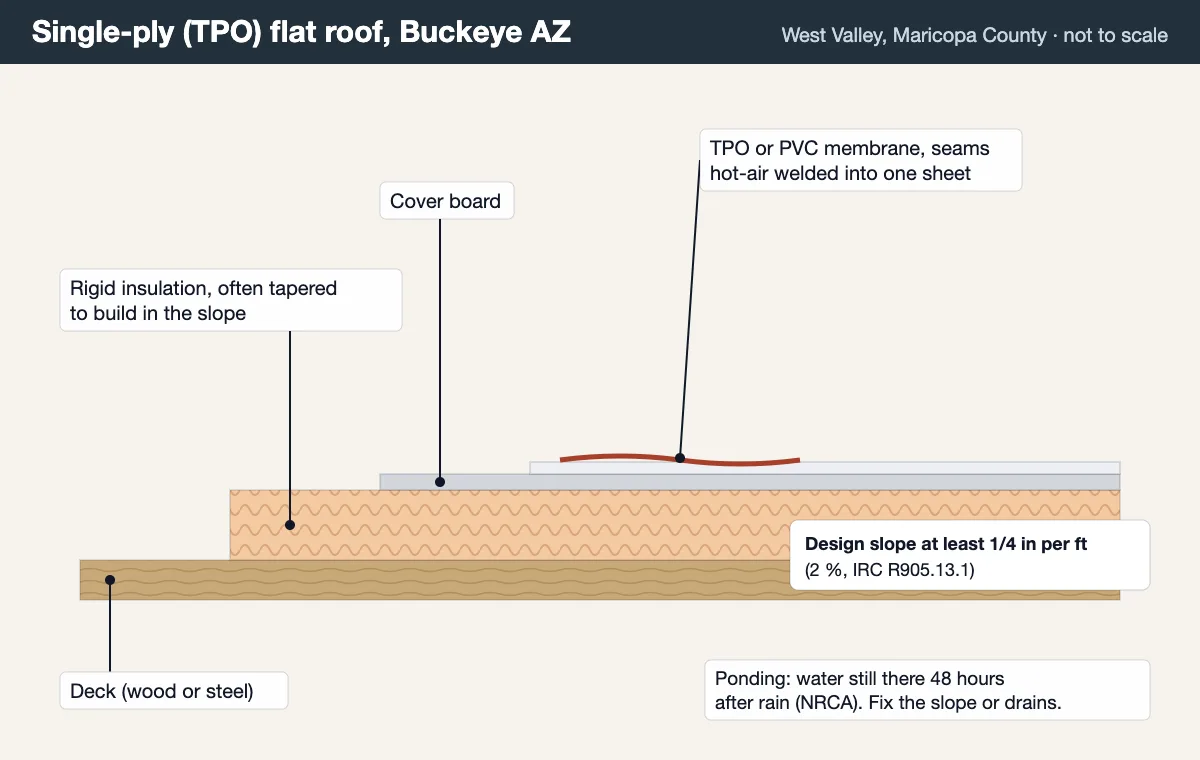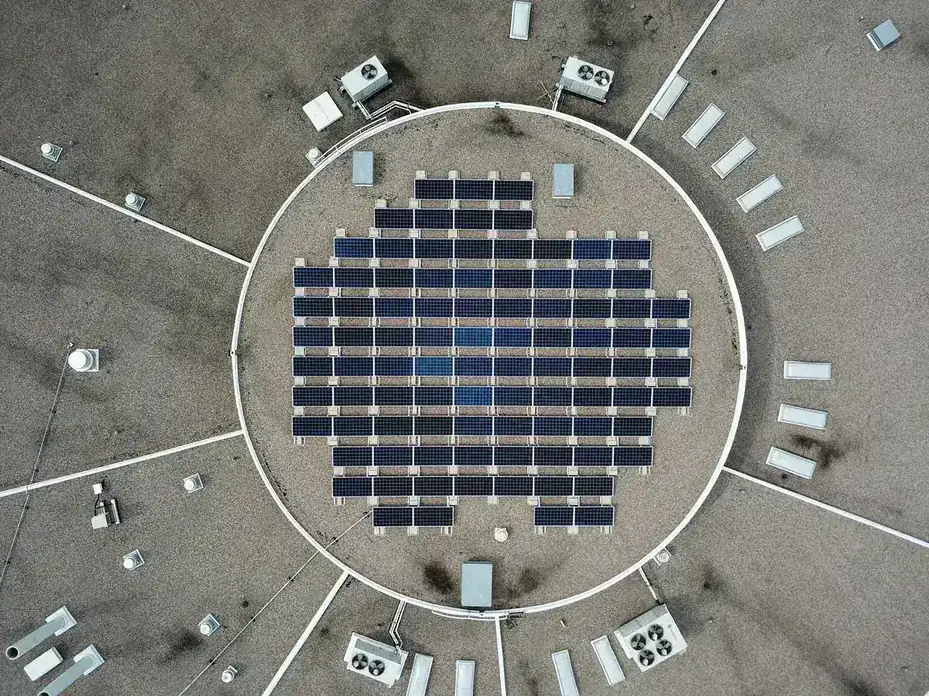
What a roof coating is for
Roof coating in Buckeye, AZ is mostly about one thing: keeping the desert sun off the roof beneath. On a spray foam roof, the coating is the only thing standing between the foam and ultraviolet light. On a membrane or metal roof, a coating adds a reflective, waterproof layer that can extend the life of a roof that is weathered but still sound.
A coating is not a cure-all. It cannot fix wet foam, saturated insulation, failed seams it is simply painted over, or a pitched tile roof whose felt has given out. Used in the right place, after the right repairs, it is one of the best-value jobs in Arizona roofing. Used in the wrong place, it hides a problem until the next monsoon.
Acrylic and silicone coatings
The two coating families used most across the Valley are acrylic and silicone, and the choice affects every future recoat as much as this one.
| Acrylic | Silicone | |
|---|---|---|
| Base | Water-based elastomeric | Silicone elastomeric |
| Common uses | Spray foam recoats, residential flat roofs | Commercial restorations, roofs with ponding |
| Ponding water | Less tolerant | More tolerant |
| Future recoats | Recoatable with compatible products | Generally needs silicone over silicone |
| Cost | Usually the lower-cost option | Usually higher |
General product characteristics. The manufacturer's system and the existing surface decide what is compatible on your roof.
When a recoat is the right job
- A foam roof whose coating is chalky, thin or worn in spots, but whose foam is dry and firm
- A foam roof that was last coated 5 to 7 or more years ago
- A weathered but sound single-ply or modified bitumen roof with intact seams
- An older metal roof with surface rust but sound panels and fasteners
- A commercial roof where a restoration coating can defer a tear-off, after moisture testing
Why preparation decides the result
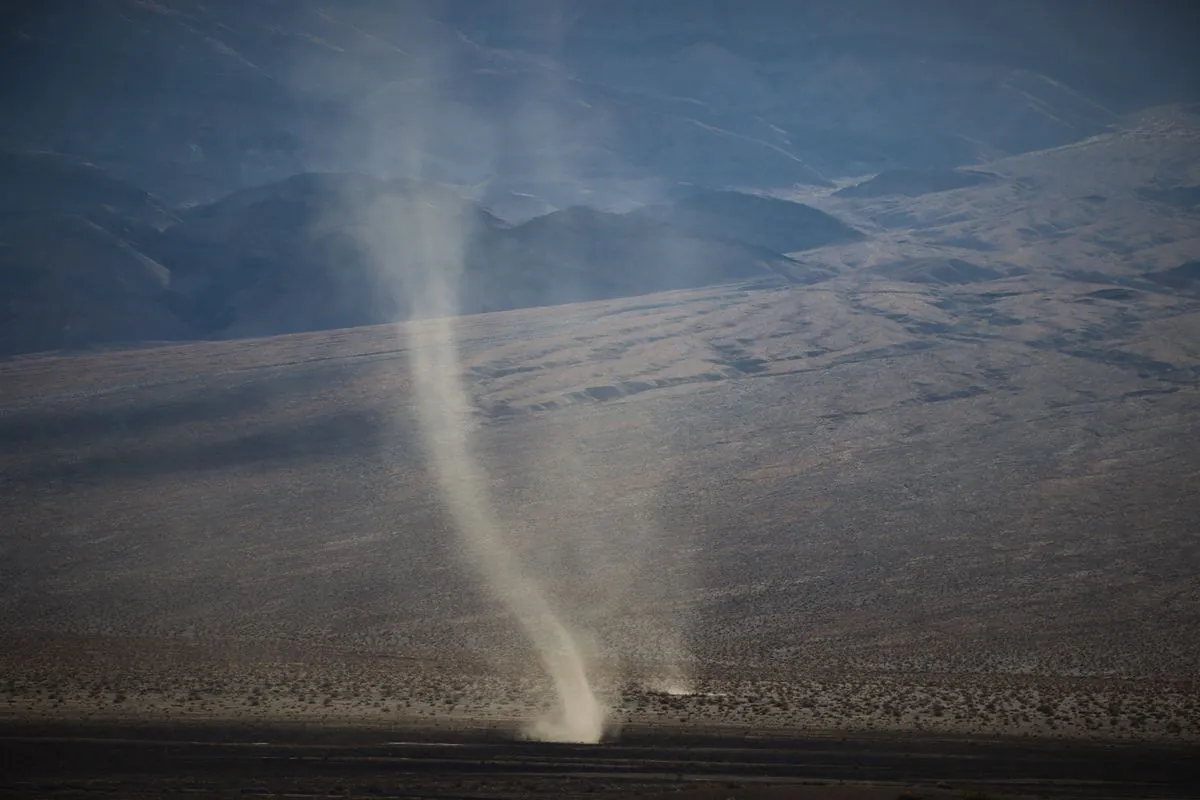
In Buckeye, preparation is most of a coating job. Monsoon dust storms, which National Weather Service warnings associate with gusts of 40 to 60 mph, leave grit across flat roofs; a coating sprayed over that dust bonds to the dust, not the roof. Thorough cleaning, repairing every blister and crack, and priming where the system calls for it are what make a coating last.
Thickness matters too. A quote should state the coating product and the application rate or dry film thickness, not just "two coats". Thin coats look fine for a season and then wear through early under roof surfaces that can pass 160 degrees in a Phoenix summer.
Coating foam roofs
Foam roofs are where most residential coating work in Buckeye happens. A Phoenix roofer's guide recommends recoating about every 5 to 7 years in the Valley, and says foam roofs recoated on that schedule can last 30 to 50 years or more. Skipping recoats lets the sun reach the foam, and then a recoat becomes a repair, or a replacement. See foam roofing.
Commercial coatings
On commercial buildings, a restoration coating over a sound membrane, foam or metal roof can defer a full tear-off, but only after moisture testing confirms the roof is dry. See commercial roof coating and coating vs replacement, the service area, or request a coating quote.
Patio covers, additions and the flat sections people forget
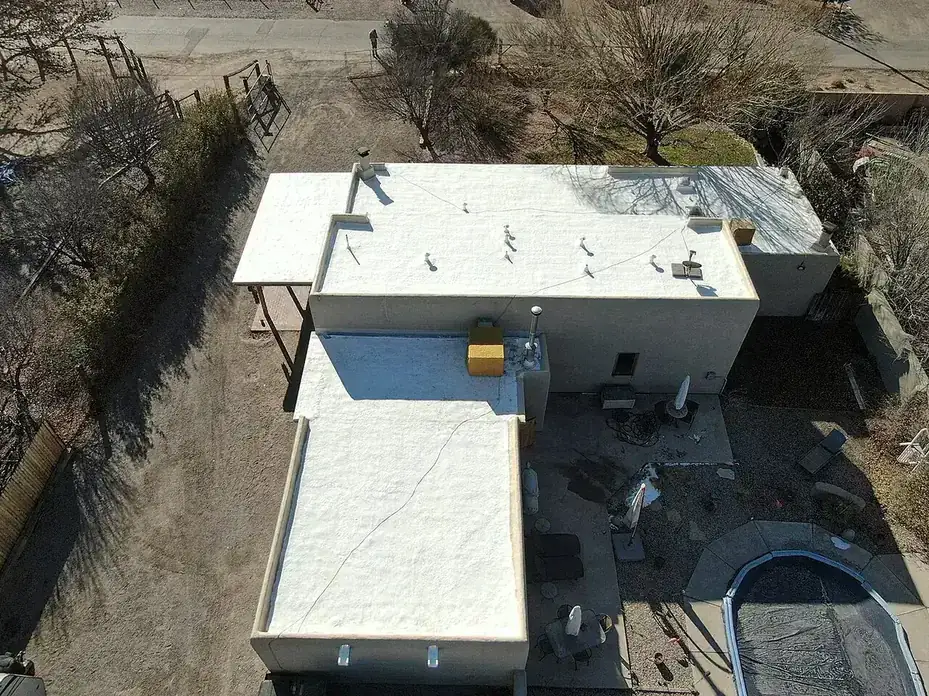
Many Buckeye homes have a pitched tile roof over the main house and a flat foam or membrane section over a patio, an addition, a casita or a mechanical area. Those flat sections are where most residential coating work happens, and they are easy to forget because nobody can see them from the street.
The weak point is usually the joint where the flat section meets the pitched roof or the house wall. Water running off the tile lands on the flat roof at that joint, so the coating there wears faster and any gap at the flashing gets tested by every storm. A recoat should give that joint extra attention and extra thickness.
Reflective coatings and roof temperature
A light, reflective coating keeps a roof surface much cooler than a dark one, which matters on a roof that can pass 160 degrees in a Phoenix summer. Lower surface temperatures mean less thermal stress on the roof and less heat driven into the space below. That is part of why spray foam with a white coating became the standard for flat roofs across the Valley.
Reflectivity drops as a coating gets dirty and weathered, which is another reason to keep flat roofs clean of monsoon dust and to recoat on schedule rather than waiting for leaks.
Coating warranties: what to ask
- Which product, and at what application rate or dry film thickness
- Whether the warranty is from the roofer, the manufacturer, or both, and what it actually covers
- What repairs are included in the price before the coating goes on
- Whether moisture testing was done, and what it showed
- What maintenance the warranty requires, such as annual inspection or cleaning
- Whether the coating chosen limits what can be applied over it in future
How a roof is recoated
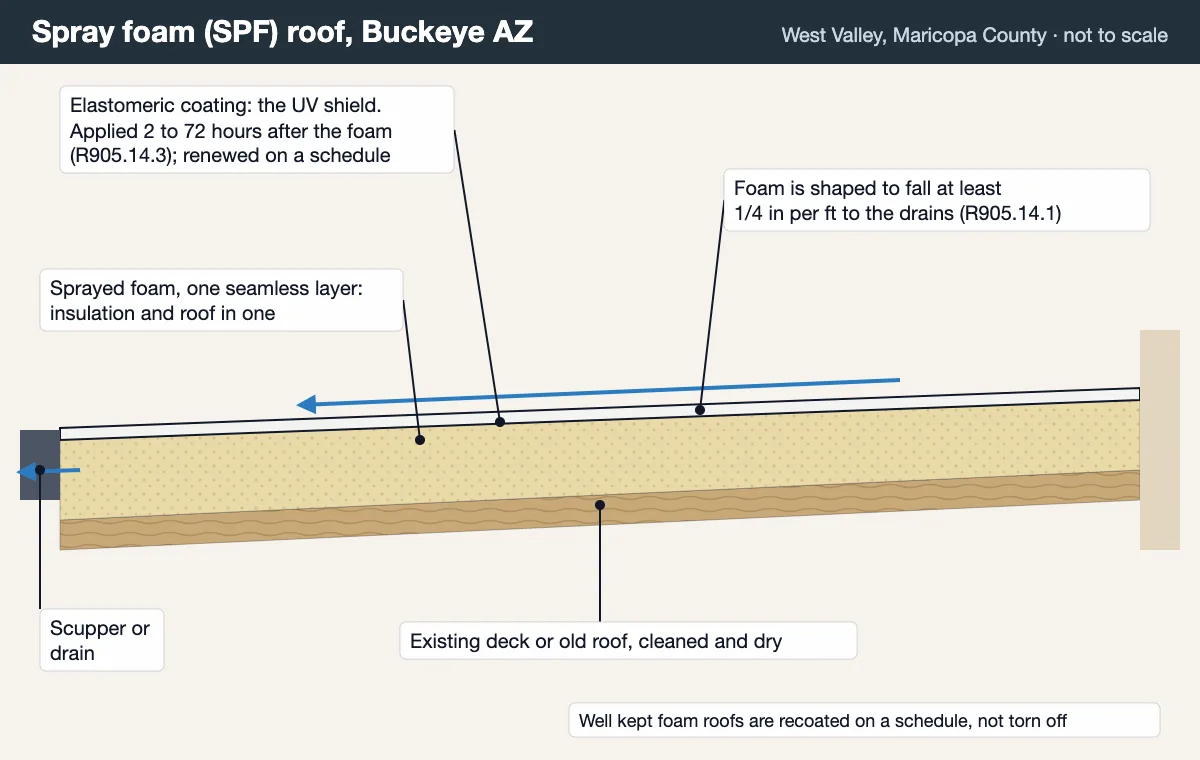
- Inspect. The roofer confirms the surface is sound and dry, checks seams, flashings and drains, and identifies blisters, cracks and damage.
- Repair first. Damaged foam is cut out and refilled, membrane seams and punctures repaired, and metal fasteners and rust addressed before any coating.
- Clean. Dust, dirt and loose material are removed. Monsoon grit left on a flat roof will stop a coating bonding.
- Prime where needed. Some surfaces and coating systems need a primer for adhesion; the manufacturer's system decides.
- Apply to thickness. The coating is applied at the specified rate, usually in two coats, with extra at seams and penetrations.